Saturday, November 25, 2023

Salt Island

 Mónica de Miranda, Salt Island, 2022 (detail)

I recently went to look around RE/SISTERS A Lens on Gender and Ecology, at the Barbican. In this exhibition the politics goes well beyond environmentalism and feminism, encompassing work that reflects on sexuality, race and the history of colonialism. And yet it would be possible in some cases to wilfully ignore all these strata of meaning and admire a work as landscape art, like Salt Island, a sequence of five photographs embroidered with green thread. We are told by the wall label that Mónica de Miranda's work 'considers the complex experience of Afrodiasporic lives and Europe's colonialist past through a Black ecofeminist lens, drawing on ideas of matrilineal relationships, kinship, migration, slavery and African liberation movements.' However it's hard to get all this from Salt Island and the exhibition would ideally have displayed more of the multimedia project of which this is just a part, The Island. There is a good description of this in a text by Ana Nolasco on the artist's website, including historical background on the “Ilha dos Pretos” (Island of Blacks) which inspired it - stories of an eighteenth century settlement of people of African origin by the Sado River. 


Agnes Denes, Wheatfield - A Confrontation: Battery Park Landfill, Downtown Manhattan, 1982

The addition of new ways of understanding our relationship with the planet make it increasingly hard to position art in this field. Agnes Denes, for example, is included for her famous Manhattan Wheatfield project, but she is now being criticised for using wheat, a Eurocolonial industrial cereal crop, 'implicated in the displacement of Indigenous people and indigenous plants over much of the continent for at least two centuries' (Catriona Sandilands). Today, artists need to think intersectionally. They have to create arresting work while steering (if I can use a mythological gendered landscape metaphor) between the Scylla of 'Mother Earth' attitudes, that equate women too closely with nature, and the Charybdis of panoramic or abstracting viewpoints, associated with power and possession

Back in 1986, Tee A. Corinne's Isis photomontages placed vulvas in the landscape of Oregon. Did this go too far in equating the female body with nature? Context is important: Corinne is well known for her books and images celebrating lesbian lives and these 'landscapes' were just one small project in a prolific lifetime's work. It is hard to criticise artists like Corinne, Ana Mendieta, Laura Aguilar and others for positioning themselves as part of their environments, as an alternative to the disembodied vistas of landscape painters or large-scale interventions of land artists. They were 'performing ground' - locating 'the self not merely in the world but of it' (Lucy Bradnock). Writing about Corinne's work, Tamsin Wilton argues that her 'celebration of woman in the woodland focuses on women's sexuality, the seat of female sexual pleasure. In other words, precisely what is most often erased in the women-as-landscape genre.' 

Symrin Gill's aerial photographs of open-pit mines can be seen as avoiding the industrial sublime by 'alluding to the corporeal' (the series is called Eyes and Storms), emphasising the landscape's 'bodily textures' by allowing shadows to disrupt a two-dimensional 'extractivist viewpoint.' By contrast, Sim Chi Yin does provide a beautiful abstract aerial view (below) as part of her Shifting Sands project. But this aestheticisation of the 'infrastructural' gaze' is juxtaposed with other photographs ('the human gaze') that show the impact of erosion in poorer areas of the Global South. Another artist, Mary Mattingly is represented by some striking unpeopled 2016 photographs: Mineral Seep, where a cliff is transformed into a drip painting by black and brown stains, and Ore Transport, where an uncanny, unfathomable concrete structure, framed by grey water and pale sky, draws you into its shadowy interior. But these too are contextualised with a chalk board Cobalt Map showing the complex system that supports its production and distribution, 'a network of violence that percolates outward from the original site of extraction.'

Sim Chi Yin, Shifting Sands #2, 2017-ongoing

Saturday, November 18, 2023

Uncultivated regal hunting grounds

Awrangzib Hunts Nilgais c. 1660

I've just read Julian Bell's new book on Adam Elsheimer, Natural Light. He talks about the paintings I referred to here in 2006, when I visited the Dulwich Elsheimer exhibition, including The Flight Into Egypt (1609) with its extraordinary depiction of the night sky. He explains that Elsheimer would not necessarily have needed a newly-invented telescope to paint this, although he was working at a time of increasing interest in natural phenomena. The book's last chapter takes an unexpected turn east, to consider some paintings from Mughal India that have been described as 'naturalistic' in a similar way to art made in seventeenth century Europe, beginning in Rome with Elsheimer, Caravaggio and Annibale Carracci. The painting above, by an unknown artist (owned now by Dublin's Chester Beatty library), is one of Bell's examples. It struck me as a relatively rare Indian 'landscape painting'. Artists working in Agra knew about European compositions from engravings and some of Elsheimer's best paintings travelled in this form, although Bell doesn't suggest Awrangzib Hunts Nilgais is based on any of these. However, he thinks Vermeer's observational experiments, 'paintings of high ambition and coolly systematic facture', bear a 'distant affinity' to this detailed, panoramic view. Figures seem of minor importance here. Instead the interest is in 'unbounded open space - the looseness and rambliness of the uncultivated regal hunting grounds, with their warm harmonies of ochre and sap green'.      

Sunday, November 05, 2023

Lake Superior, Cascade River

Sugimoto Seascapes at the Hayward Gallery

I wrote about Hiroshi Sugimoto's seascape photographs here in 2007, referring to some online images at the Smithsonian's Hirshhorn Museum. Checking back just now I found the link was dead, but there is still information on the exhibition at their website. I would love to visit the actual building in Washington one day - not only did they do that major career retrospective, they have also more recently commissioned Sugimoto (who is also an architect) to redesign their lobby and renovate their sculpture garden. This autumn though, at long last, a British gallery has put on a Sugimoto retrospective and it's just a 341 bus ride away from our home. Hiroshi Sugimoto: Time Machine includes the photograph I mentioned sixteen years ago, Boden Sea, Uttwil (1993), along with others just as beautiful. 

These luminous images, made with an old large-format camera, are referred to by the artist as seascapes, although Boden Sea is what Sugimoto calls Bodensee, i.e. Lake Constance, and my photo below shows another lake view. But The Guardian exhibition review begins with a wonderful view of the North Atlantic Ocean and the Evening Standard's includes Sugimoto's photograph of the Bay of Sagami. I will briefly quote Laura Cummings' article, as she manages to include the lovely word for a cold sea fog, 'haar'.

These monochrome photographs must all be captured at a particular moment, by their very nature, and yet they appear to stand outside time. Their poetry lies in more than they show. [They] hover between representation and abstraction. There are visions of shining light where up and down appear inscrutable, seas that tip over the horizon, or resemble nothing but haar. There are seas that register as oblongs of graphite shading. All are real – look closely and you can even distinguish tidal flow – but as intangible as outer space.


Lake Superior, Cascade River, 1995

Sugimoto's photographs allow you to imagine a primal sea untouched by humanity. In my book Frozen Air I described looking out on the English Channel, which Sugimoto has photographed for this series from both shores. There can be passages of time when no ships cross your field of vision, and nothing but light and water lie in front of you. In Marcel Proust's first book, Pleasures and Days, he described this pristine vision: ‘unlike the earth, the sea does not bear the traces of human works and human life. Nothing remains on the sea, nothing passes there except in flight, and how quickly the wake of a ship disappears! Hence the sea's great purity, which earthly things do not have.'

Saturday, November 04, 2023

The Eight Mountains

I recently watched The Eight Mountains which I'd been looking forward to since reading Peter Bradshaw's review in The Guardian:

This rich, beautiful and inexpressibly sad film is about the friendship between men who can’t talk about their feelings and about winning and losing at the great game of life. It is set in the breathtaking and wonderfully photographed Italian Alpine valley of Aosta, which includes the slopes of Mont Blanc and the Matterhorn. But the “eight mountains” of the title refers to the eight highest peaks of Nepal: a mysterious symbol of worldly ambition and conquest. Belgian film-makers Felix van Groeningen and Charlotte Vandermeersch have adapted the award-winning 2016 novel by Italian author Paolo Cognetti and have created a deeply intelligent meditation on our capacity for love, and how it is shaped by the arbitrary, irreversible experiences of childhood, and by our relationship with the landscape. The Aosta valley is depicted with magnificent sweep, and van Groeningen and Vandermeersch find a stratum of sadness under it, a kind of water table of tears.

Unfortunately, although I did quite enjoy it, I was disappointed - my view of the film was closer to Richard Brody's review in The New Yorker. In this he describes a scene that echoes a central dilemma of landscape appreciation I've referred to often on this blog. 'By far the best scene in the film is one in which the adult Pietro (Luca Marinelli) brings a trio of Turin friends to the mountains; in response to their rapturous enthusiasm for “nature,” Bruno (Alessandro Borghi) explains that the people who live in the mountains never use that “abstract” word but rather speak lovingly of the physical specifics—“forest, meadow, river, rock, path: things you can point at, things you can use.”' 

However, 

that line of dialogue conveys more of the essence of the movie’s alpine setting than does the cinematography. Much of the action there takes place outdoors; Pietro’s father (Filippo Timi) is an enthusiastic hiker and climber who takes the two boys with him on his expeditions, and Pietro, in his many returns to the region, delights in the peaks, in the clear water of the lake, in the rock formations. The movie presents these landscapes as cinematic abstractions, with drones and Steadicams and cameras perched on high to show the small figures of humans overwhelmed by, yes, nature, and to show the spectacular sights that surround the characters. But it stints on the visual point of view of the characters, voids itself of contemplative poise and analytical precision, hardly stays still long enough, looks in detail long enough. It doesn’t pay enough closeup, hands-on attention to soil and stone and water and snow, to wood and fire, to flesh and fabric, to suggest that the characters have any more of a physical connection to the settings than they have a perceptual one.

We used to exclaim "oh no, not a drone shot!" whenever they appeared on TV documentatries or movies, until they became almost ubiquitous. But complaining about the drone shot cliché has itself become a cliché, so I won't labour the point here. A New York Times article on the phenomenon did note some highly effective examples - Werner Herzog 'opens his remarkable 2016 picture “Into the Inferno” with an astounding aerial sequence that soars up a mountain and then into the volcano at its center.' Maybe we could just have some more drone shots that are grainy or misty or flawed in some way, rather than being taken on smooth glides over perfect landscapes that are not as awe-inspiring as they should be, because they look almost computer-generated. 

Another review of The Eight Mountains notes that 'some obvious drone shots are included, but much of the hiking sequences appear to have been done with Steadicams, following the men through their treacherous treks. Andrea Rauccio is listed as the Steadicam operator, but the credits for camera operators are lengthy, and the entire crew deserves credit.' Richard Brody may be being a bit harsh on all this, but I do know what he means when he says that in these scenes it's hard not to 'hear and see the crew, the walkie-talkies, the muffled clamor that goes into turning raw experience into overcooked and denatured images.' 

I feel I should end on a more positive note though. So here are a few more quotes from reviews (ending back with Peter Bradshaw), where the temptation to use mountain metaphors has proved irresistible.

  • 'Stately and serene from a distance, but up close riven with the fissures and follies of a friendship that costs both men so much but gives them even more, the movie, too, is a mountain.' (Variety)
  • 'Luca Marinelli and Alessandro Borghi put in mountain-sized performances to offset the film’s silences and propensity for postcard shots, bringing heart and guts to the chilliest scenery. A worthwhile hike through many obstacles to friendship.' (Irish Times)
  • 'A movie that seems to grow before your eyes, leaping across continents as years go by, all the while slowly accruing power. By the end it has scaled a peak, offering a bracing perspective on life experience.' (FT)
  • Much like climbing a mountain, the two-and-a-half-hour runtime may occasionally feel arduous, but the emotional release is worth it once you reach the peak.' (Time Out)
  • 'This film has mystery and passion, it climbs mountainous heights and rewards you with the opposite of vertigo: a sort of exaltation.' (The Guardian) 

Friday, November 03, 2023

The Airfields of Lincolnshire

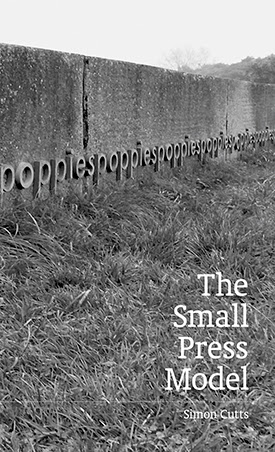
The cover of Simon Cutts' The Small Press Model is a photograph of his 'forgotten one-word poem' which can be found outside Skellingthorpe, 'A History of the Airfields of Lincolnshire'. It comprised seven slabs of concrete taken from RAF Sinderby with letters in orange anodised aluminium, glued on 'with the fiercest epoxy and a contraption that allowed it to set'. You can read a description at Simon's blog. Within the book is a the script for a talk he gave in New York called 'The Metaphor Books' which describes the book version of this poem and a later version where the word 'flax' is used to evoke the image of flak and the blue flowers that were becoming more prevalent on the old airbase. I doubt I'll ever visit Skellingthorpe, but I did have a look on Google Earth and found the sculpture - see my screenshot below (there is a visual glitch where the software has joined up photographs). Presumably that's the photographer's bicycle, well chosen to match the orange lettering.

The Small Press Model discusses artists and writers that I have written about here over the years, like Ian Hamilton Finlay, Richard Long and Jonathan Williams. Of particular interest for my theme is the introduction to The Unpainted Landscape, a 1987 exhibition that featured Finlay, Long, Thomas Joshua Cooper, Roger Ackling, Hamish Fulton, Andy Goldsworthy and Chris Drury (I've linked these names here to different Some Landscapes posts). The only artist Simon Cutts describes that I've not mentioned before is David Tremlett, who was up for the Turner Prize back in 1992 with his wall drawings. The Tate owns one of his early works, The Spring Recordings, comprising short soundscapes collected during 1972 in all 81 counties (there is a detailed description on their website). The tapes should ideally be heard when the work is on show, but in The Unpainted Landscape they were lined up on a shelf as 'a silent wallwork, referring to its source and potential replay.'

The Small Press Model was reviewed a few months ago on Caught by the River by Sukhdev Sandhu. 'Like its publisher Uniformbooks, The Small Press Model celebrates the local, the non-metropolitan, those who have a ‘resolve for a critical alternative to mainstream publishing’. ... It’s a model that stands for the dignity of production, the importance of collaboration, the need for alternative networks—and alternative publics.' The book's short texts range over five decades and the cumulative effect of reading them is to feel moved by lives 'built and lived' to support the idea of poetry - as words, objects, spaces and projects, carried out with serious attention to detail and a playful, questioning creativity.

Saturday, August 26, 2023

Ocean waves and mountain echoes


Kuncan, Origin of Immortals, 1661

I've been looking into the art of Kuncan (or Kun Can, 1623-73), a Buddhist monk who lived in and around Nanjing. In Three Thousand Years of Chinese Painting, a book I've quoted from before, Nie Chongzheng highlights Kuncan's use of calligraphy and quotes lines he added to a 1661 landscape painting, Origin of Immortals. I'll reproduce these here as they are already quoted online in a Daily Art post about Kuncan.

I still find joy in this secluded life,

Treading on the path, I find beautiful scenes as I please,

I play my musical instrument as I walk along the river,

Until I enter a fascinating place through the clouds,

The water is deep, and the land is open and flat,

Mountains shine under the sunlight,

The deafening sound of spring covers other noises,

The flat rocks look so clean, as if they have been swept,

I feel so happy I forget my fatigue,

The stream winds all the way up to the high mountain,

When I look ahead, the mountains look as if they are cut,

And the irregular mountain caves are exquisite,

I feel as if I am high in the sky.

My steps feel so light as I walk in the pine woods,

Resting in the mountains, I forget about the material world.

The place is so quiet that even monks don’t come here,

I plan to live here for the rest of my life,

Until I die in the mountain.

These lines are lovely but not very memorable. The main reason I wanted to write this post was to include another Kuncan quote that I really like, this one taken from a 1670 landscape painting that was on loan to the Met.

Master Cheng Lian [a musician, 7th century B.C.] transformed people’s temperament with the sound of ocean waves. Zong Shaowen [the landscape artist Zong Bing, 375–443] did it with echoes in the mountains. Temperament can be transformed to transcend romantic and worldly attachments. Mr. Wang Dengxian [active mid-17th century] studies in the Gaozuo Monastery [in Nanjing], taking rainy woods as his ocean waves and mountain echoes. Every day he strolls in them, chanting his literary compositions and, when gay, singing out loud while tapping trees [to keep time]. He lives as he wishes. My senior Ji once said, “As emotions arise, wisdom is blocked. When thoughts shift, the body changes in accord.” How can anyone say there is no transformation-inducing cinnabar in this process? I painted this landscape to amuse myself. When Mr. Wang saw it, I gave it to him as a present.

Cheng Lian (Ch'eng-lien) was the qin player who taught Bo Ya (Po Ya), who I have referred to here previously. Zong Bing wrote the early aesthetic essay Huashanshuixu (“Preface on Landscape Painting"). Gaozuosi is in Rain Flower Terrace park in the south of Nanjing. It looks like there are still plenty of trees there in which one could walk and listen to the rain, but this landscape now has a dark place in history, with a monument commemorating the thousands of communists executed on the site by the Kuomintang.

Tuesday, August 15, 2023

Sunlit emptiness


West Lake, Hangzhou
Source: Wikimedia

I've just read Love & Time: The Poems of Ou-Yang Hsiu, a slim volume of J. P. Seaton translations published by the Copper Canyon Press in 1989. It includes Ou-Yang's series of ten poems entitled West Lake Is Good, which popularised the tz'u form (ci in pinyin) where verse is fitted into the form of a pre-existing song. His West Lake poems (the lake is in Hangzhou - see my earlier post on it) were written to the tune Picking Mulberries. I guess it would be like someone writing a set of poems about Windermere using the rhythms and rhyme scheme of 'Scarborough Fair'. Ouyang also wrote some beautiful landscape poems in the short shih (shi) style, like 'Drifting at I-Ch'uan' in which a stream grows in a gorge and rapids turn a tiny boat. 'Birds on the sand turn too: / away from me / and fly, to the grove's green tips.'  

Ouyang Xiu (1007-72 - I'm swapping now to pinyin spelling) had the Zuiweng Pavilion constructed at Langya Mountain near Chuzhou. It was built to his design by a Buddhist priest of the mountain, Zhi Xian, and you can now build one yourself – I see that a Lego set is available to buy! Ouyang called it The Pavilion of the Old Drunkard, but as Richard Strassberg writes in Inscribed Landscapes, what Ouyang ‘cares about is to be amid mountains and streams. The joy of the landscape has been captured in his heart, and wine drinking merely expresses this.’ Ouyang’s calligraphy was engraved at the pavilion in 1048 but because it was difficult to make rubbings, Su Shi (1037-1101) rewrote it in larger characters (rubbings of this still exist). Inscribed Landscapes includes a further text on another pavilion ordered near here by Ouyang Xiu: The Pavilion of Joyful Abundance, which is by a spring at the foot of Mount Abundance, Fengshan. 

In 1070 Ouyang wrote his ‘Account of the Pavilion on Mount Xian’ (1070), an early description of the ‘principle whereby a place becomes known through a particular person’, as Stephen Owen says in his Anthology of Chinese Literature. ‘Mount Xian looks down on the river Han', Ouyang wrote. 'when I gaze at it, I can barely make it out. It is surely the smallest of the major mountains, yet its name is particularly well known in Jingzhou. This is, of course, because it of the persons associated with it. And who are those persons? None other than Yang Hu and Du Yu.’ Yang Hu and Du Yu were governors during the Jin Dynasty and Mount Xian, near Xiangyang (formerly Xiangfan) had a ‘stele for shedding tears’ dedicated to Yang Hu.  

Of course Ouyang himself created sites of future literary pilgrimage - not just the pavilions near Chuzhou. Pingshan Hall was built in 1048 when he was prefecture chief of Yangzhou. Su Shi was again on hand to commemorate the older poet, writing a poem after Ouyang’s death on an occasion when he revisited the hall. It can still be visited today - it is in the western part of Daming Temple, on the middle peak of Shugang Mountain near Yangzhou - but it has been destroyed and re-built many times over the years. Stephen Owen’s anthology includes ‘An Account of the Reconstruction of Level Mountain Hall’ written in the seventeenth century by Wei Xi (1624-80). Pingshan means ‘Level Mountain’ and comes from the fact that the mountains from this viewpoint all appear at the same level. J. P. Seaton translated one of Ouyang's poems on this landscape. He looks out and leans into 'sunlit emptiness, / the mountain's colours in the mist / now there, now gone.'


Sunday, July 23, 2023

Distant mountains and steep torrents

I have been reading Plum Shadows and Plank Bridge, a fascinating account of late Ming courtesan culture, translated and edited by Wai-yee Li. It mainly comprises two literati memoirs - Reminiscences of the Plum Shadows Convent by Mao Xiang (1611–93) and Miscellaneous Records of Plank Bridge by Yu Huai (1616–96) - which recall the pleasures of Nanjing before the dynasty's collapse into turmoil and war. This is how Columbia University Press summarise these texts:

'Mao Xiang chronicles his relationship with the courtesan Dong Bai, who became his concubine two years before the Ming dynasty fell. His mournful remembrance of their life together, written shortly after her early death, includes harrowing descriptions of their wartime sufferings as well as idyllic depictions of romantic bliss. Yu Huai offers a group portrait of Nanjing courtesans, mixing personal memories with reported anecdotes. Writing fifty years after the fall of the Ming, he expresses a deep nostalgia for courtesan culture that bears the toll of individual loss and national calamity. Together, they shed light on the sensibilities of late Ming intellectuals: their recollections of refined pleasures and ruminations on the vagaries of memory coexist with political engagement and a belief in bearing witness.'  

Dong Bai, also known as Dong Xiaowan (1624–1651), had many accomplishments. The titles of four successive sections of Plum Shadows convey her character and artistic pursuits: 'Record of her quiet intelligence'; 'Record of her respectful abstemiousness'; 'Record of her interest in poetry, history, calligraphy and painting'; 'Record of her interest in tea, incense, flowers and the moon.' Mao doesn't overpraise her talents - when it came to painting, she didn't achieve mastery but specialised in 'small clumps of bushes and wintry trees,' where 'her brushwork was graceful and appealing.' Nevertheless she clearly had a strong appreciation for gardens and landscape and lived for a time in Suzhou, which as I've mentioned here before, is famous for its gardens. Mao describes the pleasure they both took in Suzhou's Lovebirds Lake, flanked by sandbanks and temples with the Tower of Mist and Rain rising into the sky. 'She and I once roamed there for a whole day. We also reminisced together about the marvels of blue waves and dark green crags at Tongjun Mountain and the Yan Rock Rapids on the Qiantong River.' 

Some of the courtesans described by Yu Huai were renowned for their music, poetry and art. Gu Mei (1619-1664) for example, also known as Gu Hengbo 'excelled in painting orchids' and a couple of her works from the Smithsonian are reproduced in the book. Like Dong Bai, she was one of the Eight Beauties of Qinhuai (courtesans mainly lived on the South Bend of Nanjing's Qinhuai River), where she hosted a famous literary salon. 'Just as she fashions her eyebrows, she fashions orchids and calligraphy', wrote one contemporary poet. 'Surrounded by paintings, books and antique vessels, / it is hard to make room in the mind for romantic affairs.' 


Fan painting by Gu Hengbo in the Palace Museum, Beijing


Yu Huai mentions another courtesan in Plank Bridge who specialised in landscape painting, Fan Jue (also known as Fan Yun). 'She painted ancient trees with gnarled, uneven branches, distant mountains, and steep torrents.' According to him 'she was abstemious and quiet', although in an endnote Wai-yee Li observes that while he describes 'an austere artist, the poems addressed to Fan by her admirers are quite sensual.' Yu says that in art she took as her models Shi Zhong and Gu Yuan, 'she was a Fan Kuan among women.' I can't find any online images of her work, so here is a Shi Zhong landscape in the Met. Interestingly, both Shi Zhong and Gu Yuan were known for their eccentric, individual styles.


 Shi Zhong, Winter Landscape with Fishermen (detail), late 15th century or early 16th century

Friday, June 16, 2023

Pure blue in the dawn


Robert Macfarlane on Twitter, three days ago:

Ah…Cormac McCarthy has died today. A giant of a writer, who wrote with a pen of iron, torqued language into new forms & worked the rhythms of prose into wire-flashes of lightning & great rolls of thunder. Favourite lines, passages? This from Blood Meridian will stay with me:


A few responded to the invitation with other descriptions of landscape, like the stunning final paragraph of The Road

Another quoted this, from Blood Meridian, although the author of a Washington Post piece on McCarthy felt the writing here went 'past feverish to become nearly comical'.


Back in 2014 I wrote a blog post on Blood Meridian that quoted several beautiful passages describing a bloody journey made by the scalphunters ('they rode through the long twilight and the sun set and no moon rose and to the west the mountains shuddered again and again in clattering frames and burned to final darkness and the rain hissed in the blind night land'.) This writing, ignored at the time and subsequently acclaimed, is now studied by academics in books like Cormac McCarthy's Borders and Landscapes (2016). I'll conclude here with Ted Goia's words on McCarthy's landscape descriptions and another quote from Blood Meridian.

Just as a librarian throwing a dart at the text of The Sun Also Rises will inevitably strike upon an account of eating or drinking, or doing the same with Updike will encounter some creative variant on copulation, the same technique applied to the world of Blood Meridian will doubtless intersect a description of prairie or desert or hill country. A typical McCarthy passage: “They rode all day upon a pale gastine sparsely grown with saltbush and panicgrass. In the evening they entrained upon a hollow ground that rang so roundly under the horses’ hooves that they stepped and sidled and rolled their eyes like circus animals. . . . On the day following they crossed a lake of gypsum so fine the ponies left no trace upon it.” The characters of his books both haunt these landscapes and are haunted by them in turn.

Sunday, June 04, 2023

Rheinterrasse


Photograph of the Rheinterrasse on the third floor of the Berlin Vaterland building, with its view overlooking the river between Sankt Goar and the Lorelei rock.
(Source: Wikimedia)

In July 1930 Antonin Artaud was in Berlin, where he was to play a beggar in the French version of G. W. Pabst's The Threepenny Opera (you can see him in the finished film on YouTube). Antonin wrote a letter from the city to psychoanalyst René Allendy which concludes with a description of Haus Vaterland in Potsdamer Platz (translation by Helen Weaver):  

'There is an amazing building here called the Vaterland-- Paris contains nothing like it. It is a kind of pleasure house five stories high. On each story there are one or two café-restaurants, each evoking a different country, and at the back of each café is a theatrical landscape in relief, representing in one the Bosporus (the Turkish café), in another the mountains of the Tyrol, in a third Vienna, in another Spain, in another Hungary, in another America. And each serves the drinks and dishes of that country. The most amazing is the café of the Rhine, which contains a kind of overhanging balustrade with a view of the Rhine and its castles. And suddenly the sky covers over with clouds, thunder growls, it grows dark, and a torrential rain falls while lighting effects simulate a thunderstorm with absolute realism. The thunder especially bears no relation to theatrical thunder. You hear the slightest rumbles with meticulous precision. It's extraordinary.'


Haus Vaterland at night in 1932.
(Source: Wikimedia)

Haus Vaterland opened as Haus Potsdam in 1912 and was the headquarters of German filmmakers UfA, with a huge cinema in the lower floors. It was transformed and relaunched as Haus Vaterland in 1928 and features in Weimar era paintings, films and novels. Bombed in the war, it was reopened and became the haunt of spies before being torched in the East German strike and protest of 1953. It was then left in ruins - according to a 1966 Der Spiegel article: 'kestrels nest in the burned-out Haus Vaterland and hunt down rats that crawl out of barred S-Bahn entrances.' 


The burned out ruin of Haus Vaterland in 1975.
(Source: Wikimedia. More photos at Getty Images)


When it comes to restaurants with views in Berlin, I immediately think of the revolving restuarant on the Fernsehturm tower (subject of a film by Tacita Dean). As it turns it you can look west towards Potsdamer Platz, still undeveloped when I first had a meal there in 1993. But at that height you are lifted above the reality of the city, even as it stretches out before you. 

I can see why other restaurants have provided escapism with murals of idealised or fantastic landscapes, transporting diners far away from the surrounding streets. One of the best known examples in London was the Tate restaurant's Rex Whistler's painting The Expedition in Pursuit of Rare Meats, a capriccio painted in 1927 but now judged offensive (visitors are still able to see it but cannot dine surrounded by its exotic landscapes). Unsurprisingly the Vaterland Haus, dating from the same period was pretty dodgy too, with rooms influenced by Germany's changing political situation and allegiances (there were no British or French scenes, reflecting continuing animosity over Versailles). There is some remarkable UfA footage of Sidney Bechet playing in the Haus Vaterland's Palm House ballroom, with a couple of paintings visible that would not be acceptable today. This film was shot in June 1930, just a month before Artaud experienced the building.

I am fond of restaurants with landscape views that try to give you a flavour of some distant sunny location. Of course they are often hackneyed picturesque scenes, but does it matter? 'Sparkling sky-blue body of water? Check. Rolling hillsides? Check. Rounded archways with marble columns? Check and check. This is Italy as viewed through rose-colored glasses, and it’s likely painted right on the wall at your favorite red sauce joint.' For this article, art critics were asked their views on these restuarant pictures. "This art fits very well with the American version of Italian food. I mean, Italians find spaghetti and meatballs totally alien, so it’s fitting that it be eaten beneath murals that are very much American remixes of an idea of the Italian landscape.” I suppose the Vaterland Haus was doing something similar on an ambitious scale. But it also went beyond the purely visual with those Rheinland thunder effects and you can see why this would have appealed to Artaud, with his ideas of theatre as spectacle. 

I'll conclude here with another reference to Haus Vaterland and its Rheinterrase. This is from Irmgard Keun's The Artifiical Silk Girl, translated by Kathie von Ankum, in an extract published at Brooklyn Rail.

The Vaterland has spectacularly elegant staircases like a castle with countesses in stride, and landscapes and foreign countries and Turkish and Vienna and summer homes of grapevine and that incredible Rhine valley with natural scenarios that produce thunder. We are sitting there and it’s getting so hot that the ceiling is coming down—the wine makes us heavy—

“Isn’t it beautiful here and wonderful?” It is beautiful and wonderful. What other city has this much to offer, rooms and rooms bordering on each other, forming a palatial suite? All the people are in a hurry—and sometimes they look pale under those lights, then the girls’ dresses look like they’re not paid off yet and the men can’t really afford the wine—is nobody really happy?

Friday, June 02, 2023

Drinking the Rivers of Dartmoor


A few weeks ago I saw this at the National Gallery's excellent exhibition themed around Saint Francis of Assisi. It reminded me that I hadn't had a chance to note here anything about the recent Richard Long show at the Lisson Gallery, Drinking the rivers of Dartmoor (in the website's video clip interview he says he has used Dartmoor as his studio all his life). I found looking at these works rather moving because some of them clearly looking back over his long career and revisit ideas that shaped his walks. 'A Path of Innocence' (2022), for example, relates only tangentially to the landscape of Wales and uses phrases that relate to different phases of his life. He says the title was inspired by something he heard Wisława Szymborska say in her Nobel acceptance speech (although I can't see a source for it).


Another text work I particularly liked was 'Walking at the Speed of Spring' - a lovely concept, although one that only emerged retrospectively.

"I had the idea to walk from the southern tip to the northern tip of Great Britain, and the idea was to make a walking sculpture, so I put a stone on the road every day. The text work that came out of that was 'A Line of 33 Stones, A Walk of 33 days'. I thought that was it, and then I happened to be looking at some of the photographs I took on that walk and I noticed the beautiful yellow of the gorse. And then I realised that that gorse was also in Cornwall when I started the walk. So I realised that I actually had been walking at the speed of spring. And that was on the cusp of winter turning into spring, that walk, because in Lincolnshire I remember some snow showers and hail storms. So I had some bad weather, but it started in the spring and it ended in the spring."


Tuesday, May 16, 2023

Jena before us in the lovely valley

“Jena before us in the lovely valley”

This is the beginning of Gottfried Benn's poem 'Jena' (1926), translated by Michael Hoffmann and reprinted on the Poetry Foundation website. The words were his mother's, written on a postcard. 'It wasn’t a great picture,' he recalls. You can read what he says next as either touching or condescending: 

... the hills weren’t green with vineyards,
but she was from back-country hovels,
so the valleys probably did strike her as lovely,
she didn’t need laid paper or four-color print,
she supposed others would see what she had seen.

He guesses that the landscape had moved her sufficiently to ask a waiter for a postcard. When Benn wrote the poem, she was long gone, and yet that moment in front of the landscape, 'an exaltation', remained fixed in her words. Like his mother, we will all become ancestors, Benn concludes, including those who are looking at the valley today.

Michael Hoffmann, whose translation appears in the book Impromptus: Selected Poems, observes that  'Jena' is a strange but typical mixture: 'almost coldly dispassionate' and yet elegiac at the same time. Another translation can be found at the New Criterion, by Teresa Iverson, who says that it is written in 'a style which, to some, has barely seemed to avoid sentimentalism.' I had a look online to see if I could find a postcard that might resemble the one in the poem. Perhaps something like this one, dated 1903. Benn's mother died in 1912 of untreated cancer (in Impromptus the date is given as 1922, the year his wife passed away). For me, 'Jena' is doubly elegiac because nobody now sends postcards home from their holidays. This one might have been cheap and uninspiring, but it permitted Benn to return to a vanished instant of time inhabited by his mother and 'see what she had seen.'

Sunday, May 07, 2023

Atlantic Flowers


Last year I bought the latest New Arcadian Journal, Atlantic Flowers: The Naval Memorials of Little Sparta. 'The upland garden of Little Sparta is evocative of distant seas. Atlantic Flowers offers fresh insights into the poetic gardening of Ian Hamilton Finlay (1925-2006) by acknowledging that the warship sculptures are simultaneously naval memorials.' This makes it sound like quite a specialised study but the pleasure of reading the journal (essentially a beautifully illustrated book), is that it conveys a lifetime's engagement with the garden as a whole and Patrick Eyres' long friendship with Finlay. An appendix provides a bibliography of ten previous NAJs and eleven New Arcadian Broadsheets devoted to Little Sparta and IHF. Photographs show how garden features have evolved over time, since Patrick's first visit in 1979. Paintings, drawings and artworks are reproduced on almost every page, based on the work of Finlay and NAJ collaborators and friends like Chris Broughton, Catherine Aldred and former-Mekon Kevin Lycett.

The last artwork discussed in Atlantic Flowers was installed in 2001, not long before Finlay's death: Camouflaged Flowers. This was conceived as a monument to the men of the wartime Flower Class corvettes, ships that had been given incongruously pastoral names like Begonia, Larkspur and Heartsease. Some of them were transferred to the US Navy during the war and renamed; in 'Ovidian Flowers' Finlay highlighted these metamorphoses: Begonia became Impulse, Larkspur Fury and Heartsease Courage. Nicholas Monsarrat wrote about life on board a corvette in The Cruel Sea. In his memoir he described these boats as 'cramped, wet, noisy, crowded, and starkly uncomfortable.' They may have had lovely floral names but they were all the same: 'wallowing cages for eighty-eight men condemned to a world of shock, fatigue, crude violence and grinding anxiety' (It Was Cruel, 1970). Finlay's Camouflaged Flowers was the culmination of his interest in the Flower Class corvettes, following printed works, wall plaques and an obelisk. It consists of seven brick plinths with bronze plaques commemorating five ships: Lavender, Campion, Polyanthus, Montbretia and Bergamot. Three of these survived, two were torpedoed. Polyanthus sunk with total loss of life.

I'll conclude here with Patrick Eyres' description of Camouflaged Flowers, which Finlay located 'high on the hillside at the edge of moorland, where they are exposed to wind and the vagaries of weather.'

'Here this monumental artwork is an epic composition that embraces the 'disparate elements' of garden and landscape, planting and sculpture, weather and seasons, and which is animated by leaf, blossom and berries. Now that it has matured, we can appreciate that the moorland swell and undulating horizon are evocative of Atlantic seascapes. The plantings can be imagined as the waves, through which the corvettes plough their way. Sea states are intimated by the foreground grasses, whether windblown or swaying in the breeze.'

Wednesday, May 03, 2023

Örö

I have been reading Rob St John's Örö (available via Bandcamp), a book based on fieldwork and experiments undertaken during two periods as an artist in residence on the Finnish island of Örö, in January 2016 and June 2017. You can also see on Rob's website a film he made using footage and sounds from the island. Örö is an abandoned military base (before that it provided pasture for mainland farmers) and since 2014 it has hosted many artists, as can be seen on the ÖROS 21 exhibition page. It's easy to see the appeal of a location like this for contemporary land artists, field recordists and experimental film makers. One makes art that explores 'memory, ecology and destruction', another operates 'site-sensitively collaborating with weathers, insects, soil and scrap materials', another works with future fossils, 'relics of consumerism, the traces that humankind leaves in the environment'. Amy Cutler, who I've mentioned here before, was there in the winter of 2019-20 (see her Vigil for Örö). The island is a node in an international network of environmental art residences, often located in sparse, elemental landscapes. One of the Örö artists, Jessica MacMillan, has also worked on Svalbard, a location I discussed in my post High Arctic, and also at Seyðisfjörður in Iceland, where Richard Skelton did two artist residences a few years ago.

It must be somewhat daunting now to rock up at Örö and be aware of all the documentation, photography, sound recording and artistic interventions that have preceded you. What's particularly interesting about Rob's book is the way he covered so many possibilities in his time there: sampling the island through different recording methods and strategies to collect indexical signs, then processing the collected materials to create film, sound and visual art. He recorded the winter and summer soundscape using hydrophones and binaural mics, collected archive recordings and sourced data to use in sonifications. He used cameraless photography for cyanotypes, durational pinhole solargraphs and polargrams, lumen prints and panchromatic plates. He used film and digital cameras, keeping the viewpoint still to allow water to ripple, specks of snow to fall and bark to flutter in the wind. He exposed polaroids for eighteen months on the forest floor to see what would happen. He walked the island according to transects drawn on a map, stopping every hundred steps to make notes. In other methods reminiscent of Richard Long and Andy Goldsworthy, he designed text pieces and photographed the crack in a split rock which he filled with different kinds of material washed in by the tide. He also made inks by steeping Örö's bilberries, rowan berries, birch leaves and rusted iron, painting simple diamonds of colour which I think are particularly beautiful.


Screenshot from the installation film Örö, 2021

The book provides fascinating detail on all these approaches. I love the way it uses an impersonal scientific style and reports on experiments in the passive voice ('metal fence wires marking island enclosures were bowed with a violin bow, as were coat peg nails in an empty disused barracks'). It is full of paragraphs I'd like to quote but I'll just choose one here, concerning photograms he made of organic winter island materials - lichens, dried seed pods, bird feathers, reeds, sands and sediments.

'In the dark of the cabin bathroom, film canisters were cracked and unfurled - like the unrolling of the ecologist's transect line or the archivist's microfilm reel - and weighted at each end with stones. Relying only on touch in the pitch black, the island materials were laid out on the film strip and exposed in a brief flash of headtorch light; a visual patterning akin to the experience of being in the forest at night. Later experiments encased the island materials in ice lenses frozen inside the used metal containers of burnt-out tea lights. In both cases, when subsequently developed, the island objects became traced onto the film strips as abstracted forms: an archipelago archive. Lichen forms echo the shape of the island itself, micro-ice formations mimic patterned ground. Seed pods become dormant expressions of microbial life: pre-echoes of the ecological unfurling of the midsummer island.'  

Friday, April 28, 2023

Sussex Waters


I had been looking forward to 'Sussex Landscape: Chalk, Wood and Water' at Pallant House but was sadly too ill to go down and see it. The catalogue is interesting though, with an overview of the exhibition and essays on photography, engraving, chalk and flint. Some of the artists I discuss in Frozen Air were included - Frank Newbould, Eric Ravilious, John Piper, Bill Brandt and Jem Southem. Other famous artists associated with places in Sussex featured - William Blake (Felpham), John Constable (Brighton), Vanessa Bell (Charleston), Lee Miller (Farleys) - along with art by people I have discussed on this blog before - Roger Fenton, Paul Nash, Graham Sutherland, Andy Goldsworthy. I imagine the exhibition's centrepiece would have been Turner's stunning Chichester Canal (c. 1828) which includes the hazy silhouette of the cathedral, located just a street away from Pallant House.  

I'll mention here a few less well known works from the catalogue:    

  1. A View of East Dean and Mr. Dipperay's House from the Hills on the East Side of the Village, 1785 by Samuel Hieronymous Grimm. One of the views commissioned for a planned history of Sussex, this is closer to documentation than art but is fascinating now as a record of what could be seen from a specific spot at the end of the eighteenth century. The British Library has 866 of these topographical watercolours.
  2. View of the Sussex Weald. c. 1927 by C.R.W. Nevinson. If I'm ever in Reading I'll have to visit their museum to see this delightful view through a window, strikingly different to the 'angular views of the war-scarred Western Front' we associate with Nevinson. 'A flourishing genre of images of the Sussex landscape framed by the domestic window is testament to the many artists who made the area their home for short or long periods during the inter-war years.'
  3. The Wave, 1966 by Gluck. This one is in a private collection and the catalogue's reproduction is a bit small and dark so it's hard to tell what it is really like. A small cropped view in an unusual frame: the whitewater and face of a breaker emerging from a turquoise-grey sea. It was painted when Gluck was living at Chantry House in Steyning with Edith Shackleton Heald.   
  4. Track with Sheep (Near Lewes) c. 1983-87 by John Holloway. 'Holloway began photographing the landscape in 1978, and over the next twenty-five years would provide a unique view of the land by taking photographs at a height of 1,500 feet from a small aeroplane. He would work at two specific times of the year - either side of the spring and autumn equinox - when the angle of the sun reveals the textures of the Downs.' You can see examples of his work in The Guardian's obituary.
  5. Solar, Seven Sisters, 2019 by Jeremy Gardiner. This combines a familiar (to me) view of the cliffs and buildings at Cuckmere Haven with abstract planes reminiscent of St Ives painters or Richard Diebenkorn. The relief surfaces 'represent both pictorially and conceptually the geological strata of the coastline.'

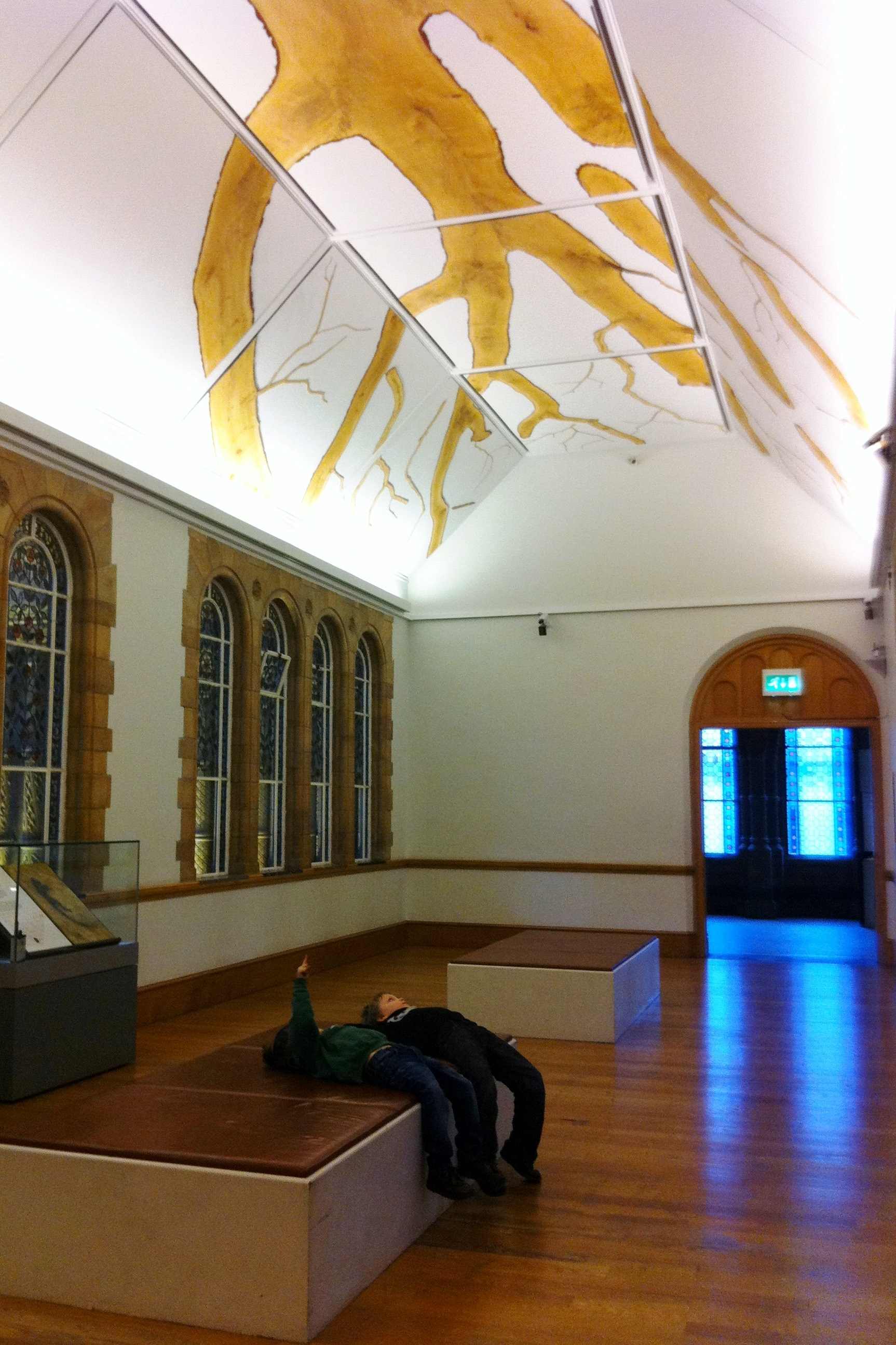
Before concluding I will just mention one of the book's essays as it's by an artist I'm surprised I haven't mentioned here before, Tania Kovats. I remember going to see her Darwin-inspired artwork TREE at the Natural History Museum back in 2011 (see photo below!) For Sussex Waters in this exhibition she installed bottles of water taken from the county's rivers. The idea of collecting and exhibiting water samples isn't new - Roni Horn's Library of Water in Iceland is more dramatic and directly addresses climate change in preserving glacial meltwater. But if you come from Sussex, the list of rivers Kovats visited is evocative in itself. They have some beautiful, resonant names - Cuckmere of course, and Cowfold, Woodsmill, Adur, Arun, Rother, Uck, Ouse. Glynde evokes an image of well-healed highbrow culture, Gatwick Stream a remnant of a landscape built over for a 'London' airport. There are quite a few I've never heard of but would like to visit. As she says, 'even naming rivers opens us up to connection.'

Sunday, April 16, 2023

A landscape submerged

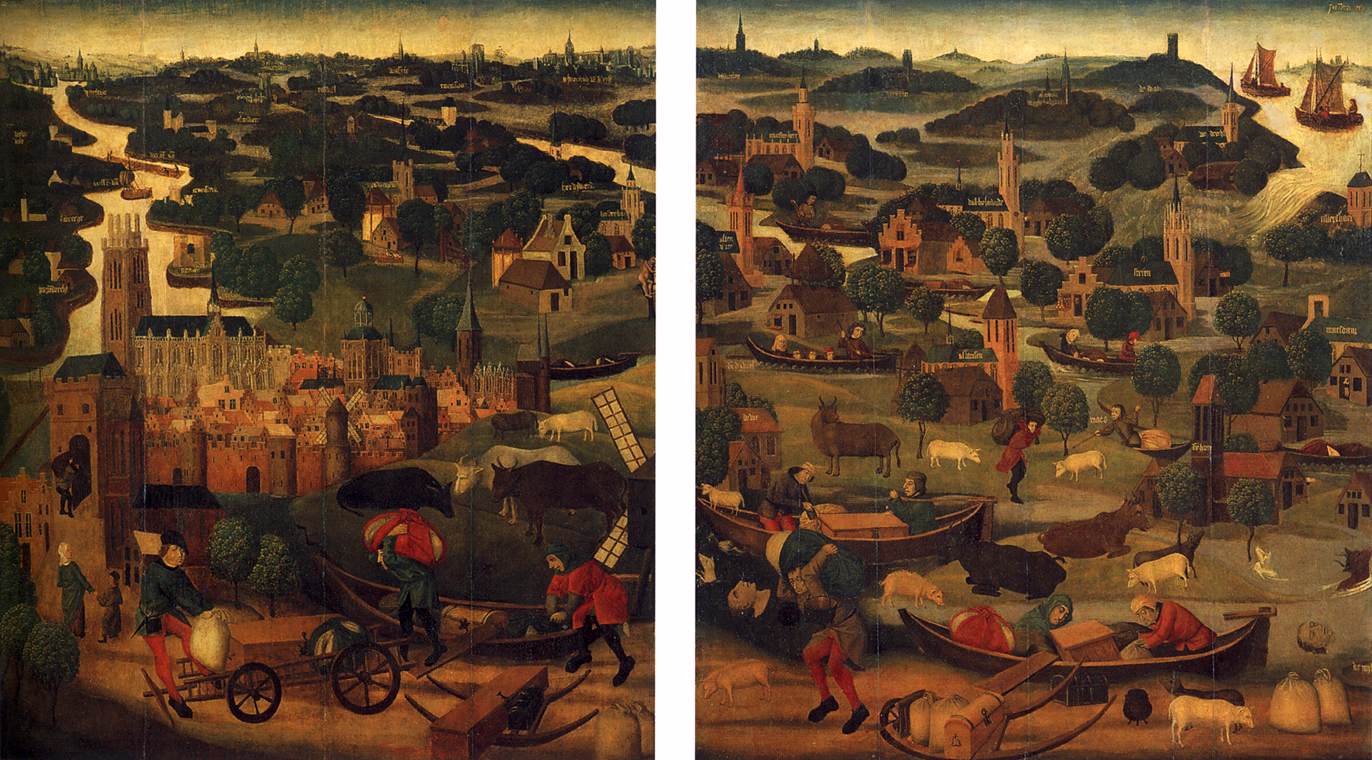
The St. Elizabeth's Day Flood, c. 1490-95


During the night of 19 November 1421 a heavy storm caused rivers to surge, dikes to overflow and large areas of polder land in Zeeland and Holland to be flooded. Thousands died. Some land was eventually reclaimed, some remains flooded to this day. The Dordrecht region was particularly damaged and the survivors commissioned an altarpiece, with outer panels depicting the disaster. As you can see from the close up below, the painting includes lots of interesting details. At the bottom right a woman in Maasdam has been left behind and looks out on the devastation from her cottage. A shop is ignored by a couple in a boat as they concentrate on saving themselves. And in the top right the flood water can be seen flooding the polder near the church of Wieldrecht. Elsewhere in the paintings there is a pig trying to swim ashore, a dead body in the water, a naked man caught in a tree, a cat balanced on a baby's cradle and a refugee arriving at the gates of Dordrecht. 


I saw these panels in the Stedelijk Museum recently after we'd been to the Vermeer exhibition. They have a guide to the picture that you can pick up and refer to - the image below is from this, showing the location of some of the villages. It indicates how the artist has created an interesting kind of landscape painting, expansive and extremely condensed at the same time, utilising a birds eye view, reducing distances and restricting places to just one or two buildings. Hollands Diep in the middle was an estuary which the flood extended further inland, separating the towns of Geertruidenberg and Dordrecht. The Biesboch is now a wetland national park, but before the flood it was Grote Hollandse Waard, cultivated farmland with several villages. We are quite used to seeing images of flooded landscapes now but I found it moving to think that all this took place six hundred years ago.


Sunday, April 09, 2023

Tidmarsh Mill


Dora Carrington, Tidmarsh Mill, c. 1918


I recently read the new Frances Spalding book The Real and the Romantic: English Art Between Two World Wars. This painting is included in the chapter 'Landscape and Places of the Mind' which mainly discussed the Nash brothers. Paul was at the Slade with Carrington and John became her close friend. 'He taught her wood engraving and she shared with him her enjoyment of authors such as Gilbert White, William Cobbett and Richard Jefferies.' Tidmarsh Mill was influenced by Carrington's love of the Pre-Raphaelites. Spalding praises another painting from 1921 and suggests 'Carrington might have achieved further success with the painting of landscape had her personal life been less fraught and her artistic interests less diverse.' Interesting, although I've always liked the Tate's Spanish Landscape with Mountains (c. 1924), which Spalding doesn't mention, one of two paintings completed at Tidmarsh Mill but begun in Spain

In a survey like the Real and the Romantic it's always fascinating to see who gets included and who doesn't. She mentions for example that Eric Ravilious's 'reputation has soared' - he was completely ignored in Charles Harrison's 1981 book English Art and Modernism 1900-1939'. Her chapter 'Landscape and Places of the Mind' begins with realist street scenes painted by the East London Group. These paintings have started drawing attention recently for the way they capture a city that has undergone huge changes since the war - she cites the recent book by Spitalfields blogger The Gentle Author.  Spalding says 'actual talent within the group was uneven' but reproduces a nice painting by Elwin Hawthorne, Cumberland Market (1931), and suggests that empty scenes by artists like Harold Steggles have an Edward Hopperish quality.

Other landscape art covered in The Real and the Romantic:

  • Chapter 1, 'Pitiless Realism' - she includes the familiar blasted visions of mud, and broken trees by John and Paul Nash, but also praises another striking First World War scene by D. Y. Cameron, The Battlefield of Ypres (1919), empty and partially covered in snow.
  • Chapter 3, 'On the Move' - 'few landscape artists settled long enough to imbibe the spirit of a place.' Scenes painted on their travels by Charles Cundell, Matthew Smith and David Bomberg are discussed. She also covers depictions of travel itself, like Eric Ravilious's Train Landscape (1940).
  • Chapter 5, 'Beginning Again' - among other things this covers Ben Nicholson's move towards abstraction and reproduces a couple of his semi-abstract views of Italy and St. Ives.


Winifred Knights, Edge of Abruzzi: Boat with Three People on a Lake, 1924-30   
 
  • Chapter 8, 'Make it Real' - a chapter arguing that qualities like stillness and clarity were as much a part of Modernism as the impetus to 'make it new'. Winifred Knights' painting exemplifies this. Spalding also discusses Evelyn Dunbar, Tristram Hillier and the etcher F. L. Griggs. The chapter ends with another aspect of 'the real', Alfred Wallis's fishing scenes drawing on his own lived experiences.  

  • Chapter 9, 'Revivalism' - the artists returned to for inspiration in this period included Canaletto (Algernon Newton's paintings, which look as if they were done in the late eighteenth century), Samuel Palmer (Graham Sutherland), and the English watercolourists (Eric Ravilious).  
  • Chapter 12, 'The Spanish Civil War, Mondrian in London and Neo-Romanticism' - this final chapter gives a sense of the 'multiplicity of styles' being pursued in the late thirties. She discusses John Piper's move away from abstraction and reproduces Graham Bell's Thomasen Park, Bolton, a misty view of the city painted at the urging of anthropologist Tom Harrison. Neo-Romanticism is briefly covered but the cut-off means we only get to see an early drawing by John Minton.

Sunday, January 22, 2023

House near Gardanne

Paul Cézanne, Montagne Sainte-Victoire, c. 1890

This is a photo I took on my phone of a painting in the Tate's superb Cézanne exhibition. I won't attempt to discuss this exhibition (you can read Laura Cumming); instead I will talk about T. J. Clark's book about the artist, If These Apples Should Fall: Cézanne and the Present which I recently read. I thought I might try to distil here some of what he says about the landscape paintings, although as ArtForum's reviewer Joseph Henry points out in his review, the book 'confirms that Clark should rarely be read for his “takeaways” or “arguments.” ... What drives If Apples Should Fall is less the task of scholarly exposition than the swelling momentum of interpretation itself.' Condensing down the flow of his prose, written in 'a tone both chatty and always-already erudite', risks leaving nothing but the most familiar observation about landscape painting - that it is both an image of the world and a performance of marks on canvas. Nevertheless I'll briefly summarise some of the paragraphs from the book's concluding chapter, which mainly discusses a painting in Indianapolis, House near Gardanne.


Paul Cézanne, House near Gardanne, c. 1886-90

Clark begins by noting that the painting is not large but its landscape has 'a formidable implied scale ... The ordinariness of the house and surroundings is accompanied by a kind of distance.' In Cézanne at his strongest 'nearness and apartness' coexist.

He then starts looking closely at some of the oddities in the painting - the kind of thing we always find in Cézanne. But none of this 'ends up robbing us of 'world' and putting 'painting' in its place'.  

Next he goes back into art history to contrast a Ruysdael landscape, where the viewer is invited to follow a path into the scene, with a more depthless image by Rembrandt. Cézanne's painting resembles the latter. His house fits into the landscape 'like a piece in a jigsaw, not a thing on the earth'. 

House near Gardanne is an example of a kind of picture that seems 'to be interested in the world, or not-quite-world, that crops up between places...' In this it resembles the Rembrandt (Goldweigher's Field) or the paintings of Jan van Goyen. The scene is not empty - it is packed with things, but the viewer can be left mystified as to why this particular stretch of nature's continuum was chosen.

Clark then returns again to a close examination of the marks making up the house, which stands out as an intervention in nature but at the same time seems porous at its edges, opening into its surroundings. That house is itself like a painting, both closed and open to the world.

Finally he shifts to a painting of Montagne Sainte-Victoire and finds in it a counter-allegory to House near Gardanne. 'The mountain is the picture, not the four-square house. And the picture, it follows, is not a closed thing', it is 'the world we are in.'

Friday, December 02, 2022

Autumn is the End


Today I found myself lying in bed with a cold, listening to an old album by Steven R. Smith, Autumn is the End (1998). The record label describes this as 'an instrumental soundtrack for more introspective moments, when time seems to wind itself down, and one gains opportunity for perspective on the landscape.' Smith was one of the Californian Jewelled Antler collective of musician/artists who often recorded outdoors and drew inspiration from nature. Last year Aquarium Drunkard had a feature by Brent Sirota on Jewelled Antler, which was originally a CD-R label founded by Loren Chasse and Glenn Donaldson. It begins a list of recommended listens with Thuja's The Deer Lay Down Their Bones (1999):

'Virtually all roads in Jewelled Antler run through Thuja. Loren Chasse and Glenn Donaldson originally founded the label with an eye toward releasing material by the quartet they had just formed with Steven R. Smith and Rob Reger. And virtually every project in the broader scene shared at least one member with this core ensemble. Named for the great red cedars of the Pacific northwest, Thuja inaugurated much of the mythos of the Jewelled Antler. Appropriately, they borrowed the name of their astonishing debut from California writer Robinson Jeffers’ poem about encountering the decaying remains of a deer in a mountain clearing.'

This poem, 'The Deer Lay Down Their Bones', begins as follows: 

'I followed the narrow cliffside trail half way up the mountain
Above the deep river-canyon. There was a little cataract crossed the path, flinging itself
Over tree roots and rocks, shaking the jeweled fern-fronds, bright bubbling water
Pure from the mountain, but a bad smell came up...'

I'll include one more passage from that Aquarium Drunkard article (the log-with-lichen quote below actually comes from Jim Haynes' 2022 Wire magazine article on the Jewelled Antler Collective):

'Sound artist and teacher Loren Chasse once mused about “releasing a piece of log with lichen on it” as an album. It was a joke, but a telling one. Chasse’s work, especially under his Of (and later, Ov) moniker, revolves around playing the found world as an instrument. He once described his art as a search for “acoustical situations,” often around the frontiers where the built environment dramatically gives way to the natural one. Sometimes this amounts to an aural observation, like his “Green Laughter” on The Jewelled Antler Library, which documents the choir of frogs, birds and crickets and cicadas on a summer pond. But, more often, Chasse enlists his natural surroundings as an accompanist, playing alongside and through the tumbling brooks and the wind in the switchgrass.' 

Loren Chasse was maintaining his own website ten years ago which is worth a look if you're interested (few seem to bother with blogger any more!) As I'm not feeling up to writing anything here myself, I'll conclude this post with relevant quotes from three Pitchfork reviews:

  • On The Blithe Sons' We Walk the Young Earth (2003): 'Recorded last summer in a World War II-era bunker in the Marin Headlands and under a creek bridge in San Gregario, We Walked the Young Earth picks up where 2001's achingly ephemeral Waves of Grass left off. Here, however, the duo forges the din of acoustic guitar, harp, bells, harmonium, toy amplifiers, gongs (submerged in a creek), battery-powered keyboards, vocals, banjo, birds, pipes, bell-blocks, drums, and branches into even quieter spaces of beauty.'
  • On The Skygreen Leopards' One Thousand Bird Ceremony (2004 - the name and title come from the writings of Kenneth Patchen): 'Like much of Glenn Donaldson's other work, One Thousand Bird Ceremony starts off with ambient forestal noises, chirps, the acoustic peregrinations of other animals, and properly spare bells. While certainly making use of Jewelled Antler [tenets] such as recording without predetermined lyrics or chord changes, instead of droning psychedelia, The Skygreen Leopards create blissful pop songs interwoven with ambient hiss and naturally occurring sounds.'
  • On Thuja's Pine Cone Temples (2005): 'As with their previous works, Thuja have recorded these pieces in a variety of natural settings, using strategically placed contact mics to help integrate the tiniest audible details of their ambient surroundings into the group's gentle commotion. Theirs is a uniquely intuitive, egoless species of improvisation, as the musicians seem to be competing not for the listener's attention, but to see who can most thoroughly camouflage himself in the underbrush'.

And finally, fast forwarding to 2022, here's a video clip from Steven R. Smith's latest album, which offers a glimpse of spring...