Tuesday, August 25, 2026

Chalcedony hills and opal oceans


Years ago I read this attractive Pushkin Press paperback which, unusually for a 19th century novel, comes with no introduction or footnotes. The publisher's website provides a brief summary of this 'little known' 1864 novel by George Sand, translated by Sue Dyson: 

While working in a small geological museum, Alexis Hartz meets his cousin Laura, who has discovered a way to enter a geode. Travelling through a vast and glittering landscape of brilliant crystals, Alexis falls passionately in love with Laura. But when they return to the ordinary world, only friendship remains. He yearns for the perfect world of the crystals, and returning there becomes a perilous obsession. 

I am fascinated by the idea of crystal landscapes, maybe because J. G. Ballard's Crystal World was one of my favourite books as a teenager. Here I thought I would extract some sentences from an early part of the book describing what Alexis is shown by Laura, and provide some appropriate illustrations. 

I was with Laura in the centre of the amethyst geode which graced the glass case in the mineralogical gallery; but what up to then I had taken blindly and on the faith of others for a block of hollow flint, the size of a melon cut in half and lined inside with prismatic crystals of irregular size and groupings, was in reality a ring of tall mountains enclosing an immense basin filled with steep hills bristling with needles of violet quartz, the smallest of which might have exceeded the dome of St Peter's in Rome both in volume and in height. 


An amethyst Geode
Image: Wikimedia Commons - Osama Shukir Muhammed Amin FRCP(Glasg)

We were soon on the tallest summit of the great ice peak, which was in reality just a colossal prism of milky hyaline quartz, as was borne out, on a manageably small scale, by the geode which I held as a point of comparison, and just as Laura had declared to me; but what a grandiose sight came into view again from the very summit of the great white crystal! At our feet, the circle of amethyst, drowned in its own reflections, was now only a small element of the picture, agreeable because of the melancholy sweetness of its lilac tints, the elegance of its shapes contributing to the harmony of the whole. 

Hyaline Quartz
Image: Wikimedia Commons - Rama

"Further off, [Laura said,] you can see the valleys where amber-coloured chalcedony is rounded into powerful hills, while a chain of dark, glowing-red zirconium completes the illusion of a limitless blaze. The lake which half-reflects them at its edges, but whose centre presents a surface of slackly lapping waves, is made up of indeterminate shades of chalcedony, whose nebulous fleeciness reminds one of white horses on the sea when there is a steady breeze."

Chalcedony
Image: Wikimedia Commons - Koltovoi

"As for these masses of beryls and sapphires, a material whose rarity is so prized among us, they have no more importance here than God's other works. They stretch out to infinity in slender colonnades which you take perhaps for far-off forests, as I wager you take those slender, tender stems of green chalcedony to be thickets, and those crystalline efflorescences of pyromorphite for carpets of velvety moss caressing the edges of the many-coloured agate ravine..." 

Pyromorphite
Image: Wikimedia Commons - Koreller

"Let us go on a little, you shall explore the opal oceans where the sun, that blazing diamond whose creative power is unknown to me, plays in all the reflections of the rainbow. Do not linger on these islands of turquoise, further on are those of tender lazulite and of lapis, run through with veins of gold. Here is mad labradorite, the reflections from its facets by turns colourless and pearly, and aventurine with silver rain that displays its polished flanks, while the fires of red, warm almandine, whose praises were once sung by a seer called Hoffmann, are concentrated around the centre of its austere mountain. As for me, I love those humble rose gypsums forming long walls, piled on top of each other, right up to the skies, and those fluorites lightly tinted with the freshest colours, or then again those blocks of feldspar, which we call moonstone, because it has the smooth reflection of that heavenly body's rays..."


Labradorite
Image: Wikimedia Commons - Parent Géry

Monday, August 24, 2026

A Map of Some Landscapes


I recently added a Map of Blog Posts to this site, replacing the earlier ones which were were restricted in what they could show. You can see the link above if you're reading this on the web version, or just click here. The map allows you to zoom in and out and alight on a pin to see the title of the post, along with date, location, labels and a link that will take you to it. It's interesting to see the distribution of what I have written about over the years - mostly Europe, America and the Far East, very little in Africa... I should try to fill some of those blanks on the map! There is a search function that covers the information on each pin. In the example below I've entered "mountain" and, because each post relating to mountains has a 'mountains' label, these all show up - lots in China and the Alps. You can also enter the names of people where I have labels for them, e.g. Turner. One caveat with all this is that each blog post can only have one location. In my last post for example I went for Isla Perejil, but might have opted for Gozo or Dakhla. And some of my posts, on imaginary landscapes, have no location at all. 


Sunday, August 16, 2026

The island of Calypso

periplum, not as land looks on a map
but as sea bord seen by men sailing.

Ezra Pound, Canto LIX 


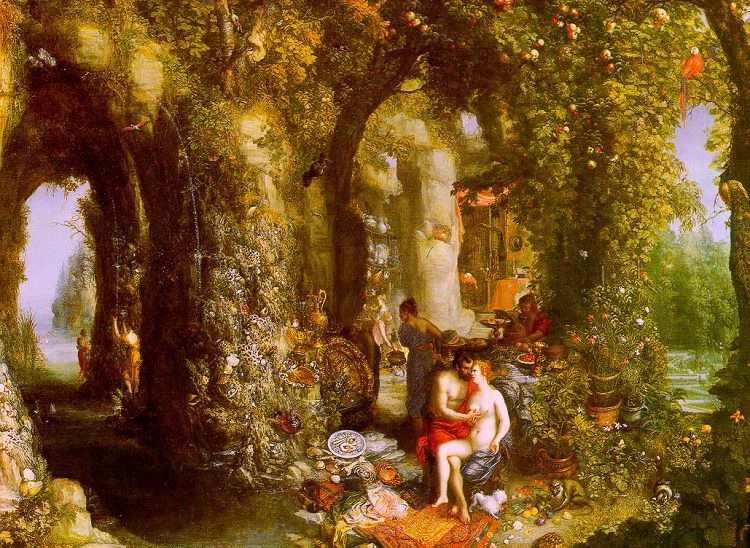
We went to see Christopher Nolan's The Odyssey. What did I think of it? I agree with what translator Daniel Mendelsohn wrote in the New York Review of Books and I recommend reading his essayEmily Wilson's scathing LRB review was entertaining but had me wincing from that second paragraph, where the recurrent themes he has explored in his films are brutally dismissed ("yet again... yet again"). In The Guardian I noticed a 4 star review of Richard E Grant’s Very Modern Odyssey and thought this might be fun, but I should have read more carefully before trying to watch it. He is a National Treasure of course and beyond criticism, but... I'll just say that this series, sponsored by P&O cruises, wasn't really really my thing. In what I saw of the first episode he was on Gozo, looking at Calypso's cave, a site associated with her mythical island, Ogygia, since the 4th century BCE. Christopher Nolan actually filmed at the cave on Gozo, but for the beach scenes (above) he chose a saltwater lagoon near Dakhla in the Western Sahara. The reasons why this has been so controversial are set out in a Guardian article by Mohamed Sleiman Labat.    

The Paris Review has an extract online from Daniel Mendelsohn's translation of The Odyssey Book V, describing the landscape seen by Hermes after he arrives on the island, after crossing the seas and skimming along the breakers. He finds 'the nymph of the beautiful braids' by an enormous fire and the aroma of cedar and juniper 

Drifted all over the isle while she lifted her lovely voice
In song and wove back and forth at her loom with a golden shuttle.
A luxuriant growth of trees spread out all around the cave,
Alder and black poplar and sweet-smelling cypress as well,
And the birds inside them were sleeping, their wings outstretched,
Little horned owls and hawks, as well as cormorants,
Their chattering tongues stretched out—birds who work the sea.
Round about the mouth of the hollow cave, a vine
Had been trained to climb; now it flourished, bursting with clusters of grapes.
Four springs, all in a row, flowed with the clearest water,
Their streams running side by side, then turning this way and that.
All around were velvety meadows where violets and bay grass were growing Lushly.
Even a god who chanced upon this scene
Would marvel at the sight, pleasure filling his mind.


Jan Brueghel the Elder, Odysseus and Calypso in the caves of Ogygia, 1606-9

Gozo is far from being the only contenders for Calypso's island - Greece, for example, currently favours Othonoi which has another picturesque cave that tourists can visit. Many writers since Strabo and Plutarch have pronounced on the subject and the great French Homer scholar Victor Bérard (1864-1931) decided it was Perejil, an islet off the coast of Morocco (the country now occupying Western Sahara). Perejil, owned by Spain, is near Ceuta, scene of the recent mass migrant crossings and there was nearly a conflict there in 2002 when Moroccan troops turned up. These tensions were very much there when Bérard was trying to find Ogygia. 'General Alfau, who commands the Spanish troops in the Western Rif and resides in Ceuta, had written to our consul in Gibraltar stating that he would support our search for Calypso with all the means at his disposal; thanks to him, after ten years of anxiety and doubt, I have seen all my hopes confirmed...' I read this in the four-volume account of his travels round the Mediterranean that Bérard published in 1927-1929. You can see below my photograph of the map he made of The Odyssey, and in other volumes his illustrations of Ithaca and 'Le Royaume de Calypso' - Ile Peregil. Bérard managed to overcome the fact that Perejil doesn't have the crucial four springs by noting that there were some on the mainland, just across a short stretch of water. It doesn't sound very convincing to me, but when Bérard was in the cave on Perejil he received a Homeric sign - a little owl actually fell on his head. 


Before these travels Bérard had advanced a new theory that The Odyssey is based on Phoenician trade routes, as set out in periploi, the lists of ports and navigation marks compiled by ancient sailors. 'Tout périple est un chapelet de noms propres. Notre poème est une galerie de personnages. Ce sont les noms du périple qui sont devenus les personnages du poème.' Names become people, so Calypso, for example, would have been the personification of a geographical name on a periplus. The poem represents the transformation of a static list of sites into dynamic human actions that form a story. Perhaps therefore, in one sense, The Odyssey can be seen as a kind of landscape writing. 

All this brings us back to Ezra Pound, whom I quoted at the start. Pound read Bérard in 1930 and mentioned the 'periplum' (spelling it with an 'm') in The ABC of Reading (1934). In his Cantos, the form of a reader's journey emerges from information encountered along the way, like islands in the Mediterranean.

Victor Bérard discovered that the geography of The Odyssey, grotesque when referred to a map, was minutely accurate according to the Phoenician voyagers' periploi. The image of successive discoveries breaking upon the consciousness of the voyager is one of Pound's central themes of the New Learning ... The periplum, the voyage of discovery among facts, whose tool is the ideogram, is everywhere contrasted with the conventions and artificialities of the bird's eye view afforded by the map. Forms grow out of data. They are not imposed upon data.' 

- Hugh Kenner, The Poetry of Ezra Pound (1951)

Friday, August 14, 2026

The gem of the skies in a summer season

Phoenix rising by the sun in the Aberdeen Bestiary
Source:
University of Notre Dame

It has been intensely hot again this week and I was listening on the news this morning to reports of fires in the Midlands. It made me think of these lines from 'The Phoenix', a 10th century Old English poem in the Exeter Book which expands upon an older Latin text.

When the gem of the skies
in a summer season, hottest with the sun, shines across the shadows
and performs its destiny, surveying the world,
then the bird’s house becomes heated by the glowing sky. 
The herbs are warmed, the house of desire steams 
with sweet fragrance, then in flames that bird burns
through the grip of the fire amid its nest.

Of course the poem has a hopeful theme, as the fire is not destructive - the phoenix regenerates. In her fascinating book about the Anglo-Saxon year, Winters in the World, Eleanor Parker links this self-immolation and rebirth to the seasonal cycle. The word used to describe the bird's nest is solere, borrowed from the Latin solarium, which in Old English meant 'an upper chamber in a house, a room that gets lots of sun. Not many Anglo-Saxon houses had upper rooms, so the phoenix is special in having this sunny chamber all to himself, up in his tree amid the feafsceade, 'shade of the leaves.'' This sound lovely, although I'm typing this now in the boiling upper room of our house, in the heat island of London, where there is no shade from any trees.

Eleanor Parker describes 'The Phoenix' as 'the most sun-drenched poem in the corpus of Anglo-Saxon literature', with 'some of the loveliest nature writing.' Its poet 'dwells with delight on scenes of blazing sunshine, leafy glades and cooling rivers.' Line 33 includes the word lixeð, which means 'glitters', and 'seems to evoke the flickering play of light in a tree-shaded grove, a dappled sunlight that shifts with the rustling of the leaves.' This quote from her book (p152) illustrates why I liked it so much - she takes fragments of natural description, often just words, and expands them into evocative landscapes. Another example is a few pages earlier, where she is talking about 'The Rhyming Poem'. This is narrated by a king or lord in 'a succession of swiftly changing pictures,' and includes this phrase: 'Ornamented horses / bore me across the meadows on paths of joy, / beautifully hung about with long branches.' She pictures him touching those long branches as he passes through the meadows, wongas, 'open green spaces, far-spreading plains and downs - the kind of landscape where a spirited horse with a fearless rider could really let himself go.'


Thursday, August 13, 2026

Prehistory from the Air


In the late 1930s comparisons were often made between new art and ancient landscapes. In British Art: Ancient Landscapes Sam Smiles cites an essay by John Piper which refers to the work of Ben Nicholson, Henry Moore, who 'has landed us back in the stomach of pre-history' and Paul Nash, who 'leaves us with the bare sea-washed bones of it.' A Barbara Hepworth catalogue compared her work to menhirs and in an article about her work in Circle, the journal that promoted 'constructive art', she included photographs of Stonehenge. One of these images was taken by Carola Giedio-Wecker, who had recently written a study of contemporary sculpture featuring Stonehenge, the Table des Marchands and the stone alignments of Carnac. Perhaps the best frequently cited example of this is 'Prehistory from the Air', the article Piper wrote for the Winter 1937 edition of Axis, edited by Myfanwy Evans (his new wife). This can be read online, so I thought I'd quote from it here, beginning with his thoughts on flight and landscape art: 

Because flying has not created any new consciousness about spaces or vistas or anything else, it has simply served the new consciousness, and has been forced on in its development by it. It has grown up with it in fact, which is the only reasonable way for an invention to work. So the horizon line vanishes, from the air. It has also vanished (nearly) from painting. Instead of being the end-all of landscape, it is now there on sufferance. It is not really strange that air photography began in the '80's, and that about the '80's the horizon in landscapes (with Courbet or Cézanne) was getting much less conscious of itself—no more self-conscious than the foreground, or the background, or the middle distance, ail of which were becoming parts of the same consistent parcel. For contrast, think of Claude's skyline castles in the scenery of his wonderful natural theatre. At its simplest, the change is one from elevations to plan. The picture has tipped over backwards on to the floor, and in being raised again it has brought part of the floor with it. Picasso, Braque, Klee, Matisse have painted elevations of wineglasses, gardens and windows at Nice which have the added richness and meaning of plan-patterns.

Piper's essay is followed by a colour reproduction of a Miró painting and in the composite image above I've juxtaposed it with what he put on the previous page, two images of Silbury Hill - very different but equally interesting. The top one is from William Stukeley 1724 publication Stonehenge and Avebury

Stukeley, above all, wanted to record the effort and the feeling for shape of the men who built it. Size and contour are all-important. The story of the size is well told, and as to the shape to jump, run, walk, or struggle up each slope with Stukeley in his drawing is as real and as sharp an experience as to take a journey round a wineglass with Picasso. The air-photograph is flat and subtle. The effect of suddenness that the mound gives in the plain, and the sense of size that the surroundings try to contradict, is as strong as that of ail Stukeley's fold-explorations. Both these representations of Silbury Hill are beautiful—and together they give a very fair idea of this large and curious mound— but so different that it is hard to realise that each gives a reasonable account of the same monument.

Piper doesn't talk about that Miró painting, but the Spanish artist does feature in a later article in this issue of AxisAnthony West's 'No Revolution.' In talking about abstract art he mentions an early painting done in a vary different style.

Hemingway writes about Miró's picture, The Farm,"It has in it all that you feel about Spain when you are there and ail that you feel when you are away and cannot go there." Perhaps it was possible to give this reading to the picture and to think about happy days in the sun instead of looking at the picture. Perhaps Miró thought so too, for his paintings are no longer like postcards to hold in your hand while you think about the days when you were younger. It is the design in his mind not the memory in yours which he wants to express.  


Joan Miró, The Farm, 1921-22

It is always fascinating to leaf through an old journal or magazine (if I can say 'leaf through' about an online PDF) and here it was impossible not to be drawn to a review by the artist Robert Medley of Hitler's degenerate art show in Munich. Medley found modern paintings by Klee and Kandinsky had been badly hung, without frames, and packed in with second-rate work. Meanwhile, the Approved Art show nearby was full of pictures of Hitler, all hung in a line, along with 'boys and maidens beating drums and waving banners. Gigantic sculptures of nude men striding forward, the artist taking so much care that they should not look pansy that they ceased to be men at all— symbolism had made them inhuman. Pictures telling you what a fine thing war is...' There were also more unassuming paintings, but these were monotonous. 'I had the impression of a number of artists pleased to work quietly, with their minds relieved from having to cope with modem aesthetic or social problems. ... I was pleased to leave.'

Monday, August 10, 2026

Musashi Plain


Utagawa Hiroshige, Musashi Plain, from the series Thirty-six Views of Mount Fuji, 1852 

I have been reading A Tale Unasked, Penguin's new Meredith McKinney translation of Lady Nijō's Towazugatari, a court and travel diary completed around 1307. After her expulsion from the palace she became an itinerant nun, travelling to famous shrines and checking out utamakura on the way. I have discussed utamakura, places important in Japanese poetry, before (see, for example, my 2008 post on Mount Fuji seen from the Beach at Tago). I enjoyed the following passage but then turned to one of the most depressing endnotes I have read recently, which I've added below in brackets. 

The eighth month had begun. A desire to wait until I could see the famous autumn scenery of Musashino had kept me here all this time, and I now decided to return that way. The temple of Asakusa was said to have a miraculous Eleven-Headed Bodhisattva Kannon which I longed to see, and I made my way towards it across a wide plain swathed in a dense growth of Musashino's famous bush clover, together with valerian, silver-grass and mugwort, all of a height that could be judged by the fact that even a man on horseback was invisible in its midst. For three days I pressed on through it all and still there was no end. Little side roads led off to the occasional inn, but the plain stretched on far and wide behind and before me as I went. The Kannon temple was on a low rise in the midst of the treeless plain, and I thought of that poem about Musashino that goes, 'as from the grassy moor / the moon emerges', for indeed this was the night of the full harvest moon. 

[The plain of Musashino, famous in poetry for its bush clover, is where Tokyo now stands]

Edo Period gold leaf folding screen showing Musashino

The transience of famous places and landscapes over the centuries is a melancholy but fascinating topic. I was reminded here of another endnote I wrote about a few years ago, explaining that Altinum, the subject of a Martial epigram, was later sacked and ruined, although its survivors' descendants would eventually found the city of Venice. Musahino doesn't sound is pleasing as Venice - it is described on Wikipedia as 'a city located in the western portion of the Tokyo Metropolis.' When was writing, Tokyo had not yet grown out of Edo, and Edo was still just the home of a samurai clan that had only recently been founded. 

I think the poem Nijō is referring to is in the Eighth Imperial Anthology, the Shinkokinshū, composed by Fujiwara no Yoshitsune. But the most famous literary reference to Musashino is in the Tales of Ise (c. 900), a book I featured here in 2019. In episode 12 a man flees with a girl and hides in a thicket on the plain. Their pursuers are about to set the grass on fire when the girl cries out 'Please don't burn / don't burn, the grasses / of the Musashi Plain. / My beloved hides here, / and I do too'. They are arrested and marched off together - we don't learn their fate. The girl's poem is probably based on a folk song and also appears in the Kokinshū anthology, although there it's set in the Plain of Kasuga, which perhaps shows how arbitrarily stories attach themselves to landscapes. There is a wonderful depiction of this Tales of Ise scene by Kajita Hanko (1870-1917), which I came across on Edward Luper's site. As you can see, a whole landscape is suggested here through one colour, leaving mere glimpses of the lit torches and figures crouching in the grass.


Kajita Hanko, Musashino, 1903

In my last post I mentioned mitate-e parody prints, so I should briefly conclude here by mentioning Musashino (c. 1788-9), a triptych by Kitagawa Utamaro. Here the couple are a young samurai and geisha, while their pursuers are fashionably-dressed ladies carrying paper lanterns. They walk through pampas grass with an exaggeratedly large moon behind them, alluding to that famous moon of poetic tradition that Lady Nijō got to see.   

Tuesday, August 04, 2026

A Mirror Stand - The Autumn Moon

Utagawa Hiroshige, Views of Ōmi #3: Autumn Moon At Ishiyama Temple, 1834 

Twenty years ago I wrote here about the tradition of 'Eight Views' in Chinese and Japanese art, stemming from the original Eight Views of the Hsiao and Hsiang Rivers. The adoption of this theme in Japan was helped by the fact that only two of the eight actually mention places in China. As Haruo Shirane writes in Japan and the Culture of the Four Seasons (2012), this flexibility led 'artist, poet and audience to graft their own favourite domestic and local places onto them' - Edo, Kanazawa and most famously The Eight Views of Ōmi (Ōmi hakkei), which I listed in my earlier blog post. Here I'll be focusing on one of these, the Autumn Moon at Ishiyama, for which Hiroshige designed a lovely print in 1834, where the southern end of Lake Biwa shimmers behind the hillside. 

Views of Ōmi became so well known that by the eighteenth century it was possible to parody them. Suzuki Harunobu's 1766 Zashiki Hakkei, Eight Parlour Views, were domestic versions of the eight landscapes, with the Autumn Moon at Ishiyama transformed into a Mirror Stand. The Art Institute of Chicago has a copy and you can see below how the shape of a crescent moon appears as a result of the way the mirror is held on its stand. Autumn is signified by the miscanthus grass blowing outside this lady's window. Shirane explains that this punning mitate technique 'creates a double vision, superimpopsing the exterior landscape ... onto the interior world of urban commoners in contemporary Edo'. The mirror reflects the beauty of the woman just as Lake Biwa reflects the light of the harvest moon.


Suzuki Harunobu, A Mirror Stand - The Autumn Moon, 1766

This is all very tasteful, but Suzuki Harunobu also produced erotic prints for private consumption... Again there is a version of the Autumn Moon at Ishiyama, in these Fashionable Eight Parlour Views (1769), and again the landscape has been turned into a woman and a mirror, but she is half naked and the figure behind here is a man, grasping and fondling her. The plant outside is now a flowering pink - a nadeshikothe word for which used to mean "the woman I love" in waka poetry. The mirror no longer resembles a crescent moon; instead it is the woman herself whos body is white as she emerges from her robes like parting clouds. Shirane explains a further pun in text that Harunobu included which refers to the pedestal unit, utena. This word can also mean 'calyx' and thus, metaphorically, female genitals. I don't normally refer readers to Wikipedia but if you are interested in all this it is well worth looking at their lengthy article on the Zashiki Hakkai, analysing each one and quoting Haruo Shirane.

Saturday, July 25, 2026

Lower Lake

Hurvin Anderson, Lower Lake, 2005

I've been twice now to the Tate's Hurvin Anderson exhibition - a refreshingly cool, air-conditioned experience on these recent hot days, even though many of his landscape paintings depict tropical vegetation and sunlit Caribbean beaches. In her catalogue essay, 'Home and the World: The Britishness of Hurvin Anderson's Diasporic Landscapes', Gillian Forrester lists British painters whose work Anderson admires: 'Michael Andrews, Francis Bacon, William Coldstream, John Constable, Peter Doig, David Hockney and Euan Uglow, but particularly Andrews. Over time he has absorbed the lessons their methods and preoccupations offer, but his constantly evolving practice is strikingly distinctive and seems unburdened by the freight of both predecessors and contemporaries.' For me the most obvious comparison is with Peter Doig, whose work I've discussed here several times before (including in 2008, when he had a major Tate retrospective). However, as Eddy Frankel points out in his Guardian review, Hurvin Anderson is 'unlike Peter Doig (also a serious painter of memory and the Caribbean)' because his work 'isn’t a purely emotional attempt to deal with the past; it’s a deeply political one, too. The Jamaican hotels Anderson paints were built for white guests, in a country founded on slavery and colonial exploitation.'

Hurvin Anderson, Maracas III, 2004

Gillian Forrester expands on this point in her essay and draws connections to the Romantic period's preoccupation with ruins, evident in the paintings of Constable and Turner. 

The adjective 'ruinate', meaning spoilt or irreparably damaged, was first used in sixteenth-century England, but became obsolete. The term was revived in Jamaica after emancipation, when it took on a new meaning: the process of nature taking over previously cultivated land. In his book Jamaica as it was, as it is, and as it may be (1835) Bernard Martin Senior, a retired military officer and owner of the Glenbirnie estate in Westmoreland, Jamaica, wrote of 'lands termed "ruinate" which means such as have been used till worn out, and then allowed to grow up in bushes and woods.' Senior optimistically argued that Jamaica could be revitalised as an agricultural and mercantile hub, but huge tracts of the country remained ruinate, and do so to this day.

Anderson saw evidence of this in 2017, when he visited Oracabessa: a 'large unfinished hotel complex, partially reclaimed by vegetation, which evoked to him an ancient abandoned palace. The photograph he took was the starting point for an ongoing series of paintings that - to borrow Bernard Martin Senior's formulation - encapsulate Jamaica 'as it was, as it is, and as it may be'. Oracabessa was a banana plantation and then a self-sufficient community for former slaves before it was ruined by hurricanes and floods. In the twentieth century redevelopment began and new properties arrived, including Ian Fleming's bungalow Goldeneye, which is now a luxury resort. Anderson though, 'prefers to look beyond Oracabessa's present reputation as a celebrity haunt, making it a focus for his profound meditations on Jamaica's longer history.'

Sunday, July 12, 2026

Deer Jump Lookout

Mrs Fox with her Stormy Landscapes

Here is a landscape painter I have never featured before, Mrs Fox. Her stormy landscapes (painted in miniature by Turlo Girffin) are in the Design Museum's Wes Anderson exhibition, which I visited recently with my son Torin, an art student and Wes aficionado. As you can see below, there were also miniature landscapes on a vending machine from Asteroid City, a film I didn't really enjoy despite all the care lavished on its sets. I particularly liked the idea of a vending machine designed to mix gin martinis with a twist, but this one selling Arid Plains real estate is a neat idea too. The desert landscapes were painted by David Meikle an artist from Salt Lake City whose website says he 'created the images that are seen on the “Welcome to Utah” billboards found at all major entry points to the state'. He looks a bit like a Wes Anderson character. His bio says he was 'inducted into the Highland High Hall of Fame in recognition of his success as an artist' and that he is happily married with six children and 'a crazy cat named Blue'. 

A couple of years ago we stayed a night at the Grand Hotel Pupp in Karlovy Vary (formerly Karlsbad) so that Torin could experience one of the main inspirations for Grand Budapest Hotel. Anderson liked the look of the Pupp but wanted something higher up - the hotel is in the valley, beside the Teplá River. So he combined its look with other buildings like the pink-painted Bristol Palace Hotel, which we also checked out, but didn't stay in. A small funicular in Karlovy Vary takes you up steep wooded slopes to a path from where you can find Deer Jump Lookout. I took a photograph of the statue there, silhouetted against the morning sun. You can see from the exhibition display below how Wes Anderson replicated it (on a grander scale) for the film's painted background scenery. A tourist website explains the history of this landmark. 'According to legend, a deer being hunted by Charles IV's entourage jumped from this rock cliff. The deer fell into a pool of hot water (today's Vřídlo), whose healing properties Charles IV himself tried out. He then ordered that the area around the spring be settled, which it was, and thus, according to legend, the Karlovy Vary spa was founded.'   


Although Wes Anderson visited Karlovy Vary and other useful locations like Budapest and Mariánské Lázně (once Marienbad), what he was really looking for was the atmosphere of old photochrom postcards in the Library of Congress collection. As he explains in an interview with Matt Zoller Seitz, 'in Karlovy Vary. there's a rock with a stag, Stag's Leap, which I first knew about from a 1908 photocrom picture of it. We made our own miniature version of this.' It is easy to find photocrom images online from the turn of the twentieth century that are 'accidentally Wes Anderson'. Some of them look like they have gone through the retro filters Instagram had when it first started. The photocrom process was invented in the 1880s by Hans Jakob Schmid, an employee of the venerable Swiss printing company Orell Gessner Füssli, and was used extensively for early colour postcards. A few years ago I included one of these - a view of Jena - in discussing a Gottfried Benn poem, and I think I should try to write more about them in future posts.      

Photocrom of the Grand Hotel Pupp, Karlsbad 1899

Sunday, June 28, 2026

Raw-boned hills

I just finished Richard Langston's superb new oral history of The Clean, In the Dreamlife You Need a Rubber Soul (I had a tear in my eye at the end). I always enjoy shoehorning into this blog stuff I like that really has nothing ostensibly to do with landscape art, and although I can't go off piste and discuss The Clean, I can quote this paragraph, which comes on p242, when they are about to record Modern Rock.

Dunedin is a city in an amphitheater of hills and harbour. It's compact, set close to nature, and a short drive from the city center is the Otago Peninsula, with the Pacific Ocean beating against its cliffs and headlands. There are seals, penguins and an albatross colony on the flanks of Taiaroa Head at the entrance to the harbour. It is a stretch of land that has inspired painters and poets and musicians - it generates a deep sense of nature and the spiritual that lingers like sea spray. One of New Zealand's leading painters of the twentieth century, Colin McCahon, painted its raw-boned hills and conical shapes in the 1940s and made them glow and pulse with an inner light. Robin White painted a portrait of the young poet Sam Hunt in singlet and gumboots, standing hands on hips in sunshine outside the pub at Portobello. It provided the setting for Martin Phillipps to walk through a ghostly grove of trees in the video for his song 'Pink Frost'. If you drive over the hill from Portobello and down onto a shingle road you come to Hoopers Inlet. As you head towards the coast there's a small community hall on your left, and this is where The Clean came to record their next album in the autumn of 1994. Out through the hall windows there's a view of toetoe and flax, bird life on the estuary and the bush-topped volcanic shape of Hereweka/Harbour Cone.

The Chills' 1984 'Pink Frost' video

Reading this I realised I knew nothing about Colin McCahon (1919-87), despite his importance in Aotearoa. I have never seen his work - the only exhibition I know of in London was way back in 1990 at the ICA, and I didn't go to it. More recent exhibitions like the Royal Academy's Oceania have featured Lisa Reihana and other contemporary artists with a focus on Maori culture but I don't imagine there's as much interest here now in McCahon's paintings. You can see some of them at the Dunedin Public Gallery website. One of the most interesting things about his paintings (for those of us keen on geography) is the way they were influenced by textbook illustrations. Learning this made me think of Geoffrey Hutchings, whose diagrams Colin Sackett used for his book The True Line. Here is a quote from an article about McCahon by Paul Stanley Ward:

Starting out as a landscape painter, McCahon’s bold representations sought to capture the majesty and difficult essence of the southern land. His take on the terrain was new; McCahon’s landscapes weren’t romantic, but pared back, primitive, almost abstract, seeking an underlying structure. As a wedding present he had received a copy of geologist G.A. Cotton’s The Geomorphology of New Zealand (3rd ed. 1942), a scientific text examining landscape forms and processes and illustrated with sketches, diagrams and photographs. Cotton’s diagrams ignored built features, trees and objects irrelevant to his scientific themes; he was attempting to strip the landscape to its geological basis. These precise drawings would inform McCahon in his efforts to find the landscape’s spiritual basis. 
The writer Sam Hunt, also mentioned in the quote above, is a poet of the road who refers to landscape as he passes through. He collaborated with The Clean's David Kilgour on an album called Falling Debris in 2009 and I'll end here by embedding one of these tracks, 'River Plateau Song.' 


Friday, June 19, 2026

The Epic of Everest

The Epic of Everest (1924) is an extraordinary landscape film - mainly shot in black and white but sometimes tinted in vivid colours, including pink, as you can see above. It was shot by John Noel, 'a soldier by profession but an artist in spirit', as Wade Johnson says in an excellent Sight & Sound essay He was heavily influenced by Herbert Ponting's footage of the equally ill-fated Antarctic expedition that was eventually turned into a film, The Great White Silence, which was also released in 1924. Both have beautiful shots of ice and snow and both now have soundtracks by Simon Fisher Turner. Noel also drew on the pioneering mountain photography of Vittorio Sella, whose work you can see at the extensive Fondazione Sella website.  

In my last post about Michael Snow, I talked about a new kind of camera installed on top of a mountain. The climax of The Epic of Everest is footage Noel took using a state of the art telephoto lens. Through this we watch George Mallory, Sandy Irvine and the others who helped their ascent as tiny black figures silhouetted against the snow, creeping up the North East ridge. While Snow deliberately excluded any human figures, Noel is desperate to spot them. But after two days the party returns, signalling from a distance with blankets in the shape of a cross that the expedition has ended in the climbers' deaths. The film’s final title card reads “if you had lived, as they had lived and died in the heart of nature, would you, yourself, wish for any better grave than a grave of pure white snow?” It is a noble idea, although in recent years these snows have been trodden by thousands of climbers and the remnants of their bodies have been identified on the mountain. 

A review of the BFI restoration noted that ‘modern viewers may squirm at the contrast between Noel's reverent approach to the mountain and his condescension toward the Tibetan locals.’ This is indeed what I felt when I watched it. And, as another article on the film notes, there is a shocking moment when an intertitle notes the death of two porters without providing their names (they were Darjeeling cobbler Manbahadur and Gurkha Lance Corporal Shamsherpun). The first performance of the The Epic of Everest, with Tibetan monks brought over to 'perform', set off a chain of events that influenced the history of Tibet. This 'Affair of the Dancing Lamas' has its own Wikipedia page where you can read the details. As Wade Johnson explains, the controversy ended up 'undercutting the reforms of the 13th Dalai Lama – reforms that no doubt would have placed Tibet in a much stronger position to cope politically and militarily with the Chinese invasion of 1950, which led to the death of an independent nation.'

Sunday, June 14, 2026

La Région Centrale


 Michael Snow, still from La Région Centrale, 1971

I thought I would focus here on a fascinating work of landscape art that I have only briefly referred to previously. In the late sixties, Michael Snow created three seminal 'camera motion' films which influenced later structural and minimal cinema. La Région Centrale was the third of these, made in the Canadian wilderness using a Camera Activating Machine (CAM) that an engineer, Pierre Abbeloos, built for him. This involved a camera mounted on a robotic arm and able to rotate through 360 degrees so that it could capture a total vision of the landscape. Five days' footage was edited down to a three hour film, which you can see on YouTube. I'll embed it below, although I realise these embedded links tend to disappear after a while.

In 'About Snow' (1979), published in October, the journal she co-founded, Annette Michelson quotes Kant's view that we measure everything in relation to ourselves, even cosmic space, and relates it to La Région Centrale. 

This film, in its circling, spiraling, rising, sweeping movements, crossing the distances between peaks, creating, in imperceptible loops through empty skies, reversals of direction which disorient the riveted spectator, seems to question, through kinetic counter-example and disorientation, the "ground" of the Kantian "view" which founds the modern sense of "place".

The absence of a 'cameraman' leaves the viewer free to identify with the camera itself. 'Snow's infinitely mobile framing, his mimesis of and gloss upon spatial exploration' provide a 'cinematic rendering of the grand metaphor of the transcendental subject.'

In a 1995 article for Parachute Thierry de Duve takes a different view. He disagrees with those, like Michelson, who have thought of the CAM as an ideal model of the Cartesian-Kantian subject, because the machine is not reflexive - it sees everything but itself. His article discusses Michael Snow's 'deictics of experience' - deictics being words that depend for their meaning on context (like 'I' and 'you'). Michael Snow is not the 'I' looking on this landscape. 'He is not the monk before the sea, or atop of the mountain'. What we see is not his experience. 'He has set the conditions of experience, but stopped short of its synthesis.' We as viewers are in a similar position to Snow, who says that while making the film "I only looked in the camera once." La Région Centrale is centripetal - 'the camera never reaches out into the landscape, it pulls the landscape towards the center.' Watching it we can't identify with the camera. As Snow said of one of his other films, "you aren't within it, it isn't within you, you're beside it."

La Région Centrale clearly offers rich material for theorists but also provided an ideal ending for Malcolm Andrews' fine book, Landscape and Western Art (1999). Snow's original 1969 proposal had positioned the project in art historical terms, as "a gigantic landscape film equal in terms of film to the great landscape paintings of Cézanne, Poussin, Corot, Monet, Matisse." But this would be something new in art, confusing the old stable coordinates of foreground and distance. Nevertheless, by filming on a Canadian mountain, Snow tapped into themes that, as Andrews says, have perennially haunted discussions of landscape in art: vanishing wilderness, the end of nature and representation of landscape as 'souvenir'. 

Over the last 500 years western landscape art has been like a barometer of anxieties over the balance of power between nature and culture. In the late twentieth century, we know that nature — that 'out there', that 'other' — is not necessarily perpetually self-renewing. It is more like ourselves than we ever feared. When it is not offering us dreams of green spaces as utopian as ever the most artificial pastoral managed to be, landscape art in our time comes burdened with guilt. 'I recorded the visit of some of our minds and bodies and machinery to a wild place,' wrote Snow, 'but I didn't colonise it, enslave it. I hardly even borrowed it'

Thursday, June 11, 2026

In the bright sunlight of a paradisal day

All at once I was standing, almost without being aware of it, on that other earth in the bright sunlight of a paradisal day. I was apparently standing on one of the islands which on our earth make up the Greek archipelago, or somewhere on the coast of the mainland adjoining that archipelago. Ah, it was all exactly as with us, but it seemed that everywhere glowed with a kind of festive air, some great sacred triumph finally achieved. The tender emerald sea lapped quietly against the shores, caressing them with a love which was obvious, palpable, almost conscious. Tall, beautiful trees stood clad in the full luxuriance of their blossom; their numberless leaves, I am convinced, greeted me with a low, caressing murmur, seeming to utter words of love. The grass sparkled with bright, sweet-smelling flowers. Flocks of birds flew across the skies, and, quite unafraid of me, perched on my shoulders and hands and gladly fluttered their dear little wings at me.  
- Fyodor Dostoevsky, 'The Dream of a Ridiculous Man' (1879), trans. Alan Myers

The protagonist of this story is ready to commit suicide when he falls asleep and dreams of being taken to another prelapsarian planet where people live in harmony - that is until he himself inadvertently introduces them to sin, war and technological progress. Eventually he begs them to crucify him, but they consider him mad.  

As the translator Alan Myers points out, this vision of utopia had already appeared in two of Dostoevsky's books, The Devils (aka The Possessed) and A Raw Youth. Philip Rahv discussed these in a 1972 New York Review article.

The first hint of this vision is contained in The Possessed, in Stavrogin’s dream of “a corner of the Greek archipelago as it was some three thousand years ago.” The dream derives from Stavrogin’s persistent memory of Claude Lorraine’s painting Acis and Galatea, which he had once seen in the Dresden museum and which he chooses to call “The Golden Age.” (According to his biographers, Dostoevsky had seen this picture several times and it made an indelible impression on him.) In Stavrogin’s version of the dream only the mythological past with its connotations of innocence and happiness is recalled, whereas in later works the past is displaced by the future. In a more elaborate form the vision is explored in A Raw Youth (1875). It receives further elaboration in “The Dream of a Ridiculous Man,” published two years later, in which the vision of a golden age is transposed to a distant star whose inhabitants live harmoniously in their human and natural environment, as men might some day live on our own planet. Finally, in The Brothers Karamazov a recapitulation of this dream of an earthly paradise is mockingly recited by the devil, Ivan’s alter ego and the product of his hallucination.     

I have written about this painting before, along with other work inspired by the myth. Here is how Helen Langdon describes the beautiful but transient scene Claude painted in her 1989 monograph on the artist. 

The lovers, in their insubstantial shelter, are unaware of the one-eyed giant Polyphemus, who, glimpsed on the rugged cliff before Mount Etna, laments his love for Galatea so loudly that 'the whole mountain and the waves below heard the pastoral strains'; later, inflamed with jealousy, he kills Acis with a great rock. Yet here Polyphemus is unstressed, and it is the landscape itself that conveys the swiftness of time and the frailty of love. The beauty of the sea and light echo the lovers' joy; and yet the stormy sky, encircling smoky Etna, foretells impending tragedy.  

Claude Lorrain, Landscape with Acis and Galatea, 1657

Monday, June 08, 2026

A yellow roughness in the land


Round Soria the land is dry and cold.
Over the hills, the barren ranges,
through green bits of meadow,
up the cindery peaks
the spring advances, leaving its small white daisies
scattered in the fragrant grasses. 
The earth is not reborn: the country dreams...

- from 'The Soria Country' by Antonio Machado, trans. Alan S. Trueblood

In 1909 the Spanish poet Antonio Machado (1875-1939), a leading figure in the Generation of '98, was offered a job teaching French in the old city of Soria in northeastern Spain. There he fell in love with Leonor, the young daughter of the owner of his boarding house (like the unfortunate Lars Hertervig, who I wrote about here earlier this year). They married and spent some time in Paris but she was suffering from tuberculosis and died in 1912. Machado had just published the collection Campos de Castilla featuring poems inspired by the landscape around Soria. He was so devastated by the loss of Leonor that he left Soria and never returned. 

I first encountered Machado via Charles Tomlinson, with Henry Gifford, made a small selection of translations, Castilian Ilexes, in 1963. Their book was named after a poem which compares ilexes to other kinds of tree and describes the regions of Spain in which they grow. A couple of poems in this book particularly appealed to me – ‘To José Maria Palacio’, with its vivid description of springtime, and ‘Novermber 1913’, with its final image of mountains ‘made of stone / of light.’ Castilian Ilexes also introduced me to Machado’s short, aphoristic, haiku-like poems, the ‘Proverbs and Canticles.’


Leonor and Antonio Machado

Henry Gifford's introduction to Castilian Ilexes explains that Machado carried with him to Soria memories of his childhood in Seville, a very different place with its fountains and lemon trees. But 

Soria replaced that vision by the mountains and stony fields, the ilexes and the silent figures in the Castilian solitude. It was Castile that had formed Spain, and here Machado could find a moral dignity born of endurance among the mountains. ... As Yvor Winters has written: 'in an empty place / I met the unmoved landscape face to face.' ... Machado did not go to the landscape like the townsman Rousseau: he sought there 'the countryman's emotion, essentially Georgic, for land that is worked'. ... There is little joy in this landscape, any more than in the Flintcomb-Ash where Tess grubbed swedes, chilled by the rain and buffeted by the wind. Machado like Hardy sees man as 'slighted and enduring': words that apply to the ilexes of Castile and by analogy to the Castilian peasant. 

In Alan S. Trueblood's Selected Poems there are two poems Machado wrote with the same title, 'Along the Duero', both describing walks beside the river that flows past the city. The first recounts the ascent of a hill and moves from a description of the landscape to a meditation on the river of Spanish history. The second begins by describing the humbleness of the river and 'a yellow roughness in the land / like the raw weave of country clothes', then observes the tiny farming plots with shoots of wheat and barley, above them 'rocks and still more rocks' and finally craggy spurs haunted by eagles. This is Castile: a place of woe, a seat of war. The sky begins to darken and Machado hears running water, the Duoro, 'lifestream of Castile, / cutting its way across cold barren plains'. The poem ends with a vision of permanence which is difficult to read now without thinking about the way global heating is affecting the climate of Spain.

Duero, your flowing waters still shall flow
as long as suns of May
melt winter snows and set them loose
through canyons and ravines,
as long as peaks stay capped
in snows and storms
and the sun's bugle flashes
through ashen cloud...

Wednesday, June 03, 2026

Saint Jerome in a Rocky Landscape


Joachim Patinir's workshop, Saint Jerome in a Rocky Landscape, c. 1515

The National Gallery's early landscape-related art is now in a Sainsbury Wing room called 'Looking at Nature: European Painting 1430-1540.' One of the works there is Saint Jerome in a Rocky Landscape, attributed to the workshop of Joachim Patinir. I've always loved looking into this - as Erika Langmuir wrote in the 1997 NG Companion Guide 'our eye travels to a hill town (more accurately a monastery complex), valleys, woods, mountains, fortresses, farm houses, fields, the sea, the high horizon, sky...' It is a whole world. And what we see now isn't even the whole picture - it was cut down from a larger original. Patinir and his workshop did several versions of Saint Jerome and the magnificent landscape at the end of this blog post is from one that is now owned by the Prado (this too was cut down). 
 
The historical record on Patinir is scant, although we do know Dürer admired his landscapes and attended his second wedding. The first monograph on him was written by Robert A. Koch and published in 1968. This includes an analysis (pp 17-19) of his 'world landscape' paintings, and from it I have extracted these ten characteristics. 

1. Distance and Scale
'In every Western landscape painting before the nineteenth century,' Koch writes, 'the illusion of distance was created in principle by the diminution of scale and a progressive loss of clarity; but Patinir is inclined to mock this law of aerial perspective until the eye of the spectator is close to the horizon line.' His example of this is the Met's St. Jerome triptych, shown below. Koch says Patinir 'permits us to scan the landscape as though through a telescope.' I remember visiting New York in 2008 and being amazed that you were now allowed to take photos in their museums, so I zoomed in and photographed lots of details visible in Patinir's painting. Sometimes 'the scale changes irrationally and abruptly' but Patinir was seemingly happy to do this 'in order to make his landscape more immediate and more exciting.' 

Joachim Patinir, The Penitence of Saint Jerome, c. 1515

2. Perspective
Patinir lavished attention on individual objects to make them as realistic as possible but the effect as a whole was clearly not 'realistic.' As an artist he sometimes resembled an architect or cartographer. 'In constructing his vast vistas of space, he was either disinterested in or unaware of scientific rules of perspective, which in any event would have availed him little in his conquest of landscape.' 

3. Foregrounds
The highly-detailed, sharply-focused plants, animals, rocks etc. in his foregrounds are designed to make the viewer feel connected to the picture space. He would sometimes put a tree there to help provide scale. Sometimes these were dead (symbolic) and sometimes they were lacking leaves, so as to leave gaps through which the landscape would be visible. 

4. Light and Shadow
'The lighting of the landscape is artificial and rather arbitrary in the nearer distances.' But while overall it 'tends to be flat, for the sake of over-all clarity, tree foliage and rocks are usually accented in light and shadow.' Few things in Patinir's landscapes cast shadows, and if they do they are rather weak ones.

5. Colour
Flemish painting deployed the formula of the 'three distances' - reddish brown in the foreground, green in the middle and then that beautiful blue for the distance, a colour I've talked about on this blog before. Patinir, though, went beyond this simple schema, using different colours to create transitions. 'The far distant blue permits little color play, though Patinir varies its intensity and may shade it to green or gray. Bright red may occur in its traditional role as the local color of the costume of a foreground figure, and touches of it may also spark the sky, or a distant earthly or infernal fire. The sky is usually shaded from a bright, creamy tone on the horizon through white and bluish white to a deep azure blue at the frame.' 

6. Sky
When it comes to weather effects, Patinir's skies usually contain 'white cumulus clouds, evoking the mood of a clear, late summer afternoon, the atmosphere cleared of dust by a recent rain.' The subject of the painting may require a change to this of course - Koch relates St. Jerome's 'dark night of the soul' to the blackness in the sky above him (see above), and the same can be said of other works like the Prado's The Temptations of Saint Anthony. 

7. Ground
Here we see 'overlapping folds of earth' with land either swelling from a darker shade to a bright summit or vice versa. 'In either case a contour line is created when dark and light meet, clarifying the earth mass.' 

8. Water
'From the trickle of a foreground stream to rivers that empty in the foreground or meander in the distance, from ponds and lakes to great bays, water is an important element of the Master's world landscape.' Koch notices that it is always 'smooth or gently rippled, but never angry', even when the religious stories being illustrated might suggest turbulent waters or rough waves. 

9. Trees
Patinir's 'compact, trimly rounded, distant trees' are produced with dots of paint that were referred to by the late sixteenth century artist-writer Karel Van Mander as getippelt. Koch doesn't translate this term but I see it implies light, quick steps (and hence a street prostitute in modern slang!) 

10. Rocks
Finally, rock formations are particularly memorable elements in all his landscapes and dominate the National Gallery's Saint Jerome. I've always thought of these as 'fantastical' but Koch believes Patinir was 'deeply affected by the noted landmarks along the Meuse River around Namur and Dinant: the Marche-les-Dames, a bright gray wall which rises precipitously from the river; the bluish limestone Rochers de Frènes; and the dramatic chimney-like Bayard Rock at Dinant. What appear to be melodramatic rock fantasies in Patinir's paintings are really constructions based upon his personal observation of nature.' 


Joachim Patinir, Landscape with Saint Jerome (detail), 1516-17