Wednesday, September 14, 2016

The open pit at Dannemora mine

We saw this tall clock a few weeks ago in Stockholm's Royal Palace.  It dates from the 1760s when ideal landscapes were painted onto all kinds of cabinets - there's no particular connection between the clock itself and the two views here.  Nearby though, in complete contrast, we saw something much more unusual: a mechanical landscape painting which actually incorporates a clock mechanism.  It wasn't possible to photograph without getting some confusing reflections but hopefully this gives you the idea.  It was made in Gothenburg in 1821 and signed 'J. G. Pettersson'.  Far from showing some dreamy Arcadian view, it depicts the Dannemora iron ore mine.


Sadly we didn't get to witness the movable elements of this painting in motion.  You can see one of these, the hoist used to bring up the ore, in the detail above.  This feature is also visible in a watercolour by Elias Martin (below), which was clearly the source for the painting.  Martin, Sweden's first prominent landscape painter, was best known for more Romantic landscapes.  Compare the two views and you will see that the clockmaker added a church as a new focal point, which gives the composition a slightly surreal quality. It contrasts with the black pit in the centre foreground, where we would normally wish to find a limpid pool or shady grove.  Perhaps it was put there to suggest the opposition of heaven and hell, or maybe it was there to strike a note of approval, blessing the labours of the miners and mine owners.  Dannemora mine was established in the Middle Ages and it is hard to imagine the countless hours of work that went into it, until eventually it was shut down in the early nineties.  Recently the mine was bought and reopened in a ceremony featuring King Carl XVI Gustaf but I see it has subsequently ceased operation again.
 
Elias Martin, The open pit at Dannemora, c. 1780-1800

This hybrid clock/painting made we imagine an alternative history for the cuckoo clock without the chalet or woodcutters or water wheels.   Each hour a bird would simply emerge from an attractive Black Forest scene to emit a melodious song.  A few examples of nineteenth century paintings with inbuilt clocks can be seen online, their faces placed where a sun or a flower might be.  You half expect them to start melting like the soft watches in Dalí's The Persistence of Memory.  Clocks within paintings were popular in Austria and Germany but rarely had moving parts. You can view one on Youtube though, in which two hammers beat on an anvil when the hour is struck.  It's a bit hard to make out what the figures in the foreground are doing - is there some nudity involved or is that my imagination?  Again the setting here is industrial - it must have been hard to imagine a clockwork mechanism without thinking of the machines used to channel and reshape nature.  For centuries artists have found ways to convey the diurnal cycle or capture a fleeting instant, but painting, fundamentally, is not a time-based medium.  A clock measures out the hours, a landscape painting should be timeless.  

Sunday, September 11, 2016

Bus de la Lum

In 'The Eeriness of the English Landscape' Robert Macfarlane wrote about a growing interest in landscape and the uncanny, with recent books, music and art all exploring places that seem to hide dark secrets.  But if, as he says, this relates to our anxieties about conflict and globalisation it would not be surprising to see non-English artists in other countries pursuing a similar path. In Italy, for example, there is Nico Vascellari, punk musician and visual artist (Macfarlane describes the field as 'a mutated cultural terrain that includes the weird and the punk').  Studio International's description of Vascellari's imagery reminds me of some of the artists referred to by Macfarlane, recent work by Richard Skelton for example: it 'draws on archaic folkloric traditions and animism. He layers both the chaotic and destructive elements of nature with their lush, more abundant counterparts. His pieces suggest or incorporate pelts, leaves, bones, animal parts, rocks, plants and fruits. Items may be charred or distorted, evoking the burning votive figures of his region’s enduring archaic folk rituals.'
 

I was in Manchester this week and visited The Whitworth where Vascellari has installed a forest of screens and projections based on an eerie landscape he knew as a child.  Here's the gallery's summary:
'Bus de la Lum (which means ‘hole of light’) is a natural cavity located in woodland of the Cansiglio plateau. Shrouded in mystery, the void emits a strange light that has long been associated with magic and satanic legend. During World War II it acquired a less mythical but equally terrifying reputation as a death pit for hundreds of prisoners and casualties of war.  Vascellari also connects us to another place, Darvaza (‘Door to Hell’) a vast, burning crater in the desert of Turkmenistan. The stories of these two magical places are interwoven by light, shadow and an extraordinary soundtrack created in collaboration with Turkish-born musician Ghédalia Tazartès.'
I had not heard of either of these places before and looking further into their history it is not hard to see why they might exert a dark fascination.  Bus de la Lum, a limestone sinkhole, may have gained its reputation for emitting fire from the vapour coming off the carcasses of dead animals thrown into the pit.  According to Vascellari, the people living outside the forest 'would see these flames and fantasise that a witch was living inside that hole and burning kids.'  In the Second World War it was the partisans rather than the fascists who pushed people to their death in this pit: civilians as well as German and Italian soldiers were killed - exactly how many is not known.  As for Darvaza, I have embedded a clip of it from Youtube below. Here's what Vascellari told Studio International about it.
'Around 40 years ago, they were drilling to look for gases and, all of a sudden, the ground under the drill collapsed, creating a large hole. And the gas that was coming out of the ground was found to be poisonous. They didn’t know what to do about this, so some geologists were contacted who suggested burning those gases. They expected that, if there was a lot of gas, most likely it would have burned out in four or five days. The reality is that the fire is still burning 40 years later. The name Darvaza, in the local language, means gate of hell.'


Tuesday, August 30, 2016

The Black Place

'As soon as I saw it, that was my country.  I'd never seen anything like it before, but it fitted me exactly.  It's something that's in the air, it's just different.  The sky is different, the stars are different, the wind is different.'  Compare this to the passage I posted a week ago: Ingmar Bergman discovering Fårö ('this is your landscape, Bergman.  It corresponds to your internal imaginings of forms, proportions, colours, horizons, sounds, silences, lights and reflections.')  The artist this time is Georgia O'Keeffe and the place New Mexico.  She wrote about experiencing a physical connection: 'my skin feels close to the earth when I walk out into the red hills.'  It is tempting to contrast this bodily response with the more cerebral Bergman, but he included 'exertion, relaxation, breathing' in the attributes of his special landscape.  And of course the idea that O'Keeffe's art could be read reductively in terms of her own body has been comprehensively criticised in recent years.  The Guardian's preview of a retrospective here in London was headlined 'Flowers or vaginas? Georgia O’Keeffe Tate show to challenge sexual cliches.'

Alfred Stieglitz, Portrait of Georgia O'Keeffe, 1918
 Source: Wikimedia Commons

We had a good look round this exhibition at Tate Modern yesterday and got the sense of an artist engaged with New Mexico's indigenous inhabitants and culture as well as it's shapes and shadows, hard blue skies and extraordinary colours.  Olivia Laing wrote a great piece about O'Keeffe that describes her first experience of the place. 'Back in 1929 she had spent a summer in Taos with the painter Beck Strand. The pair were taken up by a community of powerfully independent women, among them Mabel Dodge Luhan, the formidable heiress and art patron, and the Hon Dorothy Brett, a stone-deaf Englishwoman who carried a knife in her boots.'  It sounds fun, although O'Keeffe arrived in Taos too late to encounter D. H. Lawrence.  She did paint The Lawrence Tree (1929) though, with a viewpoint right up its trunk and into the night sky.  In Tate Magazine artist Lucy Stein writes of this painting that 'the mental image that this summons of two of the titans of nature-worshipping modernism having cosmic and sexy thoughts beneath this ancient pine is as intoxicating as the picture itself.'

I will conclude here with a longer quote from Olivia Laing on the New Mexico period (I would agree with what she says here of the potential strengths and weaknesses of these paintings).  O'Keeffe's work is in copyright but you can see the painting referred to on The Guardian site
“As you come to it over a hill, it looks like a mile of elephants – grey hills all about the same size with almost white sand at their feet,” O’Keeffe wrote of the Black Place, a remote landscape that inspired her more than any other location. The paintings she made there tip geological form over the threshold of abstraction: the serried hills smashed into shards of grey and puce, bifurcated by yolk-coloured cracks or spills of oily black.
'Hills like elephants sounds an echo of Hemingway, and there is something of his habits of compression at work in O’Keeffe, a desire to erase everything extraneous, to convey emotion without confessing it directly. She painted very flat, making surfaces so smooth she once compared the sensation to roller-skating. The risk is blandness, but it can also produce – The Black Place, 1943, say – cleanly assembled structures that quiver with unvoiced feeling.'

Sunday, August 28, 2016

The Stockholm Archipelago


This month we spent a week in and around Stockholm.  I took the photograph here from a boat, although we actually spent most of our time in the city rather than exploring the archipelago.  We saw summer houses along the shorelines and shiny white boats with healthy-looking active people on board, but sometimes it felt more like a vast park than the kind of landscape I'd imagined from Strindberg.  We probably needed to get further away, as the narrator says in this passage from Hjalmar Söderberg's brilliant novel Doctor Glas (1905).   In his view the Stockholm Archipelago is overrated...
'A mincemeat landscape, all chopped up.  Little islands, little waterways, little rocky knolls and wretched little trees.  A pale and poverty-stricken landscape, cold colours, mostly grey and blue, and yet not poor enough to have the grandeur of true desolation.  When I hear people praise the archipelago’s natural beauties I always suspect them of having quite other things in mind and on closer examination this suspicion is always confirmed.  One person thinks of the fresh air and fine bathing, another of his sailing boat, a third of the perch-fishing, yet for them all this falls under the rubric of natural beauty.  The other day I was talking to a young girl who was in love with the archipelago but, as our conversation proceeded, it transpired that in point of fact she was thinking of sunsets; possibly also of a student.  She forgot that the sun sets everywhere and that students are mobile.  I do not believe I am wholly insensitive to natural beauty, but for that I must go further afield, to Lake Vättern or Skåne, or else to the sea.  But I rarely have time, and within a radius of twenty or thirty miles of Stockholm I have never seen a landscape to compare with Stockholm itself – with Djurgården or Haga or the pavement overlooking the Stream, outside the Grand.'

The Grand Hotel, Stockholm, in 1901.
Source: Wikimedia Commons
The 'Stream' is Paul Britten Austin's translation of the Strøm, the waters of Saltsjön at the centre of Stockholm.

Tuesday, August 23, 2016

The rocks of Fårö

'My ties with Fårö have several origins.  The first was intuitive. This is your landscape, Bergman.  It corresponds to your internal imaginings of forms, proportions, colours, horizons, sounds, silences, lights and reflections.  Security is here.  Don't ask why. Explanations are clumsy rationalisations with hindsight. In, for instance, your profession you look for simplification, proportion, exertion, relaxation, breathing.  The Fårö landscape gives you a wealth of all that.'
- Ingmar Bergman in his autobiography The Magic Lantern (1987, trans. Joan Tate)
View from the Bergmancenter on Fårö

This notion of finding ones ideal landscape is an interesting one and prompts me to wonder what my own might be.  Bergman spent much of his life in theatres and the island of Fårö, with its rocks and trees and open skies, seems at first to be a very different kind of space.  But as he says here, it suited his outlook on directing as well as the deeper need for a retreat which we often see in creative artists.  Bergman was only persuaded to visit Fårö in the first place when Svensk Filmindustri requested that he consider an alternative to Orkney as a setting for Through a Glass Darkly (1961).  He made three more films there, along with two documentaries about life on the island and the TV series Scenes From a Marriage (1973), which led to an upsurge in the Swedish divorce rate and was apparently an inspiration for Dallas.
 
It might be thought that Bergman filmed more often on Fårö than he actually did because rocky coastal settings are so associated with his work.  In a post I wrote just after he died I referred to the chess game on the beach in The Seventh Seal, but this was made four years before he had set foot on the island.  I was only able to quote a description of Fårö then; now I have been myself and walked, for example, the windswept shore at Langhammars, with its strange rock formations, that Bergman used for the final scene in Shame (1968).  In this the couple – Liv Ullman and Max Von Sidow - wait for a boat which they hope will take them and other refugees away from their war-torn country.  The film ends with them adrift in a grey featureless sea.

 
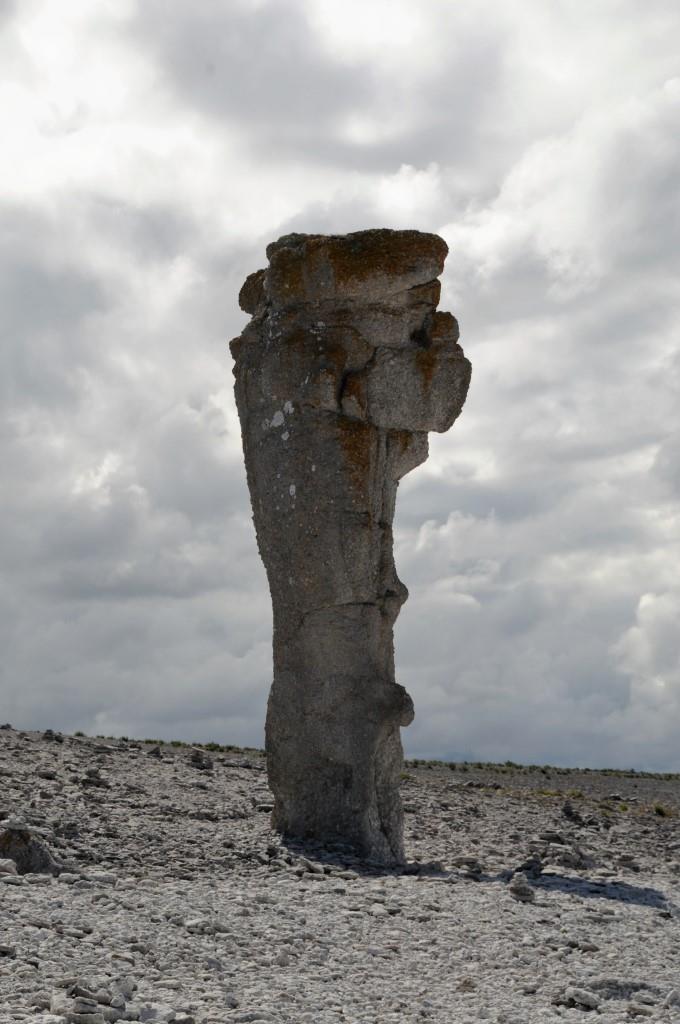
One of the limestone stacks ('rauks') at Langhammars

Perhaps another reason we associate Bergman so strongly with Fårö is the continuing fascination with Persona, which is I think, after The Seventh Seal, his most famous and iconic film (both are parodied in Woody Allen’s Love and Death).  Fårö's Bergmancenter currently has an exhibition marking its fiftieth anniversary.  Among the exhibits are Liv Ullman’s camera, Bibi Andersson’s shades and some atmospheric behind-the-scenes colour photographs of a film that is hard to imagine in anything other than beautifully-lit black and white.  Sadly it is not possible to visit the actual house used in Persona, situated on the rocky eastern shore of Fårö, where the troubled actress played by Liv Ullman withdraws from the world.  This no longer survives.

Liv Ullman on the rocks of Fårö in Persona (1966)

Friday, August 12, 2016

Voices from the Land


I don't think I've ever embedded a Ted Talk before.  This one covers some of the key points Bernie Krause makes in his recent book The Great Animal Orchestra.  The book's title comes from an insight that came to him after several years of field recording: different species have evolved to fit within their own acoustic bandwidth, so that the natural soundscape is structured like orchestral music. Krause distinguishes the biophony, sounds of living organisms, from the geophony, those natural sounds that spring from the wind, water and earth.  The geophony is the music of the underlying landscape.  In his chapter 'Voices from the Land' Krause recalls a revelatory experience of geophonic sound, back in 1971 when he was still recording with Paul Beaver (their album In a Wild Sanctuary, a pioneering fusion of synthesised music and field recording, had been released the previous year).  One frosty October day Krause was taken by a Nez Percé elder to the edge of a stream feeding Lake Wallowa in northeastern Oregon.
'After about half an hour, the wind began to funnel down from the high southern pass, gaining force with each passing moment.  A Venturi effect caused the gusts passing upstream through the narrow gorge to compress into a vigorous breeze that swept past our crouched bodies, the combined temperature and windchill now making us decidedly uncomfortable.  Then it happened.  Sounds that seemed to come from a giant pipe organ suddenly engulfed us.  The effect wasn't a chord exactly, but rather a combination of tones, sighs, and midrange groans that played off each other, sometimes setting strange beats into resonance as they nearly matched one another in pitch.  At the same time they created complex harmonic overtones, augmented by reverberations coming off the lake and the surrounding mountains.  At those moments the tone clusters, becoming quite loud, grew strangely dissonant and overwhelmed every other sensation.'
What was the source of this strange soundscape?  Krause relates that he was led to the river bank and shown a cluster of reeds, broken over time by the action of the elements into different lengths.  Those reeds with open holes at the top were played by the wind like flutes.  The Nez Percé elder took out a knife and made himself a flute our of a reed, explaining that this sound was the origin of the music of his people.

Friday, August 05, 2016

Circle of Light


Circle of Light is a fascinating new vinyl release on Trunk Records - the soundtrack to a film made in 1972 by Anthony Roland.  A hauntological mixture of electronics and field recordings, it was composed by Delia Derbyshire (in collaboration with Elsa Stansfield) and, at 32 minutes, is the longest surviving piece of her music.  The film itself can be seen online for a small fee as part of the The Roland Collection, where it is filed under the heading 'Landscape into Art' (other subjects include Turner, Friedrich, Corot and the mountain painter I wrote about here last month, Giovanni Segantini).  I have embedded above a short preview which he has made available free of charge.  So much for the filmmaker and composer, but what of the relatively obscure subject of this film, 'The Art of Pamela Bone'?  Jonny Trunk provides some background information on his website:
'The origins of the film can be traced back to 1952 when Pamela Bone, a student at Guildford School Of Art, bought her first camera for £6. This was the start of a long symbiotic journey with photography, Bone developing peculiar techniques, adapting cameras and always trying to somehow replicate the visions she had in her mind’s eye.  ... In 1959, and having had work featured in Vogue, Queen and House And Garden, she was invited to stay with a student friend in Calcutta. It was her escape.  The trip enabled Bone to travel and photograph extensively in exotic locations across India, including Sikkim and Kashmir. On returning home, she began working on a conceptual slide show of her travels and transparencies, one that began to slowly morph over the next seven years into a show of slides influenced by travel, the seasons, children, still life studies and landscapes. The working title of the show was Circle Of Light. ...
'Things took an unexpected turn in 1969 when she was introduced to Anthony Roland ...  Roland was quite overwhelmed by the images in many ways and suggested he made a film with them. Together they began work on Circle Of Light.  Bone had also written poetry and wanted this narrated over the film. But Roland knew that the images needed something a little more abstract. So for a soundtrack Roland commissioned Delia Derbyshire (moonlighting from the Radiophonic Workshop). ... Circle Of Light premiered at the Academy Cinema in Oxford Street on 28th March 1972, and three months later was selected to represent Great Britain in the Art Film class at the very well respected Cork International Festival. It won first prize. ...  There have been very occasional sightings of the film over the last few decades, but it has come into focus more recently because of the unreleased music and the dramatic rise in interest for all things Delia.'
Detail from the cover of Seven Doors by Pamela Bone

Pamela Bone gave up photography in 1992, soon after a retrospective exhibition at West Dean College (the former home of Surrealist patron Edward James).  However, in 2009 she published in a very limited edition a book about her work, Seven Doors: Finding Freedom of Expression Through Photography.  In this, she looks back on Circle of Light and recalls her first experience of the soundtrack: 'how well I remember being startled by the crash of a wave with the shell picture, and the hoot of an owl echoing through the Devon woods.'  The most interesting parts of the book explain how she created her transparencies, operating rather like an electronic composer by overlaying elements to build up an atmosphere.  Pale Balloon for example, started as a photograph of a child's balloon tied to a dead tree, to which she added clouds and sea texture.  Then ‘to give interest to the blurred colour of the foreground reeds, I added the pattern of sea foam that I had taken using lithographic film.  Binding together these four layers of film, the pale balloon had become the moon in my imagination.’

I will end here with Pamela Bone's memories of Dartmoor, where she searched for flowing water that could be captured and used later, almost like a painter applying a wash to a watercolour.
‘High on the moors one day, I followed a track leading to these woodlands.  I could hear falling water far below, and I scrambled down over the granite clitter to the upper reaches of the East Dart river.  Sitting on a boulder beside a little waterfall, I watched the bubbles whirl away beneath the water.  As the water flowed beside me, so the landscapes of Van Gogh flowed through my mind; could this be the answer to my pictures.  Between 1967 and 1972 I wandered each springtime beside those lonely reaches of the Dart, photographing again and again the ever changing patterns of sunlight through pools of still and swirling water alike, for I could not tell what the results might be, sometimes beautiful, sometimes useless for my purpose.  The idea worked by combining a water texture transparency with the transparency of the subject I had in mind, allowing their colours to mingle and flow.’

Friday, July 29, 2016

Snow Light, Water Light


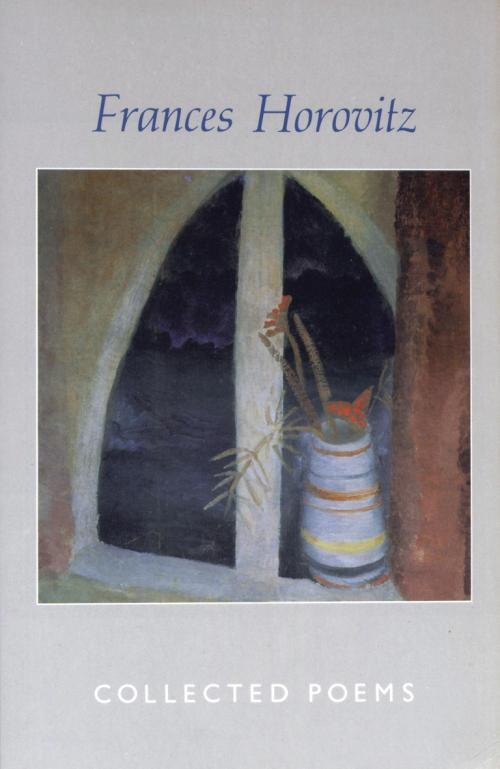
The Collected Poems of Frances Horovitz only runs to 118 poems but many are centred on the natural world and the landscapes of Cumbria, the Welsh Marches and the Cotswolds, where she lived for ten years across the valley from the white-roofed cottage that inspired Laurie Lee's Cider with Rosie.  Here are some brief examples of her imagistic writing, from the poems 'Irthing Valley' 'Finding a Sheep's Skull', 'Walking in Autumn' and 'Sightings':
'... the wind lays itself down / at dusk / a fine cloth over the stones ...'
'... I hold it up to the sunlight, / a grey-green translucent shell. / Light pours in / like water / through blades and wafers of bone. ...'
'... Pale under-leaves of whitebeam, alder / gleam at our feet like stranded fish / or Hansel's stones. ... '
'... crow's wing / brushed on snow, / three strokes / twice etched / as faint and fine / as fossil bone. ...' 

In a 1984 review of her short posthumous collection Snow Light, Water Light Peter Levi wrote that she had 'perfect rhythm, great delicacy and a rather Chinese and yet very locally British sense of landscape. (I take 'Chinese' to imply high praise).  Her last poems show a healthy influence of Basil Bunting, and of the landscape of Birdoswald and Hadrian's Wall.  She has a thrilling sense of history and archaeology. ... She does in a small degree what David Jones has done, who was the wizard of this age.'  Levi might have been thinking here of a poem I particularly like, 'An Old Man Remembers', which retells the Mabinogian story of a beautiful woman, Blodeuedd, who was formed out of 'the flowers of the oak, the broom and the meadowsweet' but ends her days transformed into an owl.

Levi goes on to quote in full an atmospheric short poem entitled 'The Crooked Glen' - a translation of 'Camboglana', the Celtic name for Birdoswald.  Camboglana has been identified as one of three possible sites for Arthur's last battle, after which, mortally wounded, the king asked Sir Bedevere to take Excalibur back to the waters whence it came.  (I saw this scene recreated a couple of years ago when my son took the role of King Arthur in his school play and other children shook a sheet of blue plastic to simulate the waves on the water).  Bedevere's words on his return,  I saw nothing but waves and winds, are the first line of 'The Crooked Glen'.  Horovitz writes of an ushering wind shaking ash and alder by the puckered river and stirring the blood-dark berries. 

In October 1983, Frances Horovitz died - she was just forty-five years old.  I find some of her final poems almost too poignant to read, like 'For Adam, nearly twelve' and 'Letter to My Son' (my own son is now twelve; Adam Horovitz grew up to become a poet himself).  Her last poem, a haiku, reminded me, sadly, of the late poems of Masaoka Shiki (described here previously) who died even younger, at thirty-four.  A disciple of Shiki's had glass installed in the sliding doors of his room, so that he was able to see out into his garden.  Frances Horovitz could see Garway Hill through the window by her bed, but in 'Orcop Haiku' it is glimpsed through September rain, 'glass beads flung on glass'.  In an obituary in Poetry Review Anne Stevenson observed that 'the fine poems of her last collection, Snow Light, Water Light, forecast her own death in the images of light and dark, water and stone, she always made her own. We who loved her miss her very much. But everyone inherits these poems which, like Hardy's and Edward Thomas's, will outlast all fluctuations of fashion.'

Friday, July 22, 2016

Coulisses de Forêt

 Six friezes for a paper theatre, 1880-1920
Source: 50Watts

I have been rather busy of late, as the tidal wave of consequences from the Referendum has swept over and fundamentally altered my place of work, and so it's been hard to find time to think about landscape and art.  However, I've just looked back at some draft posts and come upon the material here, which I wrote in 2011 after reading Will Schofield's 50Watts blog, where he reproduced various sets of scenery, like the one above, from a Dutch Puppetry Museum database.  They are all in muted colours, like memories of childhood.  When we were growing up I wasn't that taken with the Pollock’s Toy Theatre my parents got us; more recently, however, my sons did play a little with a Czech magnetic theatre.  The novelty wore off quite quickly though.  In an essay on the toy theatre, Robert Louis Stevenson looked back on the pleasure he had experienced admiring and painting these scenes and figures.  But then what?  'You might as well set up a scene or two to look at, but to cut the figures out was simply sacrilege; nor could any child twice court the tedium, the worry, and the long-drawn disenchantment of an actual performance.'

Another of my favourite blogs back in 2011, the now defunct Venetian Red, did an informative post on the history of toy theatres and their enthusiasts (you can read it here).  Writers and artists who remembered them with fondness included Goethe, Jack B. Yeats, Cocteau and Chesterton, who asked
“has not everyone noticed how sweet and startling any landscape looks when seen through an arch? This strong, square shape, this shutting off of everything else, is not only an assistance to beauty; it is the essential of beauty… This is especially true of toy theatre, that by reducing the scale of events it can introduce much larger events… Because it is small it could easily represent the Day of Judgement. Exactly in so far as it is limited, so far it could play easily with falling cities or with falling stars.”

Marcel Jambon, set design model for Verdi's Otello, 1895
Source: Wikimedia Commons

I wonder if there were painters who toyed with toy theatres while working up their compositional ideas, like set designers experimenting with their scale models?  Thomas Gainsborough, after all, was said to have 'built model landscapes in his studio, consisting of coal, clay or sand with pieces of mirror for lakes and sprigs of broccoli to represent trees, in order to help him construct his compositions.'  The set of Coulisses de Forêt below could have been used to design a hunting scene with framing trees and repoussoir stag, except, I suppose, that by the time it was printed in 1889, art had largely left behind these classical conventions.  The Toy Theatre blog says that the Épinal-based firm behind this example, Pellerin, produced scenes that were 'very distinctive in style and very French, but for all that rather second rate. The Pellerin sheets were like its other cut-out products, intended to be made, set up and looked at but not performed. There were no Toy Theatre plays as such, only tableaux.'

Coulisses de Forêt, 1889
Source: Geheugen van Nederland


Postscript
It is a month later and I have just seen a toy theatre - the one used at the start of Ingmar Bergman's Fanny and Alexander.  As I mention in my most recent post, I visited the Bergmancentrer on Fårö and it is on display there. I have included a photograph below (sorry about the unavoidable reflection from the window opposite).  The sign above the stage means 'Not for Pleasure Alone'.  The film begins with running water and then cuts to this theatre, where a young boy's face is revealed as he pulls up the background landscape scenery.

Sunday, July 17, 2016

A Panorama of the Engadine

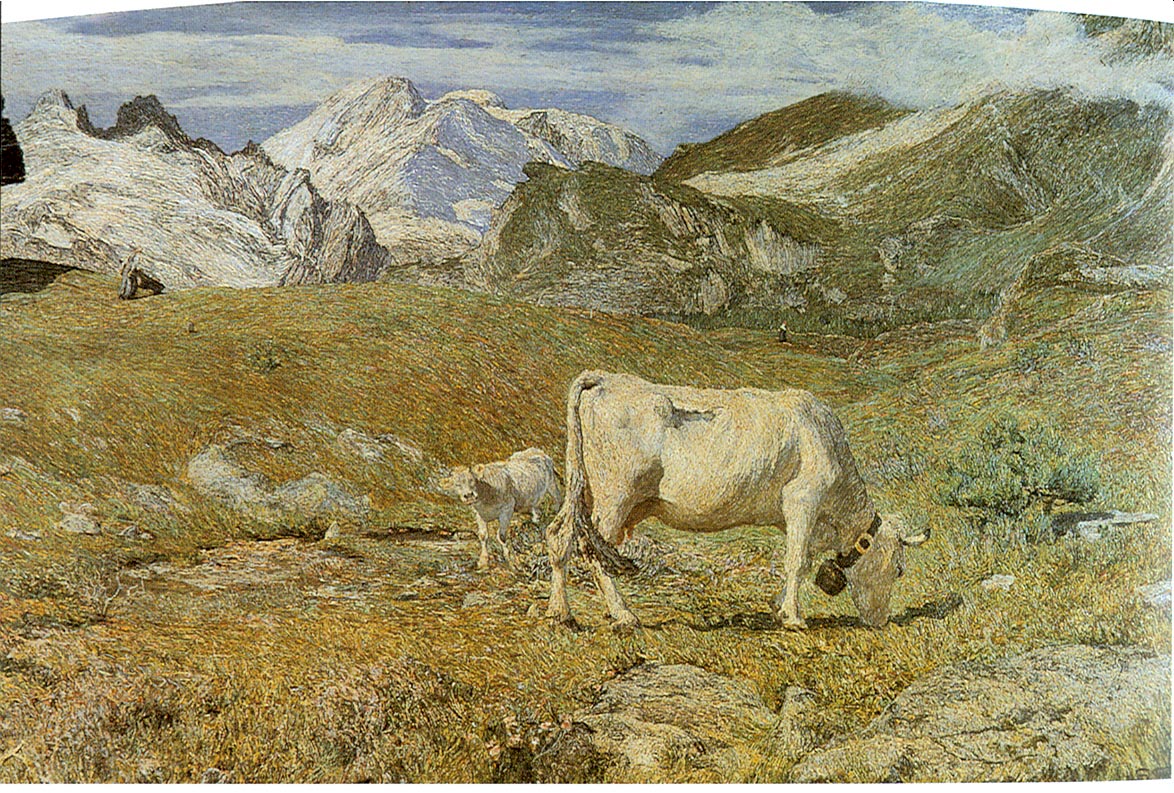
Giovanni Segantini, Spring Pastures, 1896
Source: Wikimedia Commons

In Journey to Mount Tamalpais, Etel Adnan's book that I discussed here a fortnight ago, she looks backwards to the mountain-haunted art of Hokusai and Cézanne.  Hans Ulrich Obrist mentions these artists too in the course of the interview transcribed in Etel Adnan in all her Dimensions, but he also refers to another painter of mountains, Giovanni Segantini, who ‘lived higher and higher up and when he died he was at 2500 metres in his cabin.’  This ascent was parallelled by his growing fame at the end of the nineteenth century, as the Segantini Museum in St. Moritz points out.  Segantini's search for ever higher places to paint en plein air was influenced in part by his reading of Nietzsche and he chose to work in the Swiss Engadine mountains that had inspired Thus Spake Zarathustra.   He was only 41 when he died in 1899, whilst painting the middle section of his Alpine Triptych, his health having been affected by working at altitude on the mountain of Schafberg.

 Giovanni Segantini, Alpine Triptych: Death, 1898-99
Source: Wikimedia Commons

A year after Segantini's death, the Universal Exposition in Paris might have contained his extraordinary panorama of the Engadine region.  In the event it was never painted, despite having initial financial support from a group of hotel owners inspired by Segantini's 'proclamation', which is quoted in Stephan Oettermann's book The Panorama: History of a Mass Medium.
Men of the Engadine!
       The project I have the honour of submitting to you, dear Engadiners and sons of the Alps, is a bold one, but as clear as the sunlight that shines on the mountains.  The world knows me as a painter of Alpine scenes.  My art was born amidst the solemn majesty of these peaks and here achieved the heights of its form. [...]  My panorama will have nothing in common with previous products of this genre. I intend to capture this portion of the Alps on canvas, the quality of its light and the clarity of its air; I will create the perfect illusion that the observer is high in the mountains, in a green meadow, surrounded by jagged peaks and sparkling glaciers, which feed our woody slopes with never-failing streams of fresh water and lave the smiling, fruitful valleys like emeralds in the hollows....
But this painted vista, stretching over 40,000 square feet, was by no means the summit of his ambition.

Segantini's 1897 sketch for the rotunda to contain his panorama (Segantini Museum).
This original design echoed the architecture of the Engadine's old Alpine houses.

As the proclamation goes on to explain, visitors would enter the building through a 'gallery hewn in rock' and ascend until they emerged on a craggy prominence 50 feet high with fir trees, 'mossy stones, little bridges, streams and gorges, wild flowers and fragrant herbs'.  Electrical ventilators would provide fresh air (his original idea had been to include giant ozone-producing machines) and a realistic atmosphere would be provided by lighting and hidden acoustic and hydraulic devices.  Between this viewing place and the wall of the panorama Segantini pictured 'barns full of fragrant hay, grazing cattle, and various geological features as well as the most important botanical and zoological specimens of our region.'  The building's facade would include symbolic representations of villages in the Upper Engadine, but also provide 28,000 square feet for advertising purposes.  Oettermann concludes that the withdrawal of support for the project 'spelled the end for a project that would have resulted in the most ambitious panorama of all time, in quality as well as sheer size.  It was also the death knell of the age of panoramas.'

Friday, July 08, 2016

Here in the immortal empire of the grasses


You can now read an online supplement to the journal Reliquiae which includes some archival material provided by myself and flowerville.  I've listed out the full contents below.  Here I thought I would highlight just one selection (as I have done with previous editions of the journal), but rather than pick one of my own I have chosen one of flowerville's: 'Letter XXX' by Étienne Pivert de Senancour.  It is from his Rousseauesque epistolary novel Oberman (begun in 1801, published in 1804, revised in 1833) and begins with the melancholy hero, on seeing a jonquil in bloom, apprehending for a moment 'all the happiness destined for man'.  According to the Danish critic Georg Brandes (quoted in Wikipedia) Senancour's book has been 'understood only by the highly gifted, sensitive temperaments, usually strangers to success.'  Here is another extract, from Letter II, in which Oberman first heads into the mountains.
I was under the pines of Jorat; the evening was fine, the woods silent, and the air still; the western sky was hazy, but cloudless. Everything seemed settled, light-filled, motionless, and when I happened to lift my eyes after keeping them long fixed on the moss beneath me, I experienced a wonderful illusion which my pensive mood prolonged. The steep slope which fell away to the water's edge was hidden from me by the knoll on which I sat, and the surface of the lake seemed inclined at a high angle, as though its opposite shore were lifted into the air. The Alps of Savoy were partly veiled by clouds indistinguishable from themselves and of the same tint. The sunset light, and the dim air in the depths of the Valais, lifted these mountains and cut them off from the earth by making their bases invisible ; and their huge formless bulk, neutral-tinted, sombre and touched with snow, light filled and yet partly invisible, seemed to me nothing but a mass of storm-clouds suspended in the air; and the only solid earth was that which held me up over empty space, alone, in immensity.
That moment was worthy of the first day of a new life; I shall have few like it. ...


Senancour's novel was influential.  I have referred here in passing before to one of the songs in Liszt's Années de pèlerinage cycle; the video clip embedded above is another, Vallée d'Obermann in E minor.  In England the book was important for Matthew Arnold, who wrote an essay on Senancour and two poems about Obermann (the hero's name had an extra 'n' added after Senancour's first edition). In 'Stanzas in Memory of the Author of Obermann' Arnold writes of feeling the mountain air blowing through Senancour's pages.  However, audible beneath the sounds of a lone torrent, wind in the pines and cowbells in the high pastures, he can hear a 'ground tone / of human agony'.  In 'Obermann Once More' Arnold returns to the Alps after many years, finding 'all unchanged / the turf, the pines, the sky', and recalls his youthful reading of Obermann.  As night falls the figure of Obermann appears to him, dressed as a shepherd and holding a mountain-flower, with a pensive gaze that seems to rest on his soul.  Obermann says that the times he lived through left him no choice but to live in solitude in the mountains.  But now,
"Despair not thou as I despair'd,
Nor be cold gloom thy prison!
Forward the gracious hours have fared,
And see! the sun is risen!


Reliquiae Supplement contents

New work:

  • Alyson Hallett: A ritual of release and remembrance at the Church of the Storms, Lizard Peninsula, Cornwall.
  • Maximillian Hartley: Moments sink into millennia on the ruins of black sands.
  • Mark Leech: The archaeological remnant, ‘two eyes under the sheet, trenched and ditched’.
  • Christopher Page: Pooled words, petitions, auguries, air and earth.
  • Richie McCaffery: On movement, transience and a hill’s ‘show of solidity’.
  • Sally Ann McIntyre: Boulder clay, erosion, evergreen flowers, wind moves words, memory sings.
  • John Morgan: Of Puerto del Suspiro del Moro – Pass of the Moor’s Sigh – in the Sierra Nevada mountains, Spain.
  • Jennifer Spector: Natural chaos, soil drumlins, the carry of clouds, glyphic sediment.


  • Archive work:

    A fragment on the soul of nature by Henri Frédéric Amiel; a descriptive passage on a ‘paradise of fish’ in Florida by William Bartram; a series of poetic excerpts from A Swedish Calendar by Alexander Malachias Berger; a poem for the ‘silent and dark and trackless swells’ of the north, by Charlotte Brontë; on trees, and ‘uniting the life of Earth and Sky’ by Edward Carpenter; the story of the Oriole by Florence Holbrook; Hyperion’s Song of Fate by Friedrich Hölderlin; a fragment on nature and solitude by Horace; excerpts from a treatise on nature, from the earthly sphere to the starry vault, by Alexander von Humboldt; a poem from the revelatory collection, Moosewood Sandhills, by Tim Lilburn; one of five gnomic, poetic Cantations for Endangered Species by Gerry Loose; on noticing the unnoticed by Amy Lowell; an evocation of moorland by night from Charlotte Mew; a contemplation on nature and perception by Alice Meynell; a Meskwaki myth documented by Truman Michelson; a Manx folktale from Sophia Morrison; an extract on wind-storms in a Californian winter by John Muir; a fragment from a depiction of the fabled Henry of Ofterdingen by Novalis; a poetic reflection on ‘the immortal empire of the grasses’ by Marjorie Pickthall; an inuit creation myth documented by Knud Rasmussen; a reflection on the radiance of flowers by Grace Little Rhys; a fragment on the sound of Scottish streams by John Ruskin; a letter, ‘lost in the abyss of darkness’ by Étienne Pivert de Senancour; an elegy for the badger, ‘that most ancient Briton of English beasts’ by Edward Thomas; poetic fragments from the forthcoming Epidote Press monograph on 'Hans Jürgen von der Wense'; on cascades, cataracts and the currents of thought by Mary Wollstonecraft; an extract from The Waves by Virginia Woolf.

    Sunday, July 03, 2016

    Journey to Mount Tamalpais


    The Journey To Mount Tamalpais took over two decades to write, a slow accumulation of material as Etel Adnan painted, thought and looked each day at the mountain beyond her window.  It was published in 1986 by the Post-Apollo Press, which had been set up a few years earlier by her partner, the artist and writer Simone Fattal.  In Fattal's essay 'On Perception: Etel Adnan’s Visual Art', she describes the book as a philosophical meditation on Nature and Art, which it is, although what I found reading it was that you also gain a wonderful sense of the milieu that gave rise to both the book and Adnan's paintings of the mountain.  Interspersed with her thoughts on perception there are references to the regular artist workshops - 'peaceful parties with the seriousness of children at play' - organised by Ann and Dick O'Hanlan.  It is like reading Gary Snyder, where you remain aware that his writing is set within a wider project of how to live.  In an interview with Brooklyn Rail Fattal says that 'it’s a book that is very important for any person, not only artists, but of course for artists because it’s a meditation on art and its relationship with nature. What you receive from it is this very strong sense of morality and the strength with which you conduct your life.'


    Etel Adnan, Mountain, 2012  
    At the Serpentine Gallery, photography permitted

    Etel Adnan has depicted mountain forms - some more abstract than others - in oils, watercolours and ink.  According to Fattal, ‘the natural pyramidal shape of the mountain became embedded in her whole being. It became her identity.  She could draw it while in Lebanon, at night and at dawn; the mountain was for her the ever-revealing mystery, the ongoing manifestation.’  The leporello above can be seen at the wonderful exhibition of her art now on at the new Serpentine Sackler Gallery.  In an interview with co-curator Hans Ulrich Obrest, Adnan said that coming upon this format gave her 'a good way to get out of the page as a square or a rectangle; it was like writing a river.’  Obrest is a great admirer of Adnan's art and writings, which he first encountered in the form of one of these Japanese folding books.  He has said (in the catalogue for an earlier show, Etel Adnan in all her Dimensions) that he then sat down to read her novel Sitt Marie Rose (1977) and before long found himself addicted – the first time he had felt that way since high school when he had tried to read every single word Robert Walser ever wrote. 

    Adnan and Fattal now live in Paris.  Their apartment is described in a recent Wall Street Journal article which gives a good overview of her life and relatively recent fame.  There, 'when her painting is done, she might sit down to work on any number of projects in progress—a tapestry, a book of poems, a film, an opera.'  Adnan can no longer travel to California but carries the memory of the mountain with her.  She told Obrist that ‘Mount Tamalpais represents all mountains, all the dimensions of America in my head.’  Here is how The Journey to Mount Tamalpais ends
    ‘In this unending universe Tamalpais is a miraculous thing, the miracle of matter itself: something we can single out, the pyramid of our own identity.  We are, because it is stable and it is ever changing.  Our identity is the series of the mountain’s becomings, our peace is its stubborn existence.'

    Thursday, June 30, 2016

    View of Auvers-sur-Oise


    I have been reading A Burglar's Guide to the City by BLDGBLOG's Geoff Manaugh which has interesting things to say about buildings, street patterns and the way urban space is used.  With its focus on illegally entering enclosed structures there is little directly about 'landscape', although I did learn that a popular lock picking tool is a kind of landscape in miniature: the Bogotá rake, 'named because its waves and bends apparently resemble the mountains surrounding Bogotá, Columbia, where the tool was invented.'  Also that there is a thorny plant, trifoliate orange, popular with security conscious landscape designers because it 'is so dense and fast-growing that it can stop speeding vehicles; it is used by the U.S. military to help secure the perimeters of missile silos and armories.'  And that there was a burglar in Oregon
    'who dressed up in a ghillie suit, a tangled mass of fake vegetation woven into nets, originally meant to camouflage military snipers by making them indistinguishable from plant life.  Disguised as a plant, he then slipped into his target, which, of all things - because you couldn't make this up, it would be impossible to take seriously in a work of fiction - was a museum of rocks and minerals.  He was after their gold and gemstones.  Simulating one kind of landscape, he broke into a museum of another...'

    Stories like this got me thinking about landscape art in a different way, as a target for burglary. A Cézanne painting, View of Auvers-sur-Oise (c. 1879-82) that I've always liked (the postcard I'm holding above was purchased just after I did my A-levels) can no longer be seen because it was stolen on millennium night.  Here's how The Guardian reported the burglary on 3 January 2000.
    'The theft of a £3m painting by Paul Cézanne in Oxford on millennium night was carried out by a professional burglar who created a smokescreen to foil security cameras, it was disclosed yesterday.  With the noise of his break-in masked by celebratory fireworks, the burglar cut a hole in the roof of the Ashmolean museum and descended to its art gallery by rope ladder.  He had a holdall containing a scalpel, tape, gloves, a smoke canister and a small fan. He set off the canister, and used the fan to spread the smoke and obscure the view of the gallery's closed circuit cameras. In less than 10 minutes, he had seized the painting, View of Auvers-sur-Oise, climbed up the ladder, and gone.'
    There are apparently suspicions that this painting was stolen to order by a collector, obviously not a person to be satisfied with an Ashmolean Museum postcard.  Fortunately art thefts are too rare to consider any prevailing aesthetic in the landscapes targetted.  There's the painting that gave a name to an art movement - Monet's Impression, soleil levant - stolen in Paris by a yakuza gangster; Nebelschwaden by Caspar David Friedrich, taken along with two Turners by thieves who had hidden overnight in a Hamburg gallery; Govaert Flinck's Landscape with an Obelisk, lifted along with other Dutch masterpieces in Boston by a gang dressed up as policemen (one wearing a fake wax mustache); and Marine by Claude Monet, owned by a museum in Rio de Janeiro, which disappeared with its burglars into the carnival crowd, melting into the city like the thief who got away with his Cézanne while millennium fireworks created the perfect diversion.

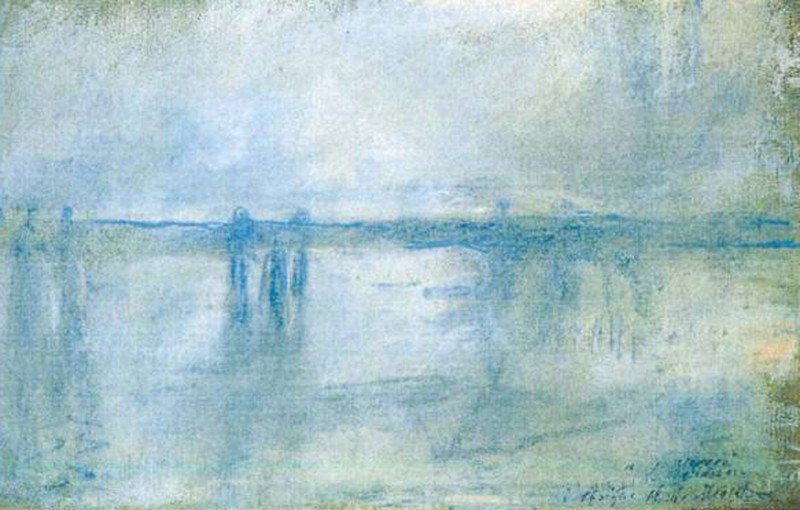
    Claude Monet, Charing Cross Bridge, 1901
    Image: Wikimedia Commons, via Rotterdam Police

    I will end here with a quote from A Burglar's Guide to the City concerning the role of architecture in a theft involving two more Monet paintings.  The following paragraph is reprinted on the Fast Company website:
    'One of the most spectacular art heists of the last decade is thought to have succeeded precisely because of a flaw in a museum’s architectural design, which inadvertently allowed the general public to study the internal patterns of the security guards and visitors. The Kunsthal in Rotterdam, designed by Rem Koolhaas’s firm OMA, was robbed in the middle of the night back in October 2012; seven paintings were stolen, including works by Matisse, Gauguin, Monet, and Picasso. Ton Cremers, founder of the Museum Security Network, an online forum, put some of the blame for this on the building itself: the museum’s expansive floor-to-ceiling windows offered a clear and unobstructed view of many of the paintings hanging inside. More important, they also allowed a constant, real-time surveillance of the internal workings of the museum for anyone passing by—the patterns of visitors and the comings and goings of the guards were effectively on public display. Thus thieves could have sat outside in a nearby park, watching until they found the right moment to strike. The museum had its own internal rhythm of events that the burglars interrupted with a perfectly timed counter-event: the heist. This is the rhythmic spacetime of burglary.'

    Friday, June 24, 2016

    Quick Light

     Alex Katz, West 1, 1998

    The Serpentine Gallery currently has two excellent exhibitions, not to mention the striking new Bjarke Ingels pavilion.  I'll write about Etel Adnan separately; here I offer a few words about Alex Katz, and some images too because, unusually, you are allowed to take photographs.  The show is called 'Quick Light', suggesting moments of illumination, sun glancing off objects or perhaps, in the large painting above, windows glimpsed at night from a passing car.  Get up close to this painting and there are no further clues to the forms of the buildings or the identity of the city, all is black.  Such scenes are non-specific but were painted in New York, where Katz was born back in 1927 and where he started painting among the Abstract Expressionists and hanging out with the New York School poets. In another nocturnal image, Untitled Cityscape 4 (below), we see only a fragment of a dark building, a two-dimensional shadow against a cold grey sky streaked with ghostly cloud forms.  It is like a cropped detail from an Edward Hopper painting.  The fork of an aerial and corner of a dimly lit window have an air of menace.  What we are shown of the roof resembles a fortification. 

     Alex Katz, Untitled Cityscape 4, 2014

    Some of the daylit scenes in this exhibition have an unsettling quality too - an air of mystery that you find in younger artists Katz has influenced like Peter Doig4pm 2014 is painted in sickly shades of green and the view of what looks like a distant boathouse is obscured by a tree whose leaves are blowing into the cold sky.  As with Doig's landscapes, you often find yourself picturing a scene from a film, just before or after some darkly significant event.  That cloud of leaves in motion reminded me of the park in Antonioni's Blow Up where you hear nothing but the wind in the trees.  The painting below could be the illustration of a fable or fairy story, or some dream-like narrative by a Robert Walser or Franz Kafka.  It is painted in flat planes of colour, like a Matisse, except for the feathery strands of grass which seem to be animated by a breeze.  I thought again of cinema - the wind in the buckwheat in Tarkovsky's Mirror, the wheat swaying in Herzog's Kaspar Hauser.  Katz has said that he wanted his large-scale paintings to have the quality of the blown-up faces and landscapes you see on a movie screen. 

    Alex Katz, Red House 3, 2013
     
    Leaving the Serpentine Gallery and walking back out into the bright sunshine of Hyde Park I found myself seeing the lake and trees and various tableaux of figures in terms of Katz's vision of landscape.  A recent article in the Telegraph described the way Katz experienced something similar himself in the art of Cézanne.  'About a decade ago, Katz visited an exhibition of work by the French post-impressionist. “I was looking at his stuff and saying: ‘See, the guy couldn’t paint, it’s terrible, this is overworked’ – stuff like that,” he recalls. “Then, when I got on a train, all I could see were Cézanne landscapes. His vision is so strong that it dominates your mind. And that, for me, is the highest thing an artist can do.”'

    Sunday, June 19, 2016

    A Way of Being in the World

    Last Sunday I managed to get to the last day of the Balham Literary Festival, A Way of Being in the World, which was entirely devoted to questions of landscape and place, nature and the city. The first session, 'Running Riot In The Urban Landscape', focused on the disappearance of public space and ways to reclaim the streets.  It featured academic/urban explorer Bradley Garrett, guerilla gardener Richard Reynolds and poet Inua Ellams who leads nocturnal cultural walks through cities.  Their contributions raised fascinating questions about the effectiveness of such practices in exposing and challenging the power structures of the city.  Guerilla gardening, for example, may have roots in the history of land struggles but today in Western cities it can, in a small way, help along gentrification and the withdrawal of local government from their responsibility to maintain the built environment.  It was heartening though to hear that one London traffic roundabout persists as an island of lavender a decade after Richard first gave it a makeover.


    In the Q&A afterwards Richard's mother, sitting in a kind of throne by the stage, recounted an anecdote about his rebellious streak at boarding school.  It made me think of those precursors of the urban explorers that Brad had referred to earlier, the Night Climbers of Cambridge, students who scaled the city's buildings with a joie de vivre and confidence that seems connected to their position of social privilege.  As Sam Jordison wrote in a Guardian article when the original 1937 book documenting their activities was reissued, 'just as it's possible to suggest that those currently seeking highs on city rooftops are reacting against their cotton-wool upbringings, so Whipplesnaith's stories of death-defying derring-do in Cambridge say a lot about those whose parents had lost so much in the first world war but who themselves were (for now) bereft of action and significance.'


    There followed two sessions featuring Cambridge academic and climber Robert Macfarlane.  In the first he was joined by China Miéville who had delivered a new lecture on the eerie and the picturesque the day before (it has just been reprinted in The Guardian). They were discussing one of many recent landscape-related books I've not yet read (for reasons partly explained in my previous post): Nina Lyon's Uprooted: On the Trail of the Green Man.  The origins and meanings of the Green Man are impossible to trace - what is of interest is how this symbol has repeatedly surfaced in the culture.  Is its current popularity an extension of the urge to identify with animals, China Miéville asked, and would we soon be seeing hipsters in vegetable masks?  Is it a symptom of the urge to aggrandise and domesticate nature by those unable to afford to live in cities but unwilling to live too far away from them?  Is there a connection, Robert Macfarlane wondered, with new ideas about the ecology of forests (the wood wide web) and speculations on the non-human by contemporary philosophers like Jane Bennett?  Ideas in his session sprouted like foliage from the mouth of the Green Man, including China Miéville's notion that the leaves are actually disappearing into his mouth: nature inexorably being swallowed up. 
     

    The Loney, Andrew Michael Hurley's debut novel, was discussed with Robert Macfarlane in connection with the recent upsurge of interest in folk horror, uncanny sites and haunted landscapes. In the course of the talk we learnt that the book is potentially the first of several novels to be set on the Lancashire coast, a place that has not featured much previously in literature.  A film is now being put together by Andrew Macdonald, producer of Danny Boyle's films and the recent version of Far from the Madding Crowd.  Again I've not read this book myself; The Guardian's review pointed out some flaws but said that 'Hurley’s lyrical grip on his landscape is flawlessly bleak'.  The Telegraph review was extremely positive and again cited the treatment of landscape in descriptions like this: 
    'Day after day, the rain swept in off the sea in huge, vaporous curtains that licked Coldbarrow from view and then moved inland to drench the cattle fields. The beach turned to brown sludge and the dunes ruptured and sometimes crumbled altogether, so that the sea and the marsh water united in vast lakes, undulating with the carcasses of uprooted trees and bright red carrageen ripped from the sea bed.'


    Fortified with an excellent pint, courtesy of Richly Evocative's Matt, I was ready for the Festival's final session 'And where next?', which sought to cover globalism, the growth of cities and the anthropocene.  Science journalists Gaia Vince and Fred Pearce were joined by Owen Hatherley, who I always find interesting - I had seen him only a week before at our local Stoke Newington Literary Festival, talking about London with Rowan Moore (they gave it to Heatherwick and the London Garden Bridge with both barrels).  This session also had thematic links to another fascinating talk I had gone to in Stokey - Becky Hogge and Ken Worpole discussing utopias - and to a Radio 4 programme Ken alerted me to afterwards, highlighting the Silicon Valley dream of establishing communities floating entirely free of  the state.

    In the Balham discussion Owen Hatherley criticised the rise of favela chic: the way architects undervalue the boring virtues of planning and celebrate the vibrancy of ungoverned urbanisation in the global south.  It took me back to a talk I attended at the ICA about fifteen years ago by Rem Koolhaas, enthusing about his recent work in Lagos.  In an interview last year Koolhaas recalled the way Lagos, a city from which the state had withdrawn, 'mobilised an incredibly beautiful, almost utopian landscape of independence and agency'.  Owen would rather have well-designed urban environments with relatively affordable housing like Vienna.  He lamented the decline of Stockholm where the benefits of social democracy appear to have been jettisoned out of an almost Ballardian sense of boredom.  I will get to see Stockholm myself shortly as we've booked a week there this summer, followed by a week on an island in the Baltic where I may actually have time to catch up on some of the books I've been hearing about recently...

    Thursday, June 16, 2016

    The Mountain of Stability

    Emperor Huizong, Plum and Birds, early 12th century
    Source: Wikimedia Commons

    A few years ago I wrote here about filial conflict and garden design in the wonderful eighteenth century Chinese novel known in English as Dream of the Red Chamber.  I recently finished reading another vast novel charting the rise and fall of a Chinese family, Chin P’ing Mei (The Plum in the Golden Vase), written at the end of the sixteenth century.  Two essays on it have appeared in The New York Review coinciding with the publication of the first and final volumes of David Toy Roy’s translation, one back in 1994 ‘when Roy reported that he had already been working on the project for a quarter century’, and the other last year, when the eighty-year old translator finally made it to the end.  It took me six months to read the five volumes my son is only just about managing to hold up for this photograph.


    The ambitious, corrupt and sexually voracious merchant at the centre of the book, Hsi-men Ch’ing, extends his private estate as he becomes more affluent. But unlike the characters in Dream of the Red Chamber, he has no real interest in landscape design.  The arbours and grottoes of his garden are a stage set for parties and trysts.  Nature poetry is not written in response to the beauty of the seasons - it is a tool of seduction, the means of pursuing a drinking game, or an element in the songs performed for Hsi-men Ch’ing by troupes of actors and prostitutes from the licensed quarter.  Occasionally there are expeditions to monasteries but the monks there are more interested in money, alcohol and sex than they are in contemplating the surrounding mountains:
    'For what purpose are Taoist sanctuaries and
      Buddhist temples established?
    The Taoists worship their Heavenly Worthies,
        the Buddhists worship Buddha.
    They are beautifully landscaped in order to
        give a false sense of purity;
    Providing for visitors and welcoming guests
       they engage in perverse doings.
    Accoutering their disciples with attractive
       clothes and handsome outfits;
    They make use of wanton wine and leisured tea
        in ravishing female beauties...'

    Zhang Zeduan, Games in the Jinming Pool, early 12th century
    Source: Wikimedia Commons

    The Plum in the Golden Vase can be read as an extended critique of Ming society (Roy draws parallels with Dickens’ Bleak House), even though it is set nearly five hundred years in the past, during the reign of Emperor Hui-tsung (pinyin: Huizong).  There were clearly parallels to be drawn between Hui-tsung and the Ming emperors, who were ‘among the most irresponsible rulers in the history of imperial irresponsibility’ according to Roy.  Hui-tsung was very interested in landscape design - so interested that his ambitious projects may have contributed to the fall of the northern Song dynasty, as Robin Lane-Fox explained in a piece for the FT entitled 'How gardening led to the downfall of one Chinese Emperor.'  Not content with one garden, The Basin of the Clarity of Gold (shown in the painting above) he decided to build a second one:
    'At Kaifeng, just south of the Yellow river, the emperor lived inside a palace complex that was not, by Chinese standards, outrageously large. What became notorious was his man-made rock garden, which was up to 220ft high. To build it, Huizong sent orders for every sort of plant from all over his empire: lychees, gardenias, palms and plum trees. He also ordered the rarest and biggest stones. Chinese rulers had often been lithomaniacs but Huizong’s orders for waterworn rock outdid them all.  At the foot of this immovable mount, known as the Genyue [Mountain of Stability], Huizong arranged big stones, some with markings like human faces. He had them honoured with plaques and poems, using gold letters if they were particularly distinguished.'
    The emperor only had five years to enjoy all this splendour before Kaifeng was captured by tribesmen from the north. Huizong was taken off to Manchuria and his garden smashed up.  Resentment has built up during its construction, as the process of shipping 'so many huge rocks and plants had cluttered up the canals and transport system. There had also been endless corruption and compulsion during the entire high-speed plan'.  Unsurprisingly Hsi-men Ch’ing got involved in this.  At one point in the novel he discusses with an official the way the 'flower and rock convoys' had impoverished ordinary people, before inviting him to partake of a typically lavish lunch.  Just as the collapse of the Song state can be ascribed to the way the country's resources were depleted by the emperor, Hsi-men Ch’ing's own graphically described demise is directly attributable to his excessive appetites.

    Wednesday, June 01, 2016

    I am a tree

    A recent piece for Atlas Obscura described some of the stories narrated by non-humans discussed in The Secret Life of Things: Animals, Objects and It-Narratives in 18th Century England, edited by Mark Blackwell.  Such stories became so successful that 'by 1781, a bored reviewer in The Critical Review could complain that “this mode of making up a book, and styling it the Adventures of a Cat, a Dog, a Monkey, a Hackney-coach, a Louse, a Shilling, a Rupee, or — any thing else, is grown so fashionable now, that few months pass which do not bring one of them under our inspection.”'  This made me wonder whether there are examples of it-narratives recounted by paintings - imagine The Picture of Dorian Gray as an eponymous novel, with its central character only able to wonder at the changes it found itself undergoing.  I suppose though that paintings of things - a Monkey, a Hackney-coach - would be less appealing to write about than the things themselves.  Landscape paintings would seem still less promising (unless they were used to tell the story of a particular place), though I can imagine an interesting narrative of the life of, say, a Van Gogh painting, from its birth in a windy field outside Arles to its incarceration in an airtight Tokyo bank vault.


    You sometimes come across versions of it-narratives in contemporary literature.  There are a sequence of them - a dog, a horse, a gold coin - in Orhan Pamuk's novel My Name is Red.  This book is set in Istanbul among Sultan Murat III's miniaturists, whose work was starting to come under the influence of Venetian painting, the art of 'the Franks'.  One chapter is told from the point of view of a picture of a tree and it is the nearest thing I can think of at the moment to an it-narrative by a landscape drawing.  The tree begins by apologising that 'at this moment, there are no other slender trees beside me, no seven–leaf steppe plants, no dark billowing rock formations which at times resemble Satan or a man and no coiling Chinese clouds.  Just the ground, the sky, myself and the horizon.'  So to be precise, this chapter is narrated not by an entire landscape (a recent development in sixteenth century Western art) but by one of the four elements in a simplified version of a landscape.

    There isn't really a story-telling tree though.  As we read, we realise there is a storyteller in a coffee house, improvising his tale on the basis of a sketch of a tree.  Or, to be more precise, what we read is the story of this storyteller, recollected later by a character called Orhan who was a young boy at the time of the events of the novel.  And even this is a simplification of a book that gets more complex the closer you look into it...  But to return to that tree: I want to share here the last words of its story (and doing so in English I must quote another narrator, translator Erdağ Göknar, rather than Orhan Pamuk).  These two short paragraphs on art and trees convey an important idea that underlies the plot of the novel and drives one of the court miniaturists in it to murder.   
    'A great European master miniaturist and another great master artist are walking through a Frank meadow discussing virtuosity and art. As they stroll, a forest comes into view before them. The more expert of the two says to the other: "Painting in the new style demands such talent that if you depicted one of the trees in this forest, a man who looked upon that painting could come here, and if he so desired, correctly select that tree from among the others."

    'I thank Allah that I, the humble tree before you, have not been drawn with such intent. And not because I fear that if I'd been thus depicted all the dogs in Istanbul would assume I was a real tree and piss on me: I don't want to be a tree, I want to be its meaning.'