Showing posts with label memory. Show all posts

Tuesday, April 19, 2022

The Sea View Has Me Again

The 'Sea View' of Patrick Wright's recent book was actually the name of one of the two pubs Uwe Johnson frequented during his final decade, living in Sheerness and almost failing to complete the fourth volume of his novel Jahrestage (Anniversaries). Johnson did have a sea view from his house on Marine Parade, although it was almost blocked by a defensive flood wall that was still under construction at the time of his death in 1984. Wright notes that 'views over water mattered greatly to Johnson', and windows feature in his novel as a device for framing the vistas of New York visible to his protagonist Gesine, providing a surface on which she pictures scenes from her youth. Looking out towards the icy New Jersey shore she is reminded of a winter morning on Lake Constance, but the moment this happens both memory and present view begin to 'corrode'. Instead of regaining a complete image of an earlier landscape, she can only experience scraps and shards of it. The streets of New York can suddenly be transformed, smog covered houses recalling 'a soft rolling landscape, forest meadows', but the memory remains partial, like somewhere seen from a boat and then obscured from view, although 'reachable not far past the shoreline cliff.'

In his chapter 'Beach, Sea and 'the View of Memory'' Wright discusses the importance of lakes and rivers for Uwe Johnson. Indeed 'Anniversaries itself comes to resemble the geography of Mecklenburg', where Johnson and Gesine grew up: 'sea-edged and filled with marshes, inland canals and lakes as well as rivers and the occasional swimming pool.' When I read Anniversaries I found this unfamiliar and complicated geography further confused by Johnsons' references to both real and imaginary places. I am no more familiar with Sheerness, never having been there, although any reader of Wright's book will learn a lot about its history. At several points it touches on resemblances between Sheerness and Mecklenburg, which could offer some explanation for Johnson's puzzling decision to move to this unloved corner of Kent. 

Wright concludes his exploration of Sheerness with the story of a Second World War ship full of explosives that has never been removed - Johnson wrote an essay about it entitled 'An Unfathomable Ship'. This essay suggests that Johnson saw the sea as 'a non-human force that is nevertheless the witness and even bearer of the murderous history that keeps troubling the surface of Gesine Cresspahl's consciousness.' It features in Johnson's books not as a unified force, resembling simplified political narratives of the historical tides that swept over Germany, but as discrete waves, 'singular and yet interconnected', like the 365 days that make up the chapters of Anniversaries. The first paragraph in the first volume of Johnson's novel describes the action of waves on the beach at New Jersey, and this sea view reminds Gesine of her childhood by the Baltic.

'Long waves beat diagonally against the beach, bulge hunchbacked with cords of muscle, raise quivering ridges that tip over at their greenest. Crests stretched tight, already welted white, wrap round activity of air crushed by the sheer mass like a secret made and then broken.'     
(translation by Damion Searls. For more information on The Sea View Has Me Again see Patrick Wright's website).

Saturday, May 14, 2016

Shiogama Bay


To Kings Place last night for Yugen – the mysterious elegance of classical Noh, part of the Noh Reimagined weekend.  It featured Yukihiro Isso on nohkan flute along with five other artists designated by the Japanese government as Important Intangible Cultural Assets: two actors from the Kanze school of Noh and three drummers.  Yukihiro has combined his career in classical Noh with improvisation - as you can hear in the recent Cafe Oto performance embedded above - and has worked with people like Cecil Taylor, John Zorn and Peter Brötzmann.  He represents the 15th generation of a family of Noh musicians and his collection of flutes includes heirlooms that are five hundred years old.  The concert yesterday ended with music and dance from the play Tōru by Zeami (c. 1363 – c. 1443), whose account of his exile on the island of Sado was the subject of a post here last month.  Here is the story of the play, based partly on the synopsis available on the Noh Plays Database.
On an autumn evening a monk visiting Kyoto comes to a mansion, where he meets an old man who is carrying buckets of brine on a pole, even though this place is far from the sea.  The curious monk is told that this mansion used to belong to Minamoto no Tōru.  Long ago he had built here a replica of the scenery of Shiogama, a place renowned for its saltwater bay.  Tōru requested that people carry brine every day from Naniwa to fill the lake.  He let people bake sea salt in his garden until his death.  Afterwards the mansion became deserted.
The monk and the old man talk about the mountains of Kyoto and the exquisite harvest moon.  The old man disappears and the monk realises that he must have been the ghost of Minister Tōru.  The monk goes to sleep and in his dream the ghost of Minister Tōru returns, appearing now as he did when he lived in this mansion.  Illuminated in the moonlight, he dances to elegant music whilst recalling his beautiful home with its replica of the saltwater bay.  At dawn, Tōru returns to the capital of the moon.
It was this this last dance that we saw, with the shite (main role actor) Masaki Umano gliding slowly round the stage, dressed in a shade of pale blue that suggested the view over a saltwater bay, while behind him the flute and drums traced the course of Tōru's remembrances.  As I watched, I thought about landscape and memory: the Minister compelled in life to build a replica of a place he had loved, returning from death to try to keep alive this simulacrum and then transformed from an old salt carrier to the nobleman he had once been. 

Zeami's play (which I have referred to here before) draws on a story that has its origins in a poem by Ki no Tsurayuki, who visited this mansion shortly after the death of Minamoto no Tōru in 895.  Tsurayuki's poem refers to the lonely beach and vanished smoke of Shiogama, as if he were looking at the real bay instead of its replica.  Tōru's death is alluded to in the image of smoke that no longer emanates from the salt fires tended by his servants.  It was said that Tōru had ocean fish and crustaceans living in his lake.  The real Shiogama Bay (now a harbour for Shiogama City) was a renowned beauty spot (Matsushima Bay, as the wider area is known, with its rocky islands rising out of the sea, is one of the Three Views of Japan).  Shiogama was, according to legend, the first place in Japan where salt was extracted by boiling sea water.  In The Art of Japanese Gardens (1940), Loraine E. Kuck speculated that Tōru may have originally seen Shiogama on an expedition to what was then the country's northern frontiers, where Ainu tribes were still fighting the advance of the Japanese.  Back in Kyoto at his villa on the banks of the Kamo, while his servants boiled salt on the edge of his lake, Tōru could 'sit and watch the ever-changing flutter of the smoke banner across the sky and romantically imagine himself far away in the picturesque north country.'

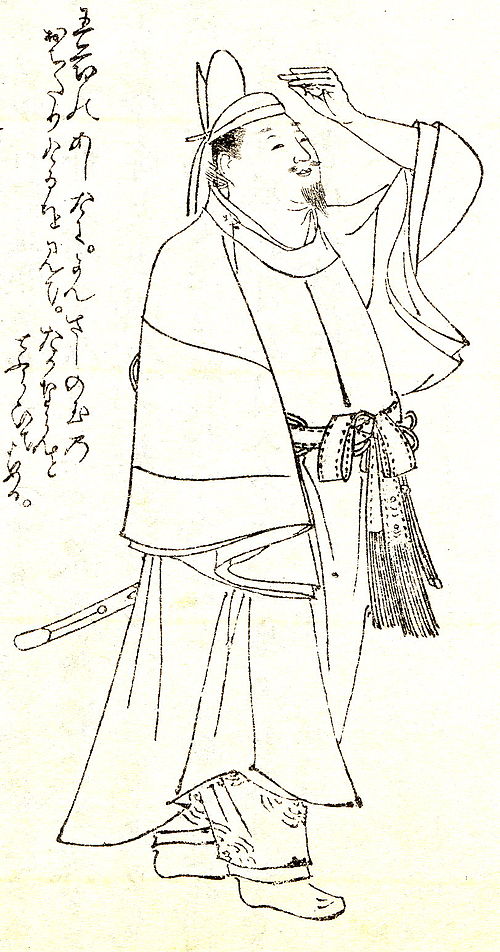
Kikuchi Yosai, Minamoto no Tōru, 19th century

Monday, February 29, 2016

Wanderings through the Mark Brandenburg


Reading the new translations of Walter Benjamin's radio broadcasts, made between 1929 and 1932, you are aware of how quickly the world in which they went out would disappear.  The final set of programmes about the catastrophes of history now seems to point towards the disaster that would shortly engulf Germany and eventually Benjamin himself.  The broadcaster was, in Benjamin's imagination, a guest in people's homes but, as Peter Conrad wrote in his review of Radio Benjamin, 'when the Nazis took control of Germany’s airwaves, such polite protocols were suspended.  A welcome guest no longer dispensed sage advice or told cautionary stories; instead, one man harangued a crowd, shouting tirades at top volume.'  How many Berlin Youth Hour listeners, you wonder, would grow up to fight in the Wehrmacht ten years later?  
 
The programme I want to highight here, 'Fontane's Wanderings through the Mark Brandenburg', begins with the idea that the landscape surrounding the city was 'discovered by the youth of Berlin'.  This Wandervogel movement would soon be outlawed, along with other groups distinct from the Hitler Youth.  However, as its title indicates, the main subject of Benjamin's broadcast was not these young walkers, or the wider groups of Bündische Jugend.  What he proceded to talk about was a remarkable topographical project, conceived one day in 1858 on Loch Levan in Scotland, by Theodor Fontane.
'In the middle of the loch lies an island, and on the middle of the island, half hidden behind ash trees and black firs, rises an old Douglas castle, the Loch Levan Castle of song and legend.  On returning to land by boat, the oars rapidly engaged, the island became a strip, finally disappearing altogether, and for a while, only as a figure of the mind, the round tower remained before us on the water, until suddenly our imagination receded further into its memories and older images eclipsed the images of this hour.  They were memories of our native land, an unforgotten day.  It was the image of Rheinsberg Castle that, like a Fata Morgana, hovered over Loch Levan...'
In that moment Fontane realised that the landscape made famous by Walter Scott was really no more beautiful than the sandy terrain of his native Mark Brandenburg.  And so he began his wanderings, selecting material to write about like 'a walker picking individual ears of grain'.  In 1860 he wrote to his friend Theodor Storm that the result might run to twenty volumes; in the event it was published in five, between 1862 and 1889.  The result was, as Benjamin told his listeners, 'far more than tedious descriptions of landscapes and castles, these books are full of stories, anecdotes, old documents, and portraits of fascinating people.'  It is not hard to imagine this appealing to Benjamin.  It sounds as if it would be enjoyed by English readers too if a modern selection were published, perhaps by an editor/translator looking, like Benjamin, to illuminate our understanding of culture and social change.  Although Fontane's novels have appeared in English (Before The Storm is one of my father's favourite books), I've not come across a translation of the Wanderings through the Mark Brandenburg, either in full or abridged form.

Carl Blechen, Rural Landscape in the Mark Brandenburg, c. 1831-8

Benjamin concluded this broadcast with his own description of the broad, expansive landscape of the Mark - quoted below again in the translation by Lecia Rosenthal - and some verse by Fontane that hardly needs to be translated.
'Its sandy, marly soil does not lend itself to strong shapes; however, one is occasionally surprised to come across a steep precipice, or a gorge ripped into the earth.  But the plain of the Mark, with its birch forests and cast acres of fields stretching to the horizon like a broad sea of gray and green, is the landscape's most beautiful feature.  It is so shy, subtle, and unobtrusive that sometimes, at sundown, on the water amid pillars of pine, you think you're in Japan, and other times, in the limestone hills of Rüdersdorf, you imagine yourself in the desert, until the names of the villages here call you back to reality.  Fontane strung some of these names together in a few light and airy lines, which we close with today.

And on this tapestry's flourishing seam
the laughing villages prosper and teem:
Linow, Lindow,
Rhinow, Glindow,
Beetz and Gatow,
Dreetz and Flatow,
Bamme, Damme, Kriele, Krielow,
Petzow, Retzow, Ferch am Schwielow,
Zachow, Wachow and Groß-Behnitz,
Marquardt-Ütz at Wublitz-Schlänitz,
Senzke, Lenzke and Marzahne,
Lietzow, Tietzow and Rekahne,
And lastly a garland of lively haunts:
Ketzin, Ketzür and Vehlefanz.'

Landscape view in the 1986 TV adaptation
Theodor Fontane, Wanderungen durch die Mark Brandenburg


Footnote: Michael Rosen's excellent programme on the Benjamin broadcasts can be heard on the BBC archive.  Although he doesn't explore the countryside of the Mark Brandenburg, he visits the Benjamin archive in Berlin and locations described in the original programmes .

Thursday, August 06, 2009

The Mill on the Floss

In The Mill on the Floss (1860), George Eliot describes the landscape of childhood.  'Life did change for Tom and Maggie; and yet they were not wrong in believing that the thoughts and loves of these first years would always make part of their lives. We could never have loved the earth so well if we had had no childhood in it, - if it were not the earth where the same flowers come up again every spring that we used to gather with our tiny fingers as we sat lisping to ourselves on the grass - the same hips and haws on the autumn hedgerows - the same redbreasts that we used to call 'God's birds' because they did no harm to the precious crops. What novelty is worth that sweet monotony where everything is known and loved because it is known?'

'The wood I walk in on this mild May day, with the young yellow-brown foliage of the oaks between me and the blue sky, the white star-flowers and the blue-eyed speedwell and the ground ivy at my feet - what grove of tropic palms, what strange ferns or splendid broad-petalled blossoms, could ever thrill such deep and delicate fibres within me as this home-scene? These familiar flowers, these well-remembered bird-notes, this sky with its fitful brightness, these furrowed and grassy fields, each with a sort of personality given to it by the capricious hedgerows - such things as these are the mother tongue of our imagination, the language that is laden with all the subtle inextricable associations the fleeting hours of our childhood left behind them. Our delight in the sunshine on the deep bladed grass today, might be no more than the faint perception of wearied souls, if it were not for the sunshine and the grass in the far-off years, which still live in us and transform our perception into love' (Chapter 5).

And the theme is picked up again at the end of Chapter 14: 'There is no sense of ease like the ease we felt in those scenes where we were born, where objects became dear to us before we had known the labour of choice, and where the outer world seemed only an extension of our own personality: we accepted and loved it as we accepted our own sense of existence and our own limbs. ...  One's delight in an elderberry bush overhanging the confused leafage of a hedgerow bank as a more gladdening sight than the finest cistus or fuchsia spreading itself on the softest undulating turf, is an entirely unjustifiable preference to a landscape gardener, or to any of those severely regulated minds who are free from the weakness of any attachment that does not rest on a demonstrable superiority of qualities. And there is no better reason for preferring this elderberry bush than that it stirs an early memory - that it is no novelty in my life speaking to me merely through my present sensibilities to form and colour, but the long companion of my existence that wove itself into my joys when joys were vivid.'

Friday, June 13, 2008

A lake at Essen

I had to go to New York last week and once work was over I took myself over to Chelsea to look round the galleries. Matthew Marks has a Katharina Fritsch exhibition (it finishes tomorrow) in which her sculptures are displayed against silkscreen landscapes. For example, there are images of a lake at Essen and rocks in Franken. The White Cube had a similar exhibition in 2006 in which 'Fritsch created a site-specific installation, transforming the exhibition space into a municipal park, or at least the memory of a park that she frequented as a child in the town of Essen. To create these mental landscapes Fritsch created works from postcards sent to her by her grandfather in the 1970s and 80s. These romanticized scenes are set within the industrial landscape of the Ruhr district, referred to by the artist as her 'heimat' or homeland. Transferred onto large, individually silk-screened panels, the single-colour matt painted surface is the result of a meticulous and extremely precise handcrafted printing process that appears deceptively simple. Each panel depicts the scene in a single colour, as if the other colours in the spectrum have faded, over time, by the bleaching of the sun to leave a trace, or a melancholic memory as if viewing the picturesque scene at twilight.'

Landscapes in old postcards inevitably have a sense of poignancy and ghostly nostalgia but there's no reason to suppose contemporary artists can't avoid cliche and make use of them in various interesting ways. Tacita Dean, for example, has pursued a similar approach in works like Crowhurst (2006) - see below (photography is allowed at MOMA!) The MOMA site says that 'a series in which Dean painted out the backgrounds of old postcards depicting trees led her to her own photographs of famous or ancient trees in her native England.' Jonathan Jones has described one of these trees as appearing to 'bulge out of its setting and press forward into the empty air of the gallery, as if the rotten, grey hulk of a graveyard tree she has found in a postcard were reaching towards you on the sticks that prop it up, tapping you on the shoulder, telling its tale. Dean has brushed white gouache, an opaque watercolour, over huge areas of an enlarged black and white photograph to create this bizarre effect. The tree, isolated, stands proud - a solitary survivor, an aged outcast, a watcher over the dead. In terms of its emotional and intellectual impact, this a truly monumental work, and yet this is just a piece of paper pinned to the wall.'

Tacita Dean, Crowhurst, 2006
photographed at MOMA, New York

Thursday, June 21, 2007

Unfamiliar Wind (Leeks Hills)

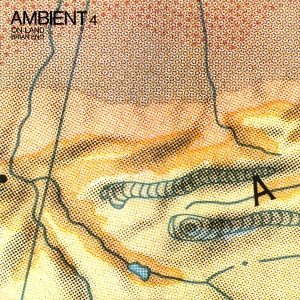
There's often precious little useful information on the internet about poets and artists who have involved themselves in landscape, but one thing the web is usually good for is popular music. Brian Eno, for instance, is unsurprisingly well served by various sites - most obviously Enoweb, which contains, for example, these comments from the sleeve notes to a reissue of On Land (1982).


Eno writes that "from Another Green World [1975] onwards I became interested in exaggerating and inventing rather than replicating spaces, experimenting in particular with various techniques of time distortion. This record represents one culmination of that development and in it the landscape has ceased to be a backdrop for something else to happen in front of; instead, everything that happens is a part of the landscape. There is no longer a sharp distinction between foreground and background.
In using the term landscape I am thinking of places, times, climates and the moods that they evoke. And of expanded moments of memory too... One of the inspirations for this record was Fellini's Amarcord (I Remember), a presumably unfaithful reconstruction of childhood moments. Watching that film, I imagined an aural counterpart to it, and that became one of the threads woven into the fabric of the music.
 
What qualified a piece for inclusion on the record was that it took me somewhere, but this might be somewhere that I'd never been before, or somewhere I'd only imagined going to. Lantern Marsh, for example, is a place only a few miles from where I grew up in East Anglia, but my experience of it derives not from having visited it (although I almost certainly did) but from having subsequently seen it on a map and imagining where and what it might be. We feel affinities not only with the past, but also with the futures that didn't materialize, and with the other variations of the present that we suspect run parallel to the one we have agreed to live in."

In a subsequent interview he explained the need to avoid New Age pastoral landscape music by providing a texture of more dissonant sounds. "Texture is information. Texture is only form looked at from a distance. If you look at this carpet, you perceive it as texture, but if you looked closer, you would see that it's actually a whole lot of forms. If you take birdsong -which is one of the aural textures of being in the country - the fact of it is that much of it is the sound of alarms and distress and attack.

"Landscape is a funny word for me, because it does conjure up pictures of nice little paintings with little paths going down them, but landscape really is and always has been a depiction of a psychological space, often of psychological cataclysm. it doesn't imply peacefulness, not to me.
"On the whole On Land is quite a disturbed landscape: some of the undertones deliberately threaten the overtones, so you get the pastoral prettiness on top, but underneath there's a dissonance that's like an impending earthquake."

As I write this entry I'm listening to a particularly effective track from the album, 'Unfamiliar Wind (Leeks Hills)'. According to the Wikipedia entry on the album, Eno explained that "Leeks Hills is a little wood (much smaller now than when I was young, and this not merely the effect of age and memory) which stands between Woodbridge and Melton. There isn't a whole lot left of it now, but it used to be quite extensive. To find it you travel down the main road connecting Woodbridge and it lies to your left as you go down the hill"

Monday, January 29, 2007

Wittgenstein's cottage

There is an excellent new 'exhibition in a book' on the theme of Place put together by Tacita Dean and Jeremy Millar, published by Thames & Hudson. Their introduction doesn't try to place 'place' precisely, but among other things they remark that 'one might say that 'place' is to landscape as 'identity' is to portraiture'. For example, they mention Guy Moreton's photograph, Wittgenstein's Cottage (2002-4), taken as part of Alec Finlay's Wittgenstein project. Both the photograph and the site itself might be seen as beautiful landscapes, but the ruins of Wittgenstein's cottage give the landscape a particular identity.

The book discusses place under the headings 'urban', 'nature', 'fantastic', 'myth / history', 'politics / control', 'territories', 'itinerancy' and 'heterotopias and non-places.' There is also a postcript which gives a four way conversation on place and its relationship with space and landscape, involving the two authors and two art historians: Joseph L. Koerner and Simon Schama. Here are some points they make:
  • That we now tend to reject the framed view (even though it is hard to escape - the painting having been replaced by the TV screen), in favour of a wider sense of experience and possibility.
  • That limitless space, as in the ocean, remains frightening, but that grids of latitude and longitude have made this kind of abstract space knowable (Deleuze and Guattari).
  • That obviously historical change means that places mutate, and that people can value both the monumental and the transient, e.g. landscapes seen through the car window like the frames of a film (Walter Benjamin).
  • That society only has a sense of place when it is no longer rooted. Urban dwellers looking at rural society and feeling their own rootlessness start to value 'place'.
  • That in the modern world place can be fixed with linear perspective and abstract thinking, and yet do we really know that their was a different sense of place in the pre-modern world?
  • That places can be experienced and recalled through all the senses (e.g. smells and sounds), but space may be something that can only be imagined.
  • That the forces of globalisation may be destroying the specificity of places, and yet those forces may themselves result from the 'staggering boredom' of life in the countryside and the possibilities of the modern city.
  • That we understand place emotionally, through memory, and ultimately find it much more difficult to explain than space.

Monday, October 30, 2006

Dream of the Vallüla massif

Tacita Dean is an artist who pursues coincidences. I bought the new Phaidon book about her at the weekend and reading it last night I realised she had quoted the same incident in Antoine de Saint-Exupéry's Wind, Sand and Stars which I had written about here earlier in the day... It comes in an article about Tristan da Cunha (published in Artforum in Summer 2005).

The Phaidon contemporary artists series includes an 'Artist's Choice' section and Tacita Dean has selected a poem by W.B. Yeats and a brief extract from W.G. Sebald's The Rings of Saturn in which the author gazes across the sea at a retreating cloudbank. This cloud formation, glistening 'like the icefields of the Caucasus', reminds Sebald of a dream in which he had walked a mountain range that had felt strangely familiar, and which later he placed as the view from a bus of the Vallüla massif, seen once on a childhood outing. 'I suppose it is submerged memories that give dreams their curious air of hyper-reality. But perhaps there is something else as well, something nebulous, gauze-like, through which everything one sees in a dream seems, paradoxically, much clearer. A pond becomes a lake, a breeze becomes a storm, a handful of dust a desert...'


Incidentally, the Artist's Choices in Phaidon's contemporary artists series make up a great reading list: Louise Bourgeois - Francois Sagan; Luc Tuymans - Andrei Platanov; Doug Aitken - Jorge Luis Borges; Uta Barth - Joan Didion; Mark Dion - John Berger; Richard Deacon - Mary Douglas; Jimmie Durham - Italo Calvino; Olafur Eliasson - Henri Bergson; Tom Friedman - Robert Walser and Timothy Leary; Antony Gormley - Saint Augustine; Dan Graham - Philip K. Dick; Paul Graham - Kazuo Ishiguro and Haruki Murakami; Mona Hatoum - Piero Manzoni and Edward Said; Jenny Holzer - Samuel Beckett and Elias Canetti; Roni Horn - Clarice Lispector; Ilya Kabakov - Anton Chekhov; Alex Katz - New York School Poets; Mike Kelley - Charles Fort; Mary Kelly - Julia Kristeva and Lynne Tillman; Paul McCarthy - Jean Paul Sartre; Cildo Meireles - Jorge Luis Borges; Raymond Pettibon - George Puttenham, Laurence Sterne and John Ruskin (what would Ruskin have made of Pettibon!); Pipilotti Rist - Anne Sexton and Richard Brautigan; Doris Salcedo - Paul Celan and Emmanuel Levinas; Thomas Schütte - Seneca; Lorna Simpson - Suzan Lori Parks; Nancy Spero - Stanley Kubrick and Alice Jardine; Jessica Stockholder - Julian Jaynes and Cornelius Castoriadis; Lawrence Weiner - W.B. Yeats and Kenneth Patchen; and Franz West - Kathryn Norberg.

Thursday, August 31, 2006

Red Arch Mountain, Utah

In Berlin Childhood around 1900 Walter Benjamin relates his childhood immersion in watercolours to the story of an old Chinese painter. The old man invited friends around to see his most recent picture. They were shown a landscape with a footpath leading along a stream and through a grove to a small cottage. When they turned around and looked for the painter, he had gone. They saw that he had entered the picture and was walking up the path to the door, where he paused ‘quite still, turned, smiled and disappeared through the narrow opening.’

Reading Benjamin’s book it is difficult not to reflect on one’s own childhood memories. Benjamin describes the streets, parks and monuments of Berlin but he also dwells on the landscapes of furniture and household objects that a child negotiates. He remembers the power of postcards and the old Imperial Panorama where ‘one afternoon, while seated before a transparency of Aix, I tried to persuade myself that, once upon a time, I must have played on the patch of pavement that is guarded by the old plane trees of the Cours Mirabeau.’ On reading this I went down to our cellar and found my father’s old stereoscope which had enchanted me as a child. The image below, for example, is Red Arch Mountain, Utah, probably photographed in about 1947 (some of the discs have this date). An anonymous photographer’s tiny image in Kodachrome “natural colour”, it now has the time capsule qualities of a miniature landscape in a Book of Hours. What seemed a strange, distant mountain to me as a child is now potentially accessible, but the world that produced the stereoscope is irretrievable, along with the imaginative space of childhood.

Friday, May 19, 2006

Valois mists

‘There was a slight stretch of open country to cover before reaching Othys. The village spire was already visible on the bluish hills that extend from Montméliant to Dammartin. The Thève was once again burbling over rocks and pebbles as it dwindled to a narrow stream near its source – where it rests among the meadows forming a small pond amid irises and gladioli’.  
This is a landscape in the Valois described by the narrator of Gerard de Nerval’s ‘Sylvie’ (1854). The translation is by Richard Sieburth, who observes that Nerval worked like a plein air painter: Nerval’s ‘limpid landscapes have often been compared to those of his friend Corot’. However, as with Corot, there is more to Nerval than mere description – this simple landscape quoted out of context conveys almost nothing of what makes ‘Sylvie’ so special (for me ‘Sylvie’ is one of the most perfect works of literature). Sieburth writes that ‘Sylvie’ is not simply ‘a regionalist roman champêtre in the bucolic manner of George Sand’. It has affinities with Poe and Proust: a shifting landscape of memory and ghosts. The Valois of Nerval’s youth merges with that of Rousseau, Catherine de Medici and Charlemagne. So perhaps a more representative landscape is from a dream in which the narrator sees a castle lit by the setting sun, its green lawn framed by elms and limes and on it young girls dancing. The shadows descend and ‘thin clouds of mist drifted over the lawn, spreading tufts of white upon the tips of the grass. We thought we were in paradise.’

For more on ‘Sylvie’ see this French Nerval site.

Monday, May 15, 2006

Memory of Marcoussis

Jean-Baptiste Camille Corot, Souvenir of Coubron, 1872

Like Howard Hodgkin, Jean-Baptiste Camille Corot was an artist who, at least in his later work, painted memories of landscapes rather than views. This is suggested in titles like Memory [Souvenir] of Coubron (above) and many others: Souvenir de Mortefontaine, de Sologne, de Toscane, du lac d'Albano, de Castelgandolfo...   Michael Clarke (Corot and the Art of Landscape) calls such painting an art of ‘reflection and reminiscence’ and compares it to the poetry of Lamartine and de Musset, who also used the term ‘Souvenir’ in their titles. Indeed ‘Corot’s The Shepherd Star of 1864 was possibly inspired by lines by de Musset, of whom the artist recalled "Ah! Musset what a poet… He also has greatly suffered. He took notice of me in the past when none recognized me. I owe him a debt of gratitude."’

Sunday, May 14, 2006

Venice / Shadows


The Green Château, In Central Park, Bombay Sunset… Howard Hodgkin sometimes chooses titles that would suggest landscapes, but the paintings themselves never do more than suggest landscapes. House Near Venice (1984-88) includes what appears to be a house reflected in water, but other Venice pictures are no more than blurred hazes of colour. Venice / Shadows (1984-88) suggests the idea of a cool doorway or the pattern of sunlight and Venice Grey Water (1988-89) gives a sense of the lagoon – not grey but shifting greens and blues. Hodgkin’s Venice, like Turner's, is a city of memory and floating forms. Rather than landscapes, these paintings are about passing time, with its moments of clarity and confusion. As Andrew Graham-Dixon has written, they are works in which ‘topography is displaced by metaphor.’

Saturday, May 06, 2006

Fallen willow leaves

For landscapes in haiku, an obvious writer to consult is the poet-painter Buson (1706-83), famous for his objective style and visual imagination. For example, from 1742 this poem about a willow tree:
Yanagi chiri
shimizu kareishi
tokorodokoro
The translation posted in several places on the web is by Robert Hass: ‘The willow leaves fallen / the spring gone dry / rocks here and there.’ Earl Miner has translated the last two lines as ‘in fresh waters weathered stones scattered here and there.’
The poem seems to be a simple landscape, describing a scene encountered by Buson, but it is also about poetry and the passing of time. The willow tree alludes to a poem by Priest Saigyo (1118-1190) in which he lingers in the shade watching the reflection of the tree in rippling water:
Michi no be ni
Shimizu nagaruru
Yanagikage
Shibashi tote koso
Tachidomaritsure.
Buson is also referring to an encounter with the tree at Ashino by Basho (1644-94) on the Narrow Road to the Deep North. As Haruo Shirane writes, ‘Basho pauses beneath the same willow tree and before he knows it, a whole field of rice has been planted. In contrast to Basho's poem, which recaptures the past, Buson's poem is about loss and the irrevocable passage of time, about the contrast between the situation now, in autumn, when the stream has dried up and the willow leaves have fallen, and the past, in summer, when the clear stream beckoned to Saigyo and the willow tree gave him shelter from the hot summer sun. Like many of Basho and Buson's poems, the poem is both about the present and the past, about the landscape and about other poems and poetic associations.’ For Buson (as Miner puts it in Japanese Linked Verse), ‘Saigyo and Basho are gone from the earth, remaining however in the mind as a cherished idea shrouded in the mystery of memory.’

Monday, February 06, 2006

A lake and a tree


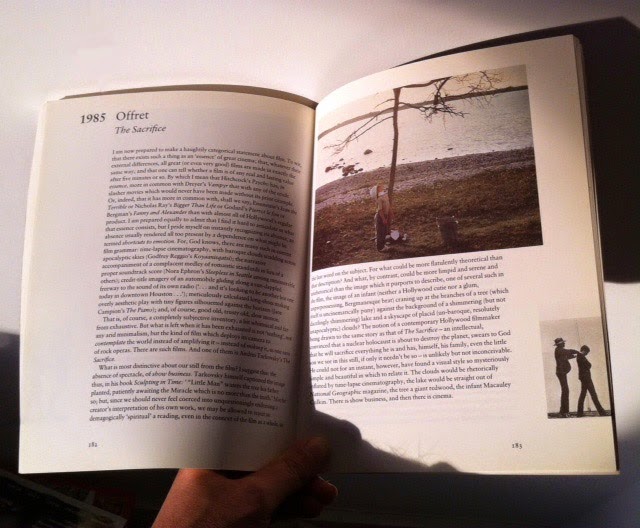
In his enjoyable survey of one hundred years of cinema, Flickers, Gilbert Adair discusses a still from Andrei Tarkovsky’s 1985 film The Sacrifice, an image which Tarkovsky himself captioned (in his book Sculpting in Time) ‘Little Man waters the tree his father planted, patiently waiting for the Miracle which is no more than the truth’. Adair suggests that this caption, “flatulently theoretical”, is the opposite of the image, “limpid and serene”. What makes the image so effective is the absence of spectacle. We see a “shimmering (but not dazzlingly shimmering) lake and a skyscape of placid (un-baroque, resolutely unapocalyptic) clouds.” In the unlikely event that Hollywood were to make such a film, the lake, Adair thinks, would inevitably have been “straight out of National Geographic.”

I think this insight is equally true of other Tarkovsky films, e.g. the scenes around the dacha in Solaris. For Mirror Tarkovsky altered the landscape before filming it, growing buckwheat round the old house to accord with his memories, even though the current owners assured him the soil would not support it (when the buckwheat flowered, Tarkovsky recognised a good omen). For all its beauty, the landscape he shot in Mirror is very real, like the lake in The Sacrifice, and gives the scene an opportunity to work naturally on the viewer’s emotions.


[Postscript: since writing this it has become possible to embed YouTube clips in blog posts.  I have therefore added above the 'wind scene' from Mirror.]

Tuesday, January 24, 2006

Tintern Abbey

J. M. W. Turner, Tintern Abbey, c. 1794
Source: Wikimedia Commons

The BBC is showing a three part Peter Ackroyd series on ‘The Romantics’. Their site contains a few free MP3 poetry readings, including William Wordsworth’s ‘Lines Written A Few Miles Above Tintern Abbey, On Revisiting The Banks of the Wye During A Tour, July 13, 1798’, a poem describing the redemptive powers of Nature and the consolations that can be had from landscapes held in the memory:

…let the moon
Shine on thee in thy solitary walk;
And let the misty mountain winds be free
To blow against thee: and in after years,
When these wild ecstasies shall be matured
Into a sober pleasure, when thy mind
Shall be a mansion for all lovely forms,
Thy memory be as a dwelling-place
For all sweet sounds and harmonies…

If you want to hear the BBC’s recording of John Clare’s ‘Remembrances’ you will have to be quick. As the site says “unfortunately Remembrances will only be available for 7 days due to copyright.” Those not familiar with this sorry situation can read all about the ongoing copyright dispute on this John Clare site.