Friday, May 17, 2013

Hills are all that is necessary, with a few trees for shade

Alfred Jarry on his bicycle
 
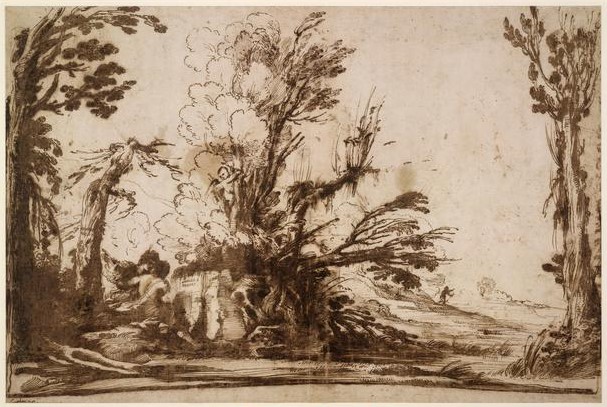
In his essay 'Of the Futility of the 'Theatrical' in the Theatre' (1896) Alfred Jarry offered 'a few words on natural decors, which exist without duplication if one tries to stage a play in the open air, on the slope of a hill, near a river, which is excellent for carrying the voice, especially when there is no awning, even though the sound may be  weakened.  Hills are all that is necessary, with a few trees for shade ... Three or four years ago Monsieur Lugné-Poë and some friends staged La Gardienne at Presles, on the edge of the Isle-Adam forest.  In these days of universal cycling it would not be absurd to make use of summer Sundays in the countryside to stage a few very short performances (say from two to five o'clock in the afternoon) of literature which is not too abstract.' 

Photograph of Maurice Pottecher's Théâtre du Peuple at Bussang in 1895

Jarry seems more interested in the idea of making theatre accessible to people than he is in the artistic possibilities of staging drama in real landscapes.  As Arnold Aronson notes in The History and Theory of Environmental Scenography, an open-air Theatre of the People had in fact recently been established by Maurice Pottecher, with a stage backing onto a hillside.  Discussing a performance there in 1896 the editor of the Mercure de France expressed a wish that 'some audacious young director - M. Lugné-Poë, for example - would take the opportunity to present plays in the parks around Paris.'  However, that year M. Lugné-Poë was busy inciting a riot with the first performance of Jarry's Ubu Roi... 

Aurélien-François Lugné-Poë was the director of the Théâtre de l'Œuvre, which had opened in 1893 with Maeterlink's Pelléas and Mélisande.  The following year he staged Henri de Régnier's La Gardienne, the play Jarry mentions in the context of outdoor theatre.  Régnier's words were recited from the orchestra pit whilst the actors moved silently on stage, partly hidden by a green gauze veil.  The backdrop was a Symbolist landscape of blue trees with a purple palace, painted by Édouard Vuillard.  According to the critic Jules Lemaître it was like 'a Puvis de Chavannes fresco imitated by the unsteady hand of a colour-blind baby.'  All this did not go down well with audiences, who were particularly baffled by the lack of synchronisation between speech and actions.  It is easy to imagine Régnier's poetry casting more of a spell under the trees of a real forest.

Friday, May 10, 2013

The Arrière-pays


'I have often experienced a feeling of anxiety, at crossroads.  At such moments it seems to me that here, or close by, a couple of steps away on the path I didn't take and which is already receding – that just over there a more elevated kind of country would open up, where I might have gone to live and which I've already lost.'  This unattainable country is the subject of Yves Bonnefoy's beautiful aesthetic reverie, The Arrière-pays (1972), recently translated by Stephen Romer.  Certain landscapes seem almost to speak 'like a language, as if the absolute would declare itself, if we could only look and listen intently.' But it remains out of reach: 'it is as if from the forces of life, from the syntax of colours and forms, from dense or iridescent words that nature perennially repeats, there is a single articulation we cannot grasp.'   And yet 'there are certain works that can, for all that, give us a fair idea of the impossible potential.  The blue in Nicolas Poussin's Bacchanalia with Guitar Player has that stormy immediacy, that non-conceptual clear-sightedness for which our whole consciousness craves.' 

Last night in the school hall of the Lycée Français, introducing an event dedicated to The Arrière-pays, Stephen Romer said he often recollected that image of the blue in Poussin's sky.  When he entered the room of Claude landscapes in Oxford that I mentioned here a couple of years ago for example, the arrière-pays was suddenly present in their blue distances.  As I listened to this I peered at a reproduction of Poussin's painting, dimly projected onto a screen behind the speakers, but the blue was hard to discern.  If 'the absolute' failed to declare itself on this occasion, it was partly because there were so many distractions in the room - temporary seats rattling, bored students whispering to each other and an organiser who spent her time coming in and out and interrupting proceedings to tell the speakers how to use microphones.  Still, we had come to experience the aura of the great Yves Bonnefoy, now ninety years old, who seemed unfazed by his surroundings.  He talked vividly about the way his childhood imagination was stirred by the names on a radio dial, the memory of summers spent in the country near the River Lot and his first impressions in Italy of the real landscape he had gazed at in the paintings of the Quattrocento.

Just before the event came to an unexpected end, Bonnefoy was talking with Romer and Anthony Rudolf about an old photograph of an Armenian church that appears in one of the later essays appended to  this edition of The Arrière-pays.  They made a link with the poetic images Sebald used in his books - both have a mysterious, disconnected quality.  This is attributable in part to their grainy light which seems to fall like a "metaphysical snow", directing our thoughts away from the objects depicted and taking us back to early childhood, before our minds had started to impose a structure on the world.  They are mirages, seducing us into dreams that deny the reality of the world.  'I have suffered much, myself, from the lure of images,' Bonnefoy writes in this essay, and it was partly to counteract this that he took up the study of art history.  In Poussin he eventually found 'a painter who could guide me into a self-acceptance of our finite nature.'  As he writes at the end of The Arrière-pays, 'Poussin searches long for the key to the 'music of knowledge', to a return to the wellspring of the real by the power of number; but he is also the man who gathers a handful of earth and says Rome is that.'

Nicolas Poussin, Moses Saved from the Waters, 1647

Monday, May 06, 2013

Mountain Rhythm and Mountain Plateau


When I mentioned Xu Bing in a post here three years ago I referred to installations I could not see, in New York and Sydney, so it was a pleasure on Saturday to enter the portico of the Ashmolean for an exhibition devoted to his art.  Ideally the Tate would put on a full retrospective, including his celebrated Book from the Sky (1991), but the Ashmolean's Landscape/Landscript was fine from the perspective of this blog, tracing as it did the artist's engagement with landscape and language.  This story, from student sketches to four lithographs completed last autumn, The Suzhou Landscripts, is outlined briefly in the notes below.
Xu Bing was born in 1955 to parents who both worked at Peking University, but during the Cultural Revolution his mother was demoted and his father paraded through the streets and jailed.  School was suspended and so Xu Bing taught himself calligraphy and engraving.  In 1974 he was sent to a mountain village north of the Great Wall to do agricultural labour, as part of an 'educated youth' detachment.  The exhibition includes a winter view of farm buildings drawn on wrapping paper in which the white children's crayon used to depict snow shows signs of having frozen in the cold and then melted.       
In 1977 the Central Academy of Fine Arts reopened and Xu Bing was among its first intake.  His training included trips to work alongside rural labourers and industrial workers - the exhibition has a drawing of a timber yard in northeast China whose stacks of logs foreshadow Xu Bing's later compositions based on notions of repetition.  His sketching became simpler and more abstract as he left behind the influence of academic art (the Ashmolean has a case of nineteenth century French drawings to show how this shaped first Soviet and then Chinese socialist realism).  Now employed as a teacher at the Academy, Xu Bing's developed his own vocabulary of 'shaping lines' for increasingly experimental woodblock prints.    
Two of the most interesting landscapes in the exhibition, Mountain Rhythm and Mountain Plateau were made in July 1986 near the hydroelectric power station on the Yellow River at Longyang Gorge.  As the catalogue says, 'the process was unusual.  Xu Bing took with him to Qinghai copper plates that had been waxed in Beijing.  In the open air he scratched through the wax to create the image, using a needle from the travelling printmaking kit he customarily used for his peripatetic teaching.  He added the acid in the evening on his return to the workers' housing where he was staying and the images were printed on his return to Beijing.'      
In 1987 he started his Repetitions series, which you can see on Xu Bing's website'for these works, he made an impression of each state - beginning with a solid black print from an uncarved block and ending with a blank white ''print'' representing the block after the raised surface had been completely carved away.'  The example in the exhibition resembles blocks of newsprint in an unknown script and shows the Ziluidi system of agriculture in which each family was allowed to retain one plot for their own use.   
The exhibition skips over the next ten years, when Xu Bing was establishing his international reputation after moving to the US in 1990.  The idea for the Landscripts came to him in 1999 whilst sketching in the Himalayas.  'I sat on a mountain and, facing a real mountain, I wrote 'mountain' (you might also say I painted a mountain, as for Chinese people to write mountain and to paint a mountain are the same thing).  Where there was river water I wrote the character for 'water'.  The clouds shifted, the mountain colours changed, the wind blew and the grasses moved ... At this point I could set aside completely the historical theories of style and brushstroke and allow myself to be entirely in the feeling of that moment.'   
For me the best kind of Landscript is composed purely of text, and there is a beautiful example in this exhibition from 1992, executed in ink on Nepalese paper with the characters for rock, rain, pine and so on.  In the four new Suzhou Landscripts Chinese characters are less conspicuous, incorporated within the brush strokes of traditional landscapes (versions of paintings by Liu Jue, Zhai Da Kun, Zheng Yuan Xun and Wang Shi Min).  The forms of ancient pictographs are also overlayed in red and the landscapes are surrounded with inscriptions in Xu Bing's Square Word Calligraphy (which turns English words into the shapes of Chinese characters).
The final room in the exhibition has works from Xu Bing's 2005 contribution to UNESCO's Human/Nature project and a 2010 adaptation of The Mustard Seed Garden Manual of Painting (1679), which is discussed in a short MFA Boston video.   The latter illustrates Xu Bing's belief that 'a core characteristic of Chinese painting is its semiotic nature': the manual is a dictionary of signs (some of which I have mentioned here before) and an artist need only memorise them, like a language, in order to piece together a world.

Sunday, April 28, 2013

The Jardin Monceau


Among the distant ancestors of television, the eighteenth century rouleaux transparents of Louis Carrogis (known by the name of Carmontelle) have a particular interest for landscape historians.  As the handles of the box were turned, viewers were taken on a stroll through a succession of scenes with titles like The Four Seasons, Landscapes of France and The Banks of the Seine.  The clip embedded above shows a surviving example, Figures Walking in a Parkland, which featured in the Getty Museum's 2006 exhibition, Carmontelle's Transparency: An 18th-Century Motion Picture.  Carmontelle, a cobbler's son, was employed as tutor, engineer and master of entertainments by various French aristocrats - the Duc de Chevreuse, the Duc de Luynes, the Comte Pons de Saint-Maurice, and from 1763, Louis Philippe I, Duke of Orléans.  He wrote plays, designed sets and painted portraits of illustrious guests, including Rameau, d'Holbach, Sterne and the young Mozart.  In the 1770s Carmontelle was given the opportunity to create a real landscape, when he was commissioned to design the Jardin Monceau for the Duc de Chartres, Louis-Philippe's son.  The resulting garden was, according to Carmontelle, 'a land of illusions.'

Carmontelle, Carmontelle Giving the Keys of the Parc Monceau to the Duke of Chartres, c. 1790

The spectacle of the Jardin Monceau is conveyed by John Dixon Hunt in his book The Picturesque Garden in Europe.  'There was, according to Carmontelle's own commentary in Jardin Monceau près de Paris (1779), a specific itinerary through its 'quantity of curious things', and later commentators have plausibly attributed to his route a Masonic subtext.  Visitors entered by a Chinese gateway, next door to a gothic building that served as a chemical laboratory, and passed through greenhouses and coloured pavilions.  Upon pressing a button, a mirrored wall opened into a winter garden painted with trompe-l'œil trees, floored with red sand, filled with exotic plants, and containing at its far end a grotto in which summer parties were held while music was played in the chamber above.  Outside was a farm.  Then there were a series of exotic 'locations': a Temple of Mars, a winding river with an island of rocks and a Dutch mill, a dairy, two flower gardens, a Turkish tent poised, minaret-like, above an icehouse, a grove of tombs (still there today), and an Italian vineyard with a classical Bacchus at its centre, regularly laid out to contrast with an irregular wood that succeeded it.  The final stretches of the itinerary included a Naumachia or Roman water-theatre (still there), more Turkish and Chinese effects, a ruined castle, yet another water-mill, and an island on which sheep grazed.' 

Friday, April 26, 2013

The Pine Woods Notebook


After the defeat of the French army and the German occupation, Francis Ponge set out, travelling by foot and bicycle, to reach the Free Zone.  It was a month and a half before he reached a small village in the Haute-Loire and there, reunited with his family but with no access to books, he began writing in the only paper that was available to him.  Over the course of a month, this pocket notebook recorded his repeated attempts to express the essence of the landscape he now found himself in.  The pine woods, like this part of unoccupied France, were a shelter, 'where one can roam about at ease, without underbrush, without branches grazing the head, where one can stretch out on dry ground, not spongy, quite comfortably.  Each pine wood is like a natural sanatorium, also a music hall... a chamber, a vast cathedral for meditation (fortunately a cathedral without a pulpit) open to all winds, but through so many doors it's as though they were closed.  For winds hesitate before them.'
August 7th: The wood is like a room - 'A carpet prevails over it.  A few stray rocks supply furnishings' 
August 8th: The pine tree is mostly dead wood and 'flares up only at the very peak: something like a candle'
August 9th: The masts of the trees are 'crinkled, lichen-cloaked like an elderly Creole'
August 12th: Pine needles are like bristles, 'hard as the teeth of a comb.'
August 13th: 'These woods are of a type of structure that has a very high ceilinged ground floor and above that an extremely complicated framework of upper floors, ceiling and roof.'  
August 17th: Within the wood there is 'perfect dryness.  Assuring vibrations and musicality.  Something metallic.  The presence of insects.  Fragrance.'
August 20th: The pine is 'the elemental idea of a tree.  It is an I, a stalk, and the rest matters little.'

August 21st: The wood is like a hairdressing salon - 'aromatic brushery in an overheated atmosphere' and 'fragments of sky like shards of mirrors.'

August 22nd: It is a 'temple of caducity'

August 24th: 'Above all, it is a slow production of wood.'

As Ponge walked and wrote he assembled the elements for a poem with the tentative title 'Sunlight in the Pine Woods.'  But what he eventually published a decade later in La rage de l'expression (translated for Archipelago Books by Lee Fahnestock) was not this poem, or even the kind of short prose pieces that brought acclaim when Le parti pris des choses appeared in 1942, but the notebook entries themselves.  The observations quoted above are found among lists and dictionary definitions, rewritings, plans and half formed ideas ('would it be possible to disentangle a forest...?')  For Ponge poetry is always imperfect, but a reader of The Pine Woods Notebook can follow him into the trees and witness poetry in the making.

Friday, April 19, 2013

KA MOUNTAIN AND GUARDenia TERRACE

 
 Still from Ka Mountain by OpenEndedGroup

In 1972 Robert Wilson and his avant-garde theatre group the Byrd Hoffman School of Byrds staged a seven-day non-stop performance across an entire mountain landscape in Iran, called KA MOUNTAIN AND GUARDenia TERRACE: a story about a family and some people changing.  Maria Shevtsova describes it in her book on Robert Wilson as 'a site-specific fantasia, a ritual and a pilgrimage across the seven hills of the arid rocky terrain of the Haft Tan Mountain.' It 'involved an old man's journey up one of these hills while a host of unconnected events occurred simultaneously on all seven.  Every day a different Byrd played the old man as if to suggest, by the change of actor, the idea of he seven stages through which human life supposedly passes.  The old man paused at various stations identified by cut-outs of such symbols of Western civilisation as Noah's Ark, the Acropolis and the New York skyline.  These served as relay points for the performers and were where the spectator-participants could stop and rest, if they had not dropped out already.  (Indeed, few managed to last the week.)'  A dinosaur stood at the summit and the performance ended with the face of a giant ape going up in flames.  But 'the mountain itself with its searing heat during the day and intense cold at night could be said to be the prime actor in this epic whose greatest significance probably lay in the personal inner journeys undergone by its makers.'

 Still from Ka Mountain by OpenEndedGroup

In an animated film made recently by the OpenEndedGroup, Robert Wilson describes his design for KA MOUNTAIN AND GUARDenia TERRACE.  The image above shows a sketch of the setting for the 'Overture' to the performance: an oasis-like Sufi garden with a view up to the mountain.  This was where, as Osia Trilling, wrote in The Drama Review (June 1973), 'the audience was able to get a foretaste of some of what was to follow later.  Here they caught their first glimpse of the livestock Wilson had collected, some of them in uncomfortably small cages, including a bear, a lion, various horses, donkeys, poultry, deer, goats and an elephant.'  If this sounds a bit dodgy from the perspective of 2013, consider Wilson's unrealised plan to blow up the top of the mountain at the end of the seven-day pilgrimage...  'At this, the Shiraz Festival authorities, who had proved unusually accommodating until then, drew the line.'  How playful this proposal was is not clear: Trilling tried to elicit information from him in an amusingly unhelpful interview ("What is the meaning of Ka in your title?" - "I dunno.")  In the end Wilson was content to set an emblematic Chinese pagoda on fire - its cut-out form can be seen on the left next to the burning ape in the photograph below.  Basil Langton recalled the scene in, 'Journey to Ka Mountain': the landscape on this last night became 'a fiery torch that burned all night over the sleeping town of Shiraz - by accident or design, a symbol of "mountain theology" and the fire-worship of ancient Persia.'

Basil Langton's photograph of the burning ape on Ka Mountain
See The Drama Review, Vol 17, No. 2, June 1973

Footnote:
Paul Kaiser of OpenEndedGroup has alerted me to 'a huge new work we're making about a cross-section through the broken city of Detroit', which sounds like it will appeal to readers of this blog.  Their site includes earlier artworks and some fascinating writings, including something on the background to their film Ka Mountain.

Sunday, April 14, 2013

A lion near Hymettos

One misty September morning in 1999 on the island of Naxos, my girlfriend and I set off in a taxi to find the kouros of Melanes.  As we drove along empty roads shaded with olive trees and past hillside farms and whitewashed churches our driver told us the story of how he had abandoned a career in the law, unable to bring himself to "tell lies".  He dropped us off near the site of the kouros - a recumbent statue 6 metres long, resting where it had been abandoned in the 6th century BC, probably because its leg had been broken.  Moved by the sight of this ancient, weathered youth, we wanted to see a second, less well-preserved kouros that apparently lay somewhere nearby.  An old lady in the neighbouring orchard spoke no English, but fortunately a passing German hiker spoke some Greek and he asked her how to find it.  We would have to climb over the rocks of the ancient quarry: "you have to be like a sheep".  And so started up a rough track before heading off across the hillside, picking our way between thistles and thorns and crumbling dry-stone walls.  There was still a low mist obscuring the distant peaks and everything was quiet.  At last we saw it, lying prone and heavily eroded among the marble boulders.  The photograph I took (below) hardly conveys the experience of that moment, when the deep past seemed seemed both present and impossibly remote.


In October 1805, Edward Dodwell came across another giant statue in the Greek landscape.  This colossal marble lion, its legs broken, lay undisturbed in the mountains of Hymettos.  But it must have been too desirable to be left there for travellers to come upon, and was eventually removed to a museum in Athens before ending up by the chapel of Agios Nikolaus at Kantza.  I have looked this place up online and all I can find is one tiny photograph of the lion, caged behind white railings.  I wonder how many people ever go to see it there?  The painting Doswell made can be seen in the British Museum's 'In Search of Classical Greece: Travel Drawings of Edward Dodwell and Simone Pomardi 1805–1806'.  The centrepiece of this exhibition is a panorama of Athens, seen from the Hill of the Muses, near the Monument to Philopappos (where, incidentally, Giovanni Battista Lusieri was also sketching that year, as I mentioned in a previous post).  Athens then was little more than a village at the base of the Acropolis; in 1999 we found a polluted urban sprawl and taxi drivers unwilling to stop for us.  It is easy to imagine urbanisation overtaking the 'lone and level sands' round the broken statue of Shelley's Ozymandius, his great shattered head with its 'wrinkled lip and sneer of cold command' long since gone, removed and lost to view in some unvisited suburb.

Edward Dodwell, Lion near Hymettos, looking north towards Mount Pentele, 1805