Friday, January 30, 2009

Death-white realms


Ethan Frome cover:
Figures in the Snow by Pamela Scott Wilkie (2005)

'The village lay under two feet of snow, with drifts at the windy corners. In a sky of iron the points of the Dipper hung like icicles and Orion flashed his cold fires. The moon had set, but the night was so transparent that the white house-fronts between the elms looked gray against the snow, clumps of bushes made black stains on it, and the basement windows of the church sent shafts of yellow light far across the endless undulations...'

Thus begins Ethan Frome (1911), a novel in which the snowy winter landscape plays a central role both in the framing narrative and the tragic story itself. I was listening to it recently in a good reading by Elizabeth Klett for LibriVox.org. It was a strange thing walking along to work and hearing descriptions of freezing weather while feeling pretty cold myself. The iPod allows you to overlay your own sensory experiences with those described in the book. And of course in theory it offers the opportunity to listen to stories in situ, experiencing Ethan Frome for example whilst literally walking through the snowy New England landscape (rather than, in my case, plodding through the cold streets of North London).

Still, the ideal is probably to read books like Ethan Frome whilst sitting snug and warm inside (and as I write this it is freezing out there...) Which reminds me of another classic novel Elizabeth Klett has read for LibriVox, Jane Eyre, in which Jane journeys in imagination to the cold seas of the far north:

'Folds of scarlet drapery shut in my view to the right hand; to the left were the clear panes of glass, protecting, but not separating me from the drear November day. At intervals, while turning over the leaves of my book, I studied the aspect of that winter afternoon. Afar, it offered a pale blank of mist and cloud; near, a scene of wet lawn and storm-beat shrub, with ceaseless rain sweeping away wildly before a long and lamentable blast.

I returned to my book—Bewick's “History of British Birds:” the letter-press thereof I cared little for, generally speaking; and yet there were certain introductory pages that, child as I was, I could not pass quite as a blank. They were those which treat of the haunts of sea-fowl; of “the solitary rocks and promontories” by them only inhabited; of the coast of Norway, studded with isles from its southern extremity, the Lindeness, or Naze, to the North Cape—

“Where the Northern Ocean, in vast whirls,
Boils round the naked, melancholy isles
Of farthest Thule; and the Atlantic surge
Pours in among the stormy Hebrides,”

Nor could I pass unnoticed the suggestion of the bleak shores of Lapland, Siberia, Spitzbergen, Nova Zembla, Iceland, Greenland, with “the vast sweep of the Arctic Zone, and those forlorn regions of dreary space—that reservoir of frost and snow, where firm fields of ice, the accumulations, of centuries of winters, glazed in Alpine heights above heights, surround the pole, and concenter the multiplied rigors of extreme cold.” Of these death-white realms I formed an idea of my own; shadowy, like all the half-comprehended notions that float dim through children's brains, but strangely impressive.'

The original passages from Thomas Bewick can be read at the Brontë Sources site. The lines of verse are from Thomson's The Seasons (the enjoyment of which will demonstrate how it is possible to enjoy that long poem in small doses, pace Michael Schmidt). Jenny Uglow, biographer of Thomas Bewick, has described Charlotte Brontës enthusiasm for Bewick. When he died in 1828 (long before Jane Eyre), she wrote a poem 'imagining his traveller on the dreary moor and his chill picture of the surf crashing at sea:

There rises some lone rock all wet with surge
And dashing billows glimmering in the light
Of a wan moon, whose silent rays emerge
From clouds that veil their lustre, cold and bright.'

Saturday, January 24, 2009

Scenery and a Music Box

'I am prepared to meet my death / In this excessively lucid landscape' wrote Kenji Miyazawa in his poem 'Scenery and a Music Box.' In the notes to his translation of this poem, Roger Pulvers suggests that it beautifully illustrates Kenji's vision. Dated 16 September 1923, the poem describes a walk along the Toyosawa River to cut down trees in the early evening. Kenji ends up imploring the hill to be still, expecting nature to take from him something in return for the trees he has felled.

The poem has landscape motifs that Kenji used repeatedly: the river, the wind, clouds, stars. There is the figure of a farmer fused with the landscape set alongside signs of modernity like the electric wires which whistle in the wind and become a 'music box'. As this wind dies down into a gentle breeze, Kenji sees it as a symbol of eternity (he uses the Buddhist term kalpa). The focus of the poem sometimes zooms in on luminous detail, like the raindrops on the bridge, and includes striking images drawn from science and geology, like the clouds that are 'crystal-rimmed' and then 'chalcedonic'.

Kenji's 'active engagement with nature, and his seeing himself as its faithful chronicler and recorder, was sufficient to set him apart from virtually all other Japanese poets, who tended to use nature as a springboard for their own musings and lamentations.' Roger Pulvers talks about the way Japan's industrialisation overwrote its traditional love of nature. In a passage that reminds me of remarks by Alex Kerr I discussed in an earlier posting here, he says 'most of Kenji's contemporaries would have believed - as Japanese still tend to believe today - that the Japanese love nature virtually more than do the people of any other nation. This belief is held despite the fact that preservation of nature is a very low priority for those people in Japan who hold the future of the country in their hands. Nature itself has become nothing more than a figment of nostalgia to most Japanese people.' In 'Scenery and a Music Box' the poet observes that the bridge over the river provides a view 'seething with nostalgia'. Kenji wanted nature cherished, but he also wanted to promote the science of modern agriculture and reduce rural poverty. Kenji's ideal life is described in his last and best known poem, 'Strong in the Rain': a strong man, free from desire, living in 'a little thatched-roof hut / In a field in the shadows of a pine tree grove.'

It may just be coincidence, because I've been reading both writers recently, but Miyazawa seems to me to share much in common with Henry David Thoreau. They both rejected convention (and their own fathers' lives) in favour of a life lived according to their own beliefs. They shared a poetic vision of nature alongside a practical interest in the process of farming. Miyazawa's desire to live 'Strong in the Rain' reminds me of the kind of life aspired to by Thoreau at Walden Pond. Neither of them married and their asceticism was seen by others as extreme. Neither was as physically robust as they would like to have been: Thoreau died of tuberculosis at the age of 44, Miyazawa of pneumonia at the age of 37 - his last request was for a thousand copies of the Lotus Sutra to be printed and distributed among his friends and acquaintances.

Tuesday, January 20, 2009

South Cove

I've been a bit busy lately, but here's a quick link to the Monumental Land Art site, which in turn gives links 'to satellite and topographic imagery of the best known large earthworks, both old and new, still extant in the continental United States, as well as a few significant smaller scale pieces. The images provide a sense of comparative scale; the topographic views provide a sense of the terrain; and the geophysical coordinates provide a sense of their proximal relationship.' I like their gif images for each site (created by Don Seeley/Daring Designs), like the representation here of South Cove, which Mary Miss created in 1988 for Battery Park, New York City.

Monday, January 12, 2009

D'autres auront nos champs

Landscape is a central theme of Graham Robb's fascinating book The Discovery of France (2007). He is continually overturning the reader's expectations, for example in this passage on the impact of modernity on the French landscape.

'Until the late nineteenth century, there are few equivalents in French literature of the sentiment expressed by William Wordsworth: 'wheresoe'er the traveller turns his steps, / He sees the barren wilderness erased, / Or disappearing' (1814). 'Is then no nook of English ground secure / From rash assault?' (1844). The best-known French elegy on the theme of changing landscape is Victor Hugo's 'Tristesse d'Olympio' (1837). It refers to the gatekeeper's cottage near Bièvres, eight miles south-west of Pairs, in which Hugo rented a room for his mistress. To an English poet, the changes described by Hugo would have seemed barely worth a mention. The steep and sandy road where the beloved left her footprint has been paved, and the milestone on which she sat and waited for her lover has been scuffed by cart wheels. A wall has been built around a spring. But other parts are returning to the wild: 'Here, the forest is missing, and there, it has grown.' 'Our leafy chambers now are thickets.' There is no sign that Bièvres would one day be the home of an industrial bakery, the Burospace technology park, the 'RAID' division of the riot police and the Victor Hugo car park.

D'autres auront nos champs, nos sentiers, nos retraites ;
Ton bois, ma bien-aimée, est à des inconnus.

(Others shall have our fields, our paths and hiding places. /
Your wood, my beloved, now belongs to strangers.)'

Saturday, January 10, 2009

Frequently the woods are pink

There was much excitement in our house when we heard that Tate Modern is going to do a Roni Horn exhibition this year. I have tickets for the talk on 25 February so should be able to report on any interesting landscape-related discussion. One of the first series of hers that caught my imagination was the 'Key and Cue' works, like I'm Nobody! Who Are You? (1994). These each use just the first line from one of Emily Dickinson's 1,775 short poems. Some other examples from the series which have a landscape connection are:

THE MOUNTAINS - GROW UNNOTICED

AIR HAS NO RESIDENCE, NO NEIGHBOR.

TO MAKE A PRAIRIE IT TAKES A CLOVER AND ONE BEE

FREQUENTLY THE WOODS ARE PINK -

These fragments have a sense of containment but retain a quality of openness and complexity. When you read the whole Emily Dickinson poem it can seem a slight anticlimax...

FREQUENTLY the woods are pink,
Frequently are brown;
Frequently the hills undress
Behind my native town.

Oft a head is crested
I was wont to see,
And as oft a cranny
Where it used to be.

And the earth, they tell me,
On its axis turned,—
Wonderful rotation
By but twelve performed!

But I wouldn't say this about many of them - few of us would prefer the fragment to this famous poem...

To make a prairie it takes a clover and one bee, -
One clover, and a bee,
And revery.
The revery alone will do
If bees are few.

To end, here are a few more Emily Dickinson first lines, which I've extracted from the index to her collected poems, each suggestive of a landscape:

THE MOUNTAINS STOOD IN HAZE
THE CLOUDS THEIR BACKS TOGETHER LAID
A LANE OF YELLOW LED THE EYE,
A FIELD OF STUBBLE LYING SERE,
A WILD BLUE SKY ABREAST OF WINDS
FOUR TREES UPON A SOLITARY ACRE
THE HILLS IN PURPLE SYLLABLES
HOW THE OLD MOUNTAINS DRIP WITH SUNSET
MY GARDEN LIKE THE BEACH

Friday, January 02, 2009

The season of rainy winter

Hesiod's Works and Days is one of the earliest Greek poems we have, which makes it a bit of a shame that the author can come over on first reading as a bit of a bore. As Dorothea Schmidt Wender puts it in the Penguin translation - 'many of us find his conservatism, pessimism, didacticism, misogyny and lack of fun quite uncongenial.' However, she also points out moments of genuine artistry in the poem, as in the contrast he draws between the lives of those who have to work in the harsh North Wind and 'the soft-skinned girl who stays / Indoors at home', able to go 'to an inner room at home' and 'take a nap upon a winter day.' The description of this wind, like other parts of the poem, give a sense of the landscape of Boeotia: 'He blows through Thrace, where horses graze; he blows / On the broad sea and whips it up: the earth / and forest mutter; in the mountain pass / He falls on high-leafed oaks and thick-branched pines / And brings them to the fruitful earth; while all the boundless forests cry...'

Opening page of a 1539 version of Hesiod's Works and Days

Here is another short extract concerned with ploughing from one of the translations available online: 'Mark, when you hear the voice of the crane who cries year by year from the clouds above, for she gives the signal for ploughing and shows the season of rainy winter; but she vexes the heart of the man who has no oxen. Then is the time to feed up your horned oxen in the byre; for it is easy to say: “Give me a yoke of oxen and a wagon,” and it is easy to refuse: “I have work for my oxen.” The man who is rich in fancy thinks his wagon as good as built already--the fool! he does not know that there are a hundred timbers to a wagon. Take care to lay these up beforehand at home. So soon as the time for ploughing is proclaimed to men, then make haste, you and your slaves alike, in wet and in dry, to plough in the season for ploughing, and bestir yourself early in the morning so that your fields may be full.'

A small bronze sculpture of a plough is one of several works by Georges Braque inspired by Hesiod that was showing at the Royal Academy's exhibition Behind the Mirror: Aimé Maeght and His Artists. The show included Braque's late landscapes which I had seen before but not previously thought of in connection with Works and Days. At the RA they were juxtaposed with Braque's works based on Hesiod and they seem to convey a sense of archaic poetry and reduce the landscape down to its fundamental elements of earth and sky. A couple of them include a plough in the foreground.

The last time I saw paintings like Landscape - Fields with Overcast Sky (1956-7) and Plain I (1955-56) was at the late RA's late Braque show in 1997. A review article by Robert Rosenblum made the comparison with Van Gogh, who 'looms large in a startlingly direct series of Normandy landscapes begun in 1955, a response, perhaps, to the exhibition "Van Gogh et les peintres d'Auvers-sur-Oise," held at the Orangerie in the winter of 1954-55. One of these poignantly simple paintings, Landscape with Dark Sky, is virtually a re-creation of the Dutch master's Wheatfield with Crows, not only in theme and format but in its heavy impasto, a bit of pictorial therapy whose outdoor air and expansive horizon offer a temporary respite from the sequestered visual and emotional intricacies of the studio paintings.'

Back in 1982 John Russell described one of these late landscapes as having 'precisely the pondered look, the rich encrusted texture, and the mingling of real and unreal, poetical and matter-of-fact, that we treasure in late Braque.' These are the qualities we can still read in Hesiod's Works and Days.

Saturday, December 27, 2008

The Oder's exit into the Baltic in C sharp major, pianissimo


In Howard's End (1910) E.M. Forster exemplifies some pretentious conversation which a hundred years earlier might have included reflections on the Picturesque. Instead, a landscape is seen through the prism of music:
"People at Stettin drop things into boats out of overhanging warehouses. At least, our cousins do, but aren't particularly rich. The town isn't interesting, except for a clock that rolls its eyes, and the view of the Oder, which truly is something special. Oh, Mrs. Wilcox, you would love the Oder! The river, or rather rivers--there seem to be dozens of them--are intense blue, and the plain they run through an intensest green."

"Indeed! That sounds like a most beautiful view, Miss Schlegel."

"So I say, but Helen, who will muddle things, says no, it's like music. The course of the Oder is to be like music. It's obliged to remind her of a symphonic poem. The part by the landing-stage is in B minor, if I remember rightly, but lower down things get extremely mixed. There is a slodgy theme in several keys at once, meaning mud-banks, and another for the navigable canal, and the exit into the Baltic is in C sharp major, pianissimo."

"What do the overhanging warehouses make of that?" asked the man, laughing.

"They make a great deal of it," replied Margaret, unexpectedly rushing off on a new track. "I think it's affectation to compare the Oder to music, and so do you, but the overhanging warehouses of Stettin take beauty seriously, which we don't, and the average Englishman doesn't, and despises all who do. Now don't say 'Germans have no taste,' or I shall scream. They haven't. But--but--such a tremendous but! --they take poetry seriously. They do take poetry seriously.

Friday, December 26, 2008

Maiden Castle

The photograph I have behind the title of this blog was taken at Maiden Castle in Dorset. The path through the grass reminded me of Richard Long but the green slopes of the castle itself are also reminiscent of recent land art. In an article in the January edition of the BBC's Garden's Illustrated, Ambra Edwards places Maiden Castle at the start of her chronology of landforms:
  • The ancient earth sculptures - ziggurats, pyramids, barrows, henges, tumuli and forts
  • The re-shaping of the land for Renaissance gardens, like Donato Bramante's terraces and ramp for the Belvedere Court of the Vatican
  • Charles Bridgman's military-inspired ramparts, bastions and other landforms - most evident today in the amphitheatre at Claremont
  • Following Capability Brown, a decline of the artificial landform in favour of more natural landscapes, before some signs of revival in mid-twentieth century garden design, like Fletcher Steele's famous Blue Steps at Naumkeag in Massachusetts
  • The earthworks of the late sixties - Michael Heizer, Robert Smithson et al
  • Recent gardens influenced by land art, like Charles Jencks and Maggie Keswick's Garden of Cosmic Speculation
The article ends by describing the work of Kim Wilkie, who has designed an inverse pyramid for Broughton Park to match the existing mount: 'The earthwork will be named after Orpheus to celebrate its descending form and as a place for music and contemplation... An inverted grass pyramid will descend 7 metres below the level of the restored terraces. Walking around the landscape, the new design will be invisible, but drawing near to the mount, a gentle grass path will spiral down to a square pool of still water deep underground. The water will reflect the sky, a little like an inverted James Turrell occulus.'

This description shows how landforms tend to be conceived in terms of movement - walking around them, climbing up or into them - and as sites from which to contemplate the surrounding environment. As objects themselves they are often best seen from a distance; I have mentioned here before the way that some of the early earthworks were conceived as art viewable from the air. The abstract form of Maiden Castle is often shown through aerial photography, as in the Dorset Shell Guide compiled by Paul Nash, or more recently in Julian Cope's The Modern Antiquarian (although the Modern Antiquarian website has many other photographs of the castle, along with field reports and folklore).

Saturday, December 20, 2008

Black Sea


'Black Sea'
, released this autumn, was the first new Fennesz album since 'Venice' (2004). As can be seen here, it has a typically beautiful Touch Records landscape photograph on the cover, but like its predecessor you wouldn't really be justified in calling this a kind of 'landscape' music. For me, 'Venice' was more like the Venice of Howard Hodgkin's paintings than the Venice of, say, Caneletto - an art of vague memories and moods. 'Black Sea' is praised in the latest Wire but also described as 'business as usual' for Fennesz and I see that it doesn't make it into their top electronica releases of 2008. However, another recent Touch record, Lawrence English's 'Kiri No Oto', does make that list. The Touch website explains the title: loosely translated it means 'the 'sound of fog' or 'sound of mist'. In many ways it's a collection that meditates on the sense of displacement and distortion that occurs in environments which undergo extreme mists, snowstorms and sea sprays. In the same way that visual objects loose their perspective, form and shape in these environments, the sound components that make up Kiri No Oto are not quite as they first might appear.'


Touch records are designed by Jon Wozencroft. In a 2000 interview he explained his fascination with landscape photography: 'It’s a response to the tyranny of the close-up of the human face, for one thing. So it’s also a response to a sexual question. Next, it’s based around a feeling I have about sacred images. It’s the way that, as a subject, “natural” landscapes can invoke wonder and respect, which hopefully feeds back into human behavior. There has to be a way that images can teach, but all the didactic methods have failed in the face of mass media, so my concern is to find a language that is the opposite of meta-this, techno-that, and try to get to elemental concerns in a softer way. These landscapes are atmosphere recordings, and they are forensic. When I really started making photographs, at the beginning of the 1990s, I started by photographing material that I’d shot on video off the TV screen. I worked a lot on what could be done with abstraction, and as soon as the PC made it so easy to output abstraction, I decided it was time to make the subject central. And it seemed to me that photography could take the opportunity that Photoshop offered to sleigh off its skin. Maybe documentary photography, and a painterly approach to the medium, could be combined with a choice of subjects that were non-representations. It is the camera, it is the moment, but alongside a series of other processes parallel to the mechanical aspect that make it unique to the viewer, and the only manipulating factor is the light. Questions for the eyes, based on beauty. Saturated beauty.'


Here are a couple more landscape images from the Touch Records catalogue. The first one, above, is a collaborative work which features Fennesz and others. I can't resist repeating an unattributed quotation on the website about this: 'Fennesz's set "...evokes the rolling centuries in all their pain and beauty, leaving us at once becalmed and energised, but never oppressed under the weight of time.' Who writes like this?! The second, 'Surface Runoff' by Jana Winderen, is a pair of soundscapes recorded using hydrophones in various rivers, ranging from the Ping and Mae Taeng north of Chiang Mai, Thailand, to the Ouse in England.

Saturday, December 13, 2008

Good Government in the Countryside

The latest New York Review has an article about Siena by Ingrid Rowland which begins with a description of its landscape.
'Unlike its near neighbour and inveterate rival Florence, the city is shaped by the land, from the curves of the three hills on which it sits to the strange volcanic pinnacles and underground springs that mark its territory. The most profound mystery enveloping Siena, then, is the very mystery of our human relation to nature. No countryside seems more harmonious, and more natural, than the rounded slopes that roll outward from the city's shell-shaped Piazza del Campo, and yet the very gentleness of those slopes gives away the fact that this is one of the most worked-over landscapes in the world.
Long familiarity has brought human and natural rhythms into so complete a balance that sometimes the trees truly do seem, like the trees of the Psalms, to clap their hands in exultation. Yet among these forests of exultant trees there are stretches of terrain where bare chalk crags rear up as sere as a hermit's roost. A band of local monks built one of their most beautiful monasteries in the midst of one craggy Sienese chalk bed and called it the Mount of Olives, Monte Oliveto Maggiore. The grapes fortunate enough to grow in the region's chalky soil produce red wines of rare quality, including Chianti, Brunello di Montalcino, and Vino Nobile di Montepulciano (all created by methods going back to the Etruscans). The same terrain hosts underground deposits of alum, natural gas, and alabaster, as well as artesian springs gushing forth hot and cold, the remnants of ancient volcanoes...'


When some years ago we stayed for a few days in Siena, I was impressed by its streets and squares and buildings, but what really seemed unique was the way the edges of the city melted into the surrounding hills and valleys - a landscape that looked unchanged since the Middle Ages. The view I photographed above, for example, looked to me hardly any different from Ambrogio Lorenzetti's depiction of life in the countryside in the Palazzo Pubblico frescoes of Good and Bad Government. And, as Ingrid Rowland says, it seemed both harmonious and thoroughly 'worked over'.

Ambrogio Lorenzetti, Good Government in the Countryside (detail) c1338-40

There is an interesting discussion of Lorenzetti's painting in Malcolm Andrews' Landscape and Western Art. He recalls that Kenneth Clark placed Lorenzetti at the start of the Western landscape tradition (perhaps unsurprising when you see how 'accurate' the buildings, hills and valleys he painted appear). But the countryside in Lorenzetti is, according to Andrews, 'represented not in order to celebrate a rural idyll, with its implied denigration of urban life, nor as a precocious virtuoso exercise in naturalistic landscape painting'. Instead it is a political landscape: the subject of the work is good government and Lorenzetti promotes the idea that the city and countryside can be strongly linked in a prosperous two-way exchange. This can clearly be read into the activities of the nobles and peasants, but it can also be seen in the use of scale: figures and architecture 'diminish in spatial recession not from the spectator's point of view, but from the point of view of the city itself.' And Lorenzetti even ignored the natural light source (on the right) to make it radiate out from the city of Siena.

Tuesday, December 09, 2008

Drifting Snow

Drifting clouds
Dry weather
A Day in the Woods
September Night
Drifting Snow
Fire of Frost
Winter Morning
One Flower

This is a list (admittedly unrepresentative) of chapter titles from Independent People, the Halldor Laxness novel which I first read in the cold winter days of February 2003. What struck me then was the almost Japanese quality of these titles - not just in what they convey but in the way that Laxness chose them over more obviously descriptive ones (The Tale of Genji is does something similar). For example, 'Drifting Snow' could more simply have been called 'The Funeral', as that is what it is about. There is drifting snow, which makes the coffin hard to carry, and in which, after the body is lowered into the grave, three crofters with bare heads sing "As the one blossom." But it is typical of the writing that Laxness sums the scene up with an element of the Icelandic landscape, in this case suggesting the way that time will quickly erase the memory of the sheep farmer's wife.

Annie Dillard wrote in the New York Times: 'Iceland grips Mr. Laxness. Northern open lands beyond tree line, over which vast skies change, inspire scenes of metaphysical simplicity. The slowly changing lights at dawn and dusk suggest eternity, and midsummer nights invite dreams. Protestant rigor lies thin over pagan dread. On the other hand, the cruel soils of high latitudes require backbreaking labor. The injustice of hard-working poverty provokes writers to analyze or rage. Nature is both ruinous and fabulous, and people love both temporal justice and spiritual beauty. A redshank's cry over the wastes seems a human soul calling into immense silence. ''One hopes that one may be able to hear it after one's death also,'' Mr. Laxness writes, ''that one may wander about the marshes of a night, the night before Ascension Day after one's death, and listen to this incredible story; yes, this story and no other.'''

Saturday, December 06, 2008

Fountains, rivers and running brooks


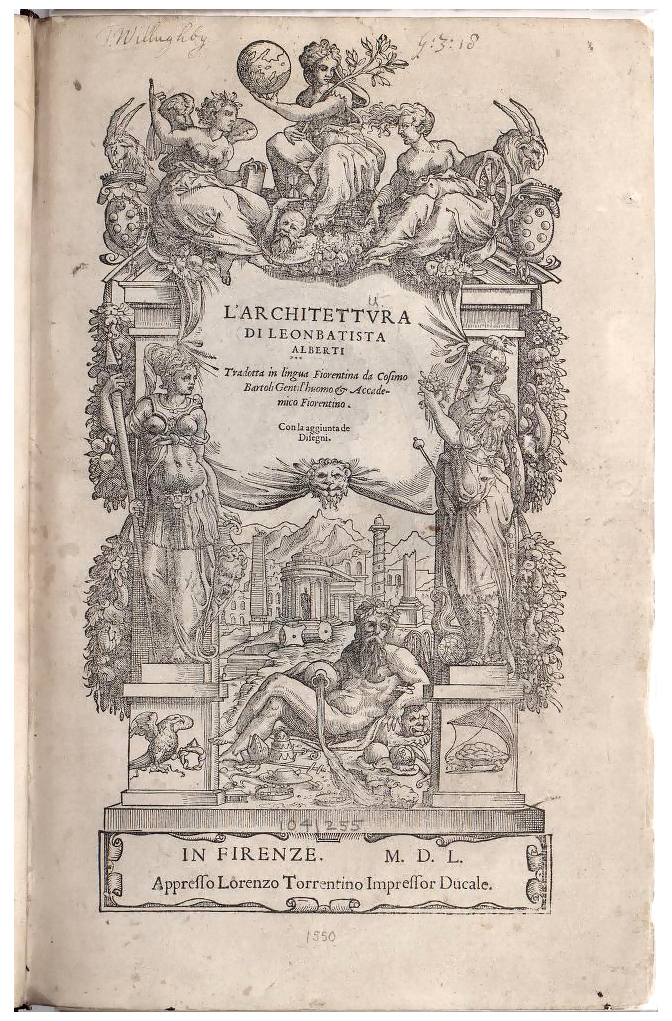
I have quoted here before Robert Burton's description of the way a good prospect will ease melancholy, but for those without such a view, similar benefits are available from looking at landscape paintings. Leon Battista Alberti, in his Ten Books on Architecture (1452), provided this advice on interior decoration: 'our minds are cheered beyond measure by the sight of paintings depicting the delightful countryside, harbours, fishing, hunting, swimming, the games of shepherds - flowers and verdure...' (Book VII, Chapter 5).

This passage is quoted in E. H. Gombrich's seminal essay 'The Renaissance Theory of Art and the Rise of Landscape', along with a later one in which the psychological benefits of landscape are further stressed by Alberti: 'Those who suffer from fever are offered much relief by the sight of painted fountains, rivers and running brooks, a fact which anyone can put to the test; for if by chance he lies in bed one night unable to sleep, he need only turn his imagination on limpid waters and fountains which he had seen at one time or another, or perhaps some lake, and his dry feeling will disappear all at once and sleep will come upon him as the sweetest of slumbers...' Of course in emphasising the benefits of landscape without any specific subject matter, Alberti starts to point beyond mere illustration or decoration, towards the new independent genre of landscape painting.

Monday, December 01, 2008

Dessert in the form of a winter landscape

I've recently been reading to my son Charlie and the Chocolate Factory, with its chocolate waterfall and minty grass, and so was tempted by a link on Arts & Letters Daily to look at the food landscapes of photographer Carl Warner. Apparently 'the images can take up to two or three days to build and photograph and then a couple of days retouching and fine-tuning them to blend together all the elements, such as parmesan cliffs with sweet potato boulders and cress and savoy cabbage foliage under a red cabbage sky.'

The subject of foodscapes puts me in mind of the Manifesto of Futurist Cooking (1930). Marinetti's section on sculpted meat highlights a recipe devised by Futurist painter Fillia for rissole of minced veal stuffed with eleven kinds of green vegetables provided 'a symbolic interpretation of all the varied landscapes of Italy'. Marinetti also refers to Enrico Prampolini's Equator + North Pole - 'an equatorial sea of poached egg yolks' surrounding 'a cone of firmly whipped egg white'.

Back in 1600, the marriage in Lyon of Marie de' Medici and Henry IV involved (according to Roy Strong in his book Feast) 'every kind of late mannerist fantasy. On the high table were two oak trees seemingly made of snow with white leaves and silver garlands. Beneath their branches a hunt was in progress.' At a certain moment, 'from beneath the floor arose a table bearing dessert in the form of a winter landscape.' The meal ended with a sugar garden full of birds, fruit and flowers. Such sugar sculptures form a whole subgenre of the foodscape - the engraving reproduced below shows a sugar collation from the wedding of Johann Wilhem, heir to the duke of Jülich-Cleve, in 1587.

Friday, November 28, 2008

No Man-Made Obstacles for the Winter Winds

Still on the subject of Land Art, discussed in the last posting, I thought it was interesting that Ben Tufnell divided environmental art into (i) 'healing' land reclamation projects, (ii) symbolic warnings / poetic meditations and (iii) art that simply bears witness to environmental concerns. In the first category he has several exmples, including Agnes Denes' Tree Mountain which I have discussed here before. However, for the other two categories he focuses on just one example each: Joseph Beuys' Eichnen 7,000 and, rather surprisingly, for 'bearing witness' the recent text works of Hamish Fulton.

Clearly Hamish Fulton feels strongly about the natural environment and has contrasted his own 'leave no trace' approach with that of Richard Long, as well as the more American land artists with their bulldozers. Tufnell gives the example of Fulton's To Build is to Destroy. No Man-Made Obstacles for the Winter Winds. 14 Seven Day Walks, Cairngorms, Scotland, 1985-1999, which criticises the building of ski lifts. But I have to say that for me, the idea that Fulton's walks leave no trace is increasingly hard to hold onto when, like any art works that are sold and exhibited, the artifacts generated by his walks create their own carbon footprint. And of course Fulton is not just walking around Britain - text works based on walks in Tibet, say, make no mention of the flight required to get there.

The way Fulton and Richard Long downplay the process of travel to remote parts is discussed in a critical essay 'Ain't Going Nowhere' by Anna Gruetzner Robins (see Gendering Landscape Art edited by her and Steven Adams). She cites Long, describing A Circle in Alaska / Bering Strait Driftwood on the Arctic Circle: 'I just happened to find myself on the Arctic Circle, and it seemed just the perfect opportunity and place for me to make a circle.' In the work of Long and Fulton, 'the viewer is asked to accept that these journeys are a primal quest divorced from time and space.' Robins compares this to the way colonial explorers tended to write up their exploits. I think this is a useful comparison - although it's hardly surprising that Richard Long or Richard Burton would skip the boring bits, we need to bear in mind what comes before and after their wilderness treks. Robins' essay is well worth reading even (especially?) where it goes rather over the top. She obviously feels bitter about Richard Long, whom she once invited to come and talk to her students - apparently all he did was turn up, play country music tapes and say nothing at all.

Monday, November 24, 2008

Marsh Ritual

Looking at some of Cildo Meireles' Arte Física (Physical Art) from 1969-70 at Tate Modern on Saturday I was reminded of the early manifestations of land art being made then in the USA. For example (to quote from the Tate magazine's interview with Meireles) there was his 'Cordões/30km de Linha Estendidos (Cords/30km Extended line), 1969, which involved laying string along 30 kilometres of beach front and then collecting what was left of it'. It's a reminder (if one were needed) that this kind of conceptual engagement with landscape was going on all over the world - in this case, Brazil.

A couple of years ago the Tate published an introduction to land art written by Ben Tufnell (who curated the Hamish Fulton exhibition there in 2002). It 'attempts to redress a historical imbalance in previous accounts, whereby American artists, particularly those working with earthworks are prioritised over Europeans whose work is perhaps small-scale or ephemeral.' Thus the opening chapter is on Richard Long, with Robert Smithson relegated to chapter 2. However, reading about them in this order really serves to emphasise how full of fertile ideas Smithson was. Long has largely lets his minimal work speak for itself, although Tufnell quotes Long's objection to 'so-called American land art' with its need for large tracts of real estate and earth moving machinery.

Ironically, the perception that it is European artists who create 'small-scale or ephemeral' land art, along with the fame of Andy Goldsworthy, may have obscured the contribution of North American's working in this quieter vein. Ben Tufnell mentions Patrick Dougherty, Roy Staab and Michael Singer. Works by Singer, 'such as the Marsh Ritual Series 1973, Long Island, and the Glades Ritual Series 1975, Everglades National Park, Florida, were composed of sculptural constructions spread across large areas of landscape, each barely visible but gradually revealed, through the ongoing engagement of the viewer, as part of a complex whole.'

Non-Western land art is largely beyond the scope of Ben Tufnell's survey, but he does say that Andy Goldsworthy has inspired a kind of school of land art in Japan, citing the works included in the Hakone Open-Air museum's 30th anniversary exhibition 'Forms in Nature.' Among the artists who exhibited were Masafumi Maita, Takamasa Kuniyasu (see below) and Toshikatsu Endo (whose Epitaph can be seen at Flakstad in Norway). If anyone knows more about the ways in which these Japanese artists see Goldsworthy as an influence, please feel free to leave a comment...


Takamasa Kuniyasu, Spiral of Töölönlahti Bay
Source: tietoukka

Sunday, November 23, 2008

The ring of living beauty


In his memoir Father and Son (1907), Edmund Gosse described the effect of collectors, many inspired by his father's bestseller The Aquarium, on the rockpools of Devon:
'Half a century ago, in many parts of the coast of Devonshire and
Cornwall, where the limestone at the water's edge is wrought into
crevices and hollows, the tideline was, like Keats' Grecian vase,
'a still unravished bride of quietness'. These cups and basins
were always full, whether the tide was high or low, and the only
way in which they were affected was that twice in the twenty-four
hours they were replenished by cold streams from the great sea,
and then twice were left brimming to be vivified by the temperate
movement of the upper air. They were living flower-beds, so
exquisite in their perfection, that my Father, in spite of his
scientific requirements, used not seldom to pause before he began
to rifle them, ejaculating that it was indeed a pity to disturb
such congregated beauty. The antiquity of these rock-pools, and
the infinite succession of the soft and radiant forms, sea-
anemones, seaweeds, shells, fishes, which had inhabited them,
undisturbed since the creation of the world, used to occupy my
Father's fancy. We burst in, he used to say, where no one had
ever thought of intruding before; and if the Garden of Eden had
been situate in Devonshire, Adam and Eve, stepping lightly down
to bathe in the rainbow-coloured spray, would have seen the
identical sights that we now saw,--the great prawns gliding like
transparent launches, anthea waving in the twilight its thick
white waxen tentacles, and the fronds of the duke faintly
streaming on the water like huge red banners in some reverted
atmosphere.

'All this is long over and done with. The ring of living beauty
drawn about our shores was a very thin and fragile one. It had
existed all those centuries solely in consequence of the
indifference, the blissful ignorance of man. These rockbasins,
fringed by corallines, filled with still water almost as pellucid
as the upper air itself, thronged with beautiful sensitive forms
of life, they exist no longer, they are all profaned, and
emptied, and vulgarized. An army of 'collectors' has passed over
them, and ravaged every corner of them. The fairy paradise has
been violated, the exquisite product of centuries of natural
selection has been crushed under the rough paw of well-meaning,
idle-minded curiosity.'

Friday, November 14, 2008

Shoreland

The New Arcadian Press aims 'to generate a continuous programme of artistic, scholarly and poetic research into cultural landscape.' Since 1981 The New Arcadian Journal has discussed William Shenstone, William Kent, John Sell Cotman and Ian Hamilton Finlay, along with varius British Arcadias, from the northern fells to the shingle of Dungeness. The cover shown here is my copy of issue 41/42 (number 199 out of the edition of 300!), bought recently at the Small Publishers Fair in London.

Among the illustrations in Landfall are a set of music boxes by Grahame Jones, each with a different musical landscape on the lid. The first is the Shoreland Musical Box, showing the Seven Sisters, Sussex, 'an invocation of Seafoam, second of the four movements of The Sea by Frank Bridge (1879-1941), inhabitant of the Sussex shoreland.' Next is the Broadland Music Box, 'an invocation of Dawn, the first of the Four Sea Interludes in the opera Peter Grimes. Benjamin Britten (1913-1976) was a Suffolk man and his music oozes the flatlands. Peter Grimes and the Sea Interludes are as much to do with the land as the sea.' The third musical box depicts Chanctonbury Ring, 'an invocation of the musical response, by John Ireland (1879-1962), to the barrows, tree clumps and hillforts of the Sussex downs; in particular to Chanctonbury Ring, which evokes this tree planted, circular fort.' Then there is an Upland Musical Box, inspired by the North Country Sketches of Delius and a Moorland Musical Box based on the Moorland Suite of Gustav Holst. Finally, to illustrate some Litanies in honour of Alfred Wainwright, there is a Lakeland Musical Box, 'an invocation of the composition for strings, Land of the Mountain and Flood, by Hamish MacCunn (1868-1916).

The main article in this edition of the New Arcadian Journal is Michael Charlesworth's 'Shoreland', about the gardens of Derek Jarman and Brian Yale. It mentions Jarman's The Last Of England (with its 'landscape of rubble and repression'), a film I saw before actually getting to visit the garden itself. I remember being struck by the film's soundtrack with its persistent, oppressive background hum from the nuclear power station. The day we went to Dungeness to see Jarman's garden, the electricity could be heard even above the noise of the wind, which was so fierce you could hardly stand up, and the cold bleakness of the place seemed to discourage any lingering examination of the garden sculptures.


Derek Jarman's house and garden, 2006

Wednesday, November 12, 2008

From the top of Beechen Cliff

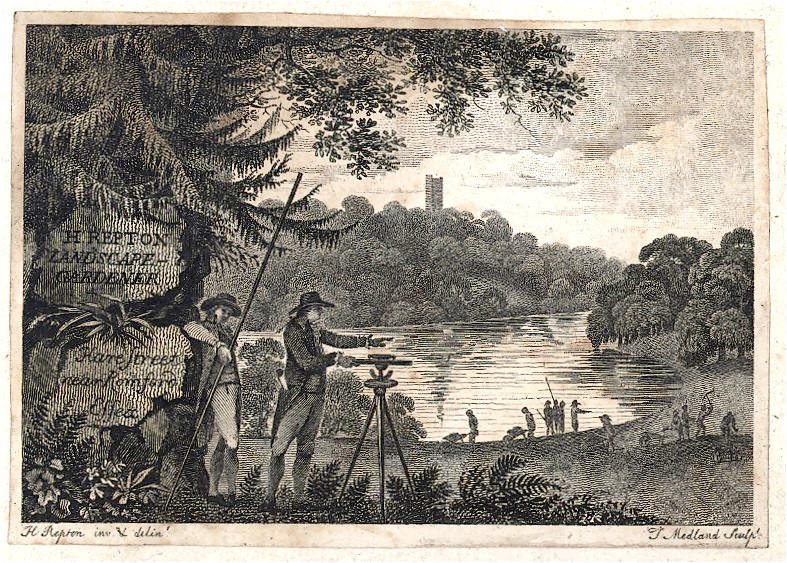
One thing that connects the last two postings here is that Jacquetta Hawkes quotes 'The Ruin' in her book. Another rather more tenuous link is Jane Austen - an admirer of George Crabbe, a visitor to Bath. On being told that Mrs. Crabbe had died, Jane Austen imagined being able to "comfort him as well as I can'. Crabbe's poem 'The Parish Register' provided the name for Austen's heroine Fanny Price in Mansfield Park, one of the novels in which Jane Austen refers to landscape gardening and the Picturesque. The wealthy but dull Mr Rushworth talks about improving his estate: "Your best friend upon such an occasion," said Miss Bertram calmly, "would be Mr. Repton, I imagine." This seems to be a dig at Humphry Repton's landscape garden design, although Colin Winborn (The Literary Economy of Jane Austen and George Crabbe) has argued that Repton's approach in the Red Books, seeking to create freedom within boundaries, is consistent with the views of both Austen and Crabbe.


In Northanger Abbey, the heroine Catherine is given a lecture on the Picturesque by an admirer and the reader is led elegantly from aesthetics to politics in a way that has made this, I would think, one of the most frequently quoted passages in histories of landscape:
'... a lecture on the picturesque immediately followed, in which his instructions were so clear that she soon began to see beauty in everything admired by him, and her attention was so earnest that he became perfectly satisfied of her having a great deal of natural taste. He talked of foregrounds, distances, and second distances--side-screens and perspectives--lights and shades; and Catherine was so hopeful a scholar that when they gained the top of Beechen Cliff, she voluntarily rejected the whole city of Bath as unworthy to make part of a landscape. Delighted with her progress, and fearful of wearying her with too much wisdom at once, Henry suffered the subject to decline, and by an easy transition from a piece of rocky fragment and the withered oak which he had placed near its summit, to oaks in general, to forests, the enclosure of them, waste lands, crown lands and government, he shortly found himself arrived at politics; and from politics, it was an easy step to silence.'

Sunday, November 09, 2008

A Land

Jacquetta Hawkes' A Land can be seen as one manifestation of the widespread interest in Britain's landscape pursued by artists, composers, film makers and writers in the 1940s. It is a consciously poetic history of the land, opening with the author lying in her back garden imagining the earth's strata beneath her. Throughout the book she emphasises her feeling of connectedness with deep time. She describes the formation of rocks, the evolution of animals and finally the influence of people on the landscape - initially good, increasingly malign. The book ends with 'A Prospect of Britain', from the city streets round her home in Primrose Hill to the different landscapes of Britain described in the order they were created: the chalk Downs, the Costswolds, the West Riding, the Lake District. She says of these places that 'their poetry, the images rising from the darkness of unconscious memory, seem to be as much a part of the growth of that countryside as the distinctive plants and animals which it more directly supports. Hardy's poems grew from the Wessex downlands, Clare's from the tiny stretch of the Midlands in which alone he felt at home; Crabbe's are the bitter fruit of the Norfolk Coast: 'There poppies, nodding mock the hope of toil, / There the blue bugloss paints the sterile soil.'

The philosophy of A Land can be read in condensed form in the description of her immediate surroundings: 'the York Stone paving, worn by footsteps into attractive miniature landscapes, survives in the side streets but has recently been replaced in Fitzroy Road itself by lifeless cement slabs.' Like W. G. Hoskins, whose The Making of the English Landscape appeared in 1955, she was no fan of the modern city. Indeed, in a passage impossible to imagine someone writing today, she explicitly locates 'one of the best of times to have been alive in this country' for 'all classes' in Queen Anne's reign and contrasts life then with the materialism of modern Britain. 'It is idiocy to pretend that to live in a lovely countryside, to handle only comely things, and to know that only comely things will issue from your hands is of no importance when set beside the amount of cash in your purse'.

Jacquetta Hawkes moved in artistic circles and was friendly with Henry Moore. In A Land she waxes lyrical about his use of native stones: 'it is hardly possible to express in prose the extraordinary awareness of the unity of past and present, of mind and matter, of man and man's origins which these thoughts bring to me. Once when I was in Moore's studio and saw one of his reclining figures with the shaft of a belemnite exposed in the thigh, my vision of this unity was overwhelming.'

There are hints of a rather overheated imagination in A Land, but it was her 1980 novel A Quest for Love that combined archaeology and sex in a mixture that alienated many of her admirers. Christine Finn has written an entertaining account of this affair. She wonders of Hawkes, 'are her manuscripts, set down in her hard-to-read handwriting, meant to be entirely serious? Her script for Figures in a Landscape, an experimental film, starts: "Cornwall, a horn of rock, Cornwall is England's horn, Its point thrust out into the sea, Smooth or ribbed with waves . . ."' The photograph of Hawkes on the Penguin paperback doesn't give much hint of volcanic sexual passion, but her lover J. B. Priestley described her in elemental terms to a friend: "What a woman — ice without and fire within!"

Friday, November 07, 2008

The Ruin

Earlier this week Mrs Plinius had a well earned rest from some intense work issues and traveled to Bath to take the waters. Her trip reminded me that one of the most intriguing old poems in English, 'The Ruin', mentions the old Roman baths as they appeared in the eighth century. The poem's narrator wonders through the remnants of an old city and sees 'i þær þa baþu wæron, hat on hreþre' (where the baths were, hot at hall's hearth).

I first read this poem in Michael Alexander's anthology The Earliest English Poems (1966) where he says that 'the city of the poem is Aquae Sulis, the Roman Bath, and we may imagine the anonymous author walking about the overgrown streets... the first of many English meditations on old stones.' Another translation can be read at the Anglo-Saxon Poetry Project - 'roofs are fallen, ruinous towers, / the frosty gate with frost on cement is ravaged, / chipped roofs are torn, fallen, / undermined by old age...'